
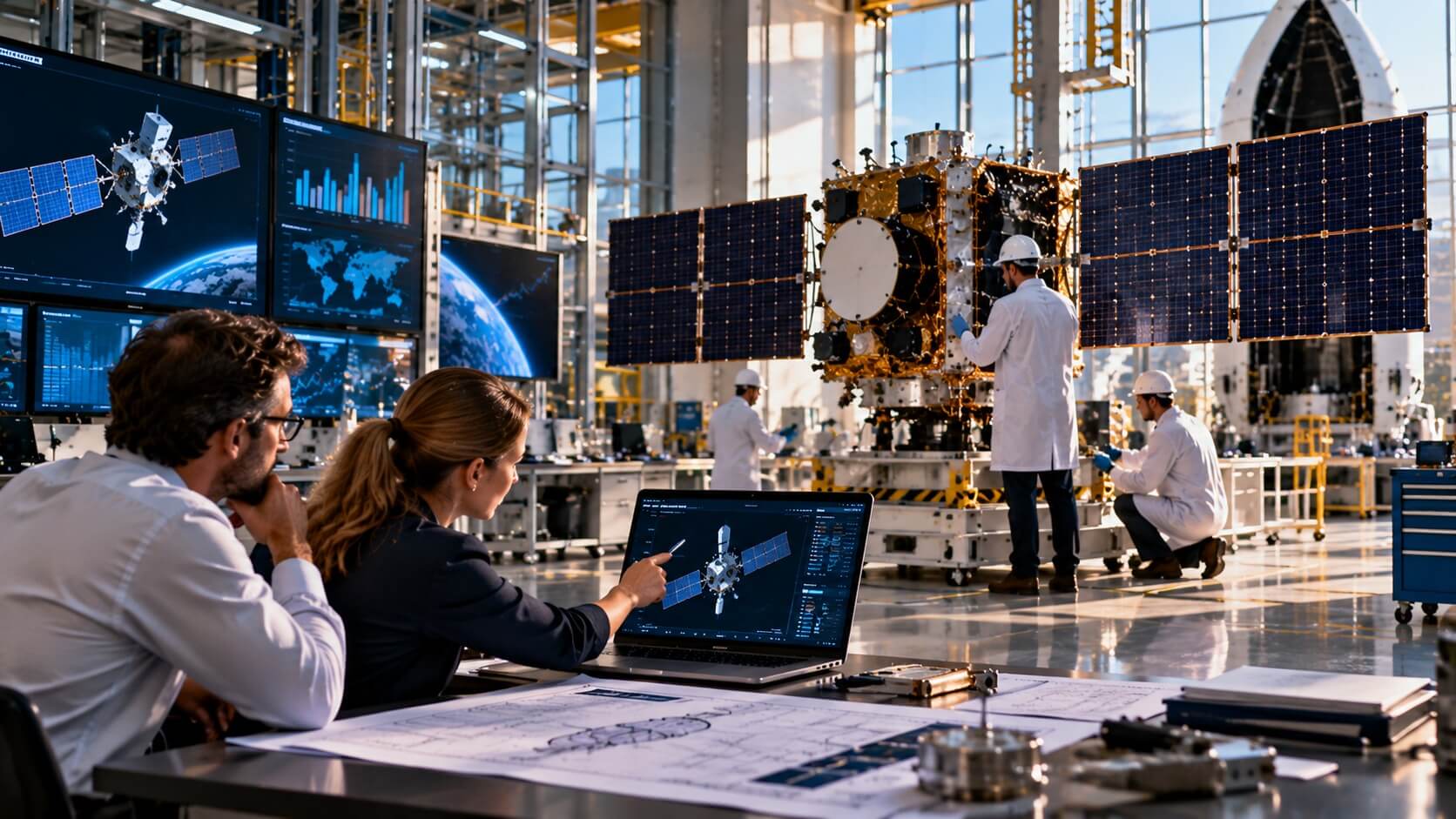
The space stocks worth watching include SpaceX (SPCX), Rocket Lab (RKLB), AST SpaceMobile (ASTS), Planet Labs (PL), Iridium Communications (IRDM), Redwire (RDW), Intuitive Machines (LUNR), Viasat (VSAT), Lockheed Martin (LMT), Northrop Grumman (NOC), and L3Harris Technologies (LHX).
These eleven publicly traded companies provide exposure to different parts of the space economy, including rocket launches, satellite communications, Earth observation, spacecraft manufacturing, lunar exploration, and national security programs.
One major development in 2026 was SpaceX's initial public offering. The company began trading on Nasdaq under the ticker SPCX on June 12, 2026, giving retail investors a new way to obtain direct exposure to its businesses.
However, these companies are not interchangeable investments.
Some operate established businesses with recurring revenue. Others are developing technologies that could generate substantial future demand but still face financing, operational, and commercial risks.
For retail investors, the most important question is not which space stock has the most exciting technology. It is which companies have the financial resources, competitive advantages, and business models needed to convert industry growth into sustainable shareholder value.
The broader investment case is examined in Is Investing in Space a Good Idea? Opportunities and Risks for Retail Investors.
What Are the Top 11 Space Stocks to Watch?
The following companies represent different investment opportunities across the space industry.
| Company | Ticker | Main space-related business | Investment profile |
|---|---|---|---|
| SpaceX | SPCX | Launch services, satellite connectivity and advanced technology | Large-scale commercial space and technology |
| Rocket Lab | RKLB | Launch services and space systems | Commercial space growth |
| AST SpaceMobile | ASTS | Satellite-to-phone connectivity | Capital-intensive network expansion |
| Planet Labs | PL | Earth observation and satellite data | Data and analytics growth |
| Iridium Communications | IRDM | Satellite communications | Established service business |
| Redwire | RDW | Space infrastructure and technology | Space systems and manufacturing |
| Intuitive Machines | LUNR | Lunar missions and space services | Mission and contract-driven growth |
| Viasat | VSAT | Satellite broadband and communications | Established network operator |
| Lockheed Martin | LMT | Space systems and defense | Diversified aerospace and defense |
| Northrop Grumman | NOC | Satellites, spacecraft and defense systems | Diversified government contractor |
| L3Harris Technologies | LHX | Space sensors, communications and propulsion | Diversified defense technology |
This is a research watchlist, not a ranking of expected investment returns or a recommendation to purchase all eleven companies.
The best choice depends on an investor's objectives, risk tolerance, and the valuation of each stock at the time of purchase.
1. SpaceX (SPCX): Launch Services, Starlink and Advanced Technology
SpaceX became publicly traded in June 2026, making it one of the most significant new additions to the investable space economy.
The company designs, manufactures, launches, and operates rockets, spacecraft, and satellite-based communications infrastructure.
Its activities include Falcon launch services, spacecraft development, and Starlink connectivity services. Public company disclosures also describe activities involving artificial intelligence and advanced computing infrastructure.
Why Investors Watch SpaceX
SpaceX combines several business activities that previously required investors to obtain exposure through private-market arrangements.
Its reusable launch capabilities provide access to commercial and government launch demand.
Starlink provides exposure to satellite broadband and connectivity markets, while the company's broader technology investments introduce additional potential sources of growth.
Unlike a company focused on a single satellite service or launch vehicle, SpaceX operates across several related markets.
That breadth may create commercial advantages, but investors must evaluate the economics of each business rather than treating all future growth opportunities as equally profitable.
What Are the Risks?
SpaceX faces significant valuation risk, particularly when investors price its shares based on expectations of rapid long-term growth.
Its operations require substantial investment in launch infrastructure, satellite networks, manufacturing, and computing technology.
Technical failures, regulatory restrictions, competition, and changes in government demand can also affect results.
Investors should examine the company's latest public financial disclosures, cash flow, capital expenditure requirements, and share-class structure.
SpaceX's successful IPO does not guarantee that SPCX shares will outperform other space stocks.
2. Rocket Lab (RKLB): Launch Services and Space Systems
Rocket Lab is one of the most recognizable publicly traded companies focused on commercial space activities.
The company operates in two important areas: launching payloads into space and supplying spacecraft, components, and related systems.
Its Electron rocket has established a record of launching small satellites, while its broader space systems business provides hardware and services used in spacecraft and satellite missions.
Rocket Lab has also been developing Neutron, a larger reusable launch vehicle intended to serve a different segment of the launch market.
Investors should check the latest development and operational disclosures rather than assuming that earlier Neutron schedules remain current.
Why Investors Watch Rocket Lab
Rocket Lab offers exposure to several sources of space-industry demand.
Satellite operators need launch services, while spacecraft manufacturers and government customers require components, systems, and engineering capabilities.
This combination can help diversify Rocket Lab's revenue opportunities beyond launch activity alone.
Its space systems operations are particularly relevant because the company can participate in missions even when another provider performs the launch.
What Are the Risks?
Developing new rockets requires substantial capital and technical expertise.
Delays, launch failures, unexpected expenses, or weaker-than-expected customer demand can affect financial results.
Investors should evaluate whether revenue growth is translating into improving margins and cash flow.
Rocket Lab may benefit from commercial space expansion, but its investment performance will depend on execution and valuation rather than industry growth alone.
3. AST SpaceMobile (ASTS): Satellite Connectivity for Mobile Phones
AST SpaceMobile is developing satellite communications capabilities designed to provide broadband connectivity directly to compatible mobile phones.
The company's objective is to extend cellular coverage beyond the reach of traditional terrestrial infrastructure.
This could be valuable in remote areas, underserved regions, and locations where conventional communications networks are unavailable.
Why Investors Watch AST SpaceMobile
Direct-to-device satellite connectivity represents a potentially significant commercial market.
Instead of requiring consumers to purchase dedicated satellite phones, the technology aims to connect compatible ordinary mobile devices through partnerships with mobile network operators.
Successful commercial deployment could create opportunities involving connectivity services and telecommunications partnerships.
Investors should distinguish demonstrated technical capabilities, announced partnerships, and commercial services generating recognized revenue.
What Are the Risks?
Building and deploying a satellite network requires significant investment.
AST SpaceMobile must address technical performance, launch schedules, regulatory requirements, network capacity, and commercial adoption.
The company also faces competition from other satellite communications providers and evolving direct-to-device technologies.
Investors should pay close attention to financing requirements, satellite deployment progress, and actual commercial revenue.
ASTS offers exposure to an ambitious market opportunity, but its financial outcomes remain uncertain.
4. Planet Labs (PL): Earth Observation and Satellite Data
Planet Labs operates in the Earth observation market.
The company uses satellites to collect imagery and information about conditions on Earth.
Its customers include organizations interested in agriculture, environmental monitoring, infrastructure, mapping, and government applications.
Why Investors Watch Planet Labs
Earth observation offers a different investment opportunity from rocket launches or satellite internet.
Planet Labs seeks to generate value by providing information that customers can use to make decisions.
Satellite imagery can help monitor agricultural conditions, identify physical changes, and support commercial or government analysis.
As businesses increasingly use data to manage operations, demand for timely Earth observation information could expand.
The recurring nature of certain data services may also create opportunities for ongoing customer relationships.
What Are the Risks?
Collecting satellite imagery does not automatically guarantee strong profitability.
Planet Labs must compete on data quality, coverage, analytics, pricing, and customer value.
Investors should examine revenue growth, customer retention, government contract exposure, operating expenses, and cash flow.
A growing market for satellite information can support the business, but sustainable financial performance depends on the company's ability to monetize its capabilities effectively.
5. Iridium Communications (IRDM): Established Satellite Services
Iridium Communications operates a global satellite communications network.
Its services support customers in industries such as maritime transportation, aviation, government operations, and remote communications.
Unlike businesses still building their initial commercial infrastructure, Iridium has an established network and operating service model.
Why Investors Watch Iridium
Iridium provides exposure to satellite communications demand through an existing commercial business.
Customers rely on satellite connectivity when conventional communications networks are unavailable or unsuitable.
The company serves specialized markets where reliable coverage can be particularly important.
For investors, this creates a different financial profile from an early-stage satellite company that has not yet completed its network.
What Are the Risks?
Established operations do not eliminate business risk.
Iridium faces competition, technology changes, customer concentration in certain markets, and ongoing infrastructure requirements.
Investors should evaluate service revenue, operating margins, free cash flow, debt, and the company's ability to maintain its competitive position.
The business may offer a more established form of space exposure, but its shares can still experience substantial price fluctuations.
6. Redwire (RDW): Space Infrastructure and Manufacturing
Redwire develops technologies and infrastructure used in space and aerospace missions.
Its activities include spacecraft components, engineering solutions, and specialized systems supporting government and commercial customers.
The company participates in the infrastructure behind space operations rather than focusing exclusively on operating satellite networks or launching rockets.
Investors should also review its current business mix, including any aerospace and defense activities, when evaluating how much of its revenue is directly attributable to space.
Why Investors Watch Redwire
As space activity expands, companies require equipment, structures, components, and technical services.
Redwire can potentially benefit from demand across multiple programs and customers.
This supplier-oriented model creates opportunities to participate in the broader space industry without depending entirely on the commercial success of a single satellite service.
What Are the Risks?
Manufacturing and engineering businesses can face execution challenges, contract delays, cost overruns, and integration difficulties.
Investors should examine the company's revenue mix, backlog quality, margins, debt, and cash generation.
It is also important to distinguish announced contract values from revenue already recognized.
Redwire's investment appeal depends on whether its technology capabilities and customer relationships translate into profitable, sustainable operations.
7. Intuitive Machines (LUNR): Lunar Exploration and Space Services
Intuitive Machines develops technologies and services supporting lunar exploration and other space missions.
Its activities include lunar landers, mission services, and infrastructure associated with operations beyond Earth orbit.
The company has participated in NASA's Commercial Lunar Payload Services initiative.
Why Investors Watch Intuitive Machines
Lunar exploration has attracted renewed attention from governments and commercial organizations.
Future missions may require transportation, communications, navigation, and supporting infrastructure.
Intuitive Machines offers investors exposure to this emerging part of the space economy.
Government programs can create meaningful opportunities for companies capable of delivering specialized services.
What Are the Risks?
Lunar missions are technically challenging and can involve significant uncertainty.
Mission failures, schedule changes, contract delays, and development costs can affect financial performance.
The company may also depend heavily on a relatively limited number of major customers and programs.
Investors should distinguish between long-term ambitions for lunar infrastructure and the revenue opportunities supported by existing contracts.
The potential market is interesting, but its future commercial scale remains uncertain.
8. Viasat (VSAT): Satellite Broadband and Connectivity
Viasat provides satellite communications services and related technologies.
Its operations support broadband connectivity and communications applications across commercial, government, aviation, maritime, and other markets.
The company represents a more established segment of the space economy: delivering communications services using satellite infrastructure.
Why Investors Watch Viasat
Demand for connectivity extends beyond traditional terrestrial networks.
Aircraft, ships, remote businesses, and government users can require communications services in locations where conventional infrastructure is limited.
Viasat participates in these markets through its satellite network and related services.
Its business provides exposure to commercial demand for satellite connectivity rather than relying primarily on future space exploration missions.
What Are the Risks?
Satellite communications infrastructure is expensive to develop, launch, and maintain.
Debt, capital expenditures, competition, and network performance are important considerations.
Investors should evaluate whether operating cash flow can support financial obligations and future infrastructure investments.
The company's established operations do not remove the risks associated with maintaining a competitive satellite network.
9. Lockheed Martin (LMT): Space and National Security
Lockheed Martin is a major aerospace and defense contractor with significant space-related operations.
Its activities include satellites, missile warning systems, spacecraft, and technologies supporting national security and government missions.
However, space is only one part of its broader business.
Why Investors Watch Lockheed Martin
Lockheed Martin provides exposure to space-related government spending through an established, diversified company.
National security requirements create demand for satellite communications, surveillance, navigation, and other space capabilities.
The company's experience with large government programs can be an important competitive advantage.
Its broader business also means that financial performance does not depend exclusively on commercial space activity.
What Are the Risks?
Lockheed Martin faces risks associated with government budgets, procurement decisions, contract execution, and program costs.
Investors should understand that its stock performance may be driven more by overall defense operations than by growth in the commercial space economy.
For someone seeking direct exposure to emerging satellite businesses, Lockheed Martin may therefore represent a different investment proposition.
10. Northrop Grumman (NOC): Satellites and Advanced Space Systems
Northrop Grumman develops aerospace, defense, and space technologies.
Its space-related activities include satellites, spacecraft systems, propulsion technologies, and programs supporting government missions.
Like Lockheed Martin, Northrop Grumman operates across multiple defense and aerospace markets.
Why Investors Watch Northrop Grumman
Government demand for advanced space capabilities can create long-term business opportunities.
Northrop Grumman participates in complex programs requiring specialized engineering and established technical capabilities.
Its diversified operations may reduce dependence on the commercial success of any one space-related technology.
For investors, the company offers a way to participate in space-related spending through a large established contractor.
What Are the Risks?
Government contracts can involve significant financial and operational uncertainty.
Cost overruns, program delays, changes in procurement priorities, and budget constraints can affect profitability.
Investors should evaluate contract execution, margins, cash flow, and the contribution of space operations to overall company results.
The company's involvement in major space programs does not necessarily mean its shares will closely follow the performance of emerging commercial space stocks.
11. L3Harris Technologies (LHX): Space Technology and Defense Systems
L3Harris Technologies provides communications, sensors, propulsion, and other technologies used in defense and aerospace applications.
Its space-related activities include systems supporting spacecraft, national security programs, and government missions.
Through its aerospace and defense operations, the company participates in multiple parts of the technology supply chain.
Why Investors Watch L3Harris
Space programs require specialized equipment and engineering capabilities.
L3Harris supplies technologies that can support satellites, launch vehicles, and other space systems.
Its exposure to government and defense customers can provide opportunities connected to national security spending.
Because the company operates across several markets, its financial results are not entirely dependent on the commercial space industry.
What Are the Risks?
L3Harris faces contract execution risk, competition, government spending uncertainty, and operational challenges.
Investors should examine profitability, debt, cash generation, and the financial contribution of different business segments.
A company supplying important space technologies can still experience weak investment performance if operating results disappoint or its valuation is excessive.
Which Space Stocks Have the Highest Growth Potential?
Emerging commercial space companies may offer greater potential for rapid business expansion than established aerospace contractors.
Rocket Lab, AST SpaceMobile, Planet Labs, Redwire, and Intuitive Machines are examples of businesses whose future financial results could change significantly as their markets develop.
SpaceX also provides exposure to major growth opportunities, but its scale and public-market valuation create a different investment profile from smaller companies.
Investors should distinguish between a company's potential for business expansion and its stock's potential for investment returns.
Higher potential growth generally comes with greater uncertainty, but higher growth does not automatically produce higher shareholder returns.
Some companies must complete expensive infrastructure projects before reaching their intended commercial scale.
Others depend on winning government contracts, demonstrating new technologies, or attracting enough customers to support their operating costs.
Established companies such as Lockheed Martin, Northrop Grumman, and L3Harris have broader operations and more diversified sources of revenue.
That does not guarantee better stock performance, but it creates a different risk profile.
Future share-price performance depends on both business results and the valuation investors pay today.
Which Space Stocks Are More Established?
Iridium, Viasat, Lockheed Martin, Northrop Grumman, and L3Harris represent different examples of companies with established commercial or government operations.
SpaceX also operates established commercial services, although its public trading history is relatively short following its June 2026 IPO.
However, established does not mean financially risk-free.
Iridium operates an existing satellite communications network, while Viasat serves communications customers across several markets.
Lockheed Martin, Northrop Grumman, and L3Harris have diversified aerospace and defense businesses.
These companies generally have more developed operating histories than businesses still building their initial commercial infrastructure.
Nevertheless, investors should compare their debt, profitability, cash flow, capital requirements, and exposure to major customers.
A mature company with substantial financial obligations can still carry significant investment risk.
Likewise, a diversified defense contractor may offer less direct participation in emerging commercial space markets.
How Do You Compare Space Stocks Before Buying?
A useful comparison should focus on financial sustainability rather than company popularity.
| Factor | Why it matters |
|---|---|
| Revenue growth | Indicates whether commercial demand is expanding |
| Profitability | Shows whether operations generate sustainable earnings |
| Free cash flow | Helps assess the ability to fund operations and investment |
| Cash reserves | Important for businesses still financing development |
| Debt | Can increase financial pressure and refinancing risk |
| Customer concentration | Reveals dependence on a limited number of contracts |
| Competitive advantage | Helps determine whether growth can be defended |
| Stock valuation | Determines how much future success is already priced in |
| Capital requirements | Shows how much investment is needed to support future expansion |
For example, a satellite company may report rapidly increasing revenue while continuing to spend more cash than it generates.
That does not automatically make it a poor business, but investors need to understand how future expansion will be financed.
Similarly, a defense contractor may generate stable revenue but offer relatively limited growth if its major programs are mature.
Investors evaluating SpaceX should consider its entire business portfolio and the expectations reflected in its current market capitalization.
A strong investment decision requires examining both business quality and the price of the shares.
Should You Buy Individual Space Stocks or a Space ETF?
Investing in individual space stocks gives investors control over which businesses they own.
Someone interested primarily in satellite communications can select companies operating in that market.
Another investor may prefer launch providers, Earth observation businesses, or diversified aerospace contractors.
However, individual stock selection requires research and ongoing monitoring.
A space ETF offers an alternative by holding multiple companies within one investment product.
This can reduce dependence on the success of a single business, although it does not eliminate sector-wide risks.
Some ETFs focus on commercial space companies, while others include broader defense and technology businesses.
The differences are explained in Space ETFs Compared: What They Hold and Who They're For.
Investors interested specifically in SpaceX should check whether an ETF actually holds SPCX and how much of its portfolio is allocated to the company.
Owning an ETF is not equivalent to owning individual SpaceX shares.
For investors who do not want to research individual financial statements, an ETF may offer a simpler approach, provided its holdings and investment strategy match their objectives.
Why Are Space Stocks So Volatile?
Space stocks can experience significant price movements because investors often place substantial value on expected future growth.
For developing companies, future earnings may depend on technologies, contracts, and infrastructure that have not yet reached full commercial scale.
Unexpected delays can therefore cause large changes in market expectations.
Interest rates also matter.
When financing becomes more expensive, companies requiring substantial additional capital may face greater financial pressure.
Shareholder dilution is another concern.
A business that issues new shares to fund expansion can reduce existing investors' percentage ownership.
Even successful operational milestones may not prevent a stock from declining if investors expected stronger results.
SpaceX provides an example of why a successful IPO does not eliminate market risk. Once publicly traded, a company's shares can rise or fall independently of enthusiasm for its technology.
These factors help explain why space stocks sometimes fall sharply despite continued growth in the broader industry.
For a more detailed examination of market declines and their causes, read Why Space Stocks Fall: Understanding Volatility in the Space Sector.
Are Space Stocks a Good Long-Term Investment?
Space stocks can provide exposure to technologies and services that may become increasingly important over time.
Satellite communications, Earth observation, spacecraft manufacturing, launch services, and national security programs already support real economic activity.
However, a growing industry does not guarantee strong returns for every company.
Some businesses may achieve commercial success but still disappoint shareholders because their stocks were purchased at high valuations.
Others may struggle to finance operations or compete effectively.
For retail investors, a disciplined approach involves evaluating business fundamentals, financial resilience, competitive advantages, and valuation.
Diversification is also important because even promising companies can encounter unexpected setbacks.
The goal should be to identify businesses capable of generating sustainable value rather than simply purchasing whichever space stock is attracting the most attention.
Which Space Stock Should You Buy Now?
There is no single space stock that is automatically the best purchase for every investor.
Investors seeking exposure to emerging commercial space businesses may want to research companies such as Rocket Lab, AST SpaceMobile, Planet Labs, Redwire, or Intuitive Machines.
Those interested in established satellite communications operations may examine Iridium or Viasat.
SpaceX offers direct exposure to a large publicly traded company spanning launch services, satellite connectivity, and advanced technology. Its current valuation and financial performance should be evaluated independently of its reputation.
Investors preferring diversified aerospace and defense exposure may consider studying Lockheed Martin, Northrop Grumman, or L3Harris.
These are research categories, not buy recommendations.
The appropriate choice depends on financial objectives, investment horizon, tolerance for losses, and the market valuation of each company.
The most important distinction is between a company with exciting technology and a stock offering an attractive investment opportunity at its current price.
The space economy may continue expanding, but the companies that ultimately reward shareholders will be those capable of turning commercial demand into durable financial results.
Disclaimer: This article is for informational and educational purposes only and does not constitute financial or investment advice. The companies discussed are examples for research, not personalized recommendations. Stock prices, financial conditions, and business prospects can change. All investments involve risk, including the potential loss of principal.