
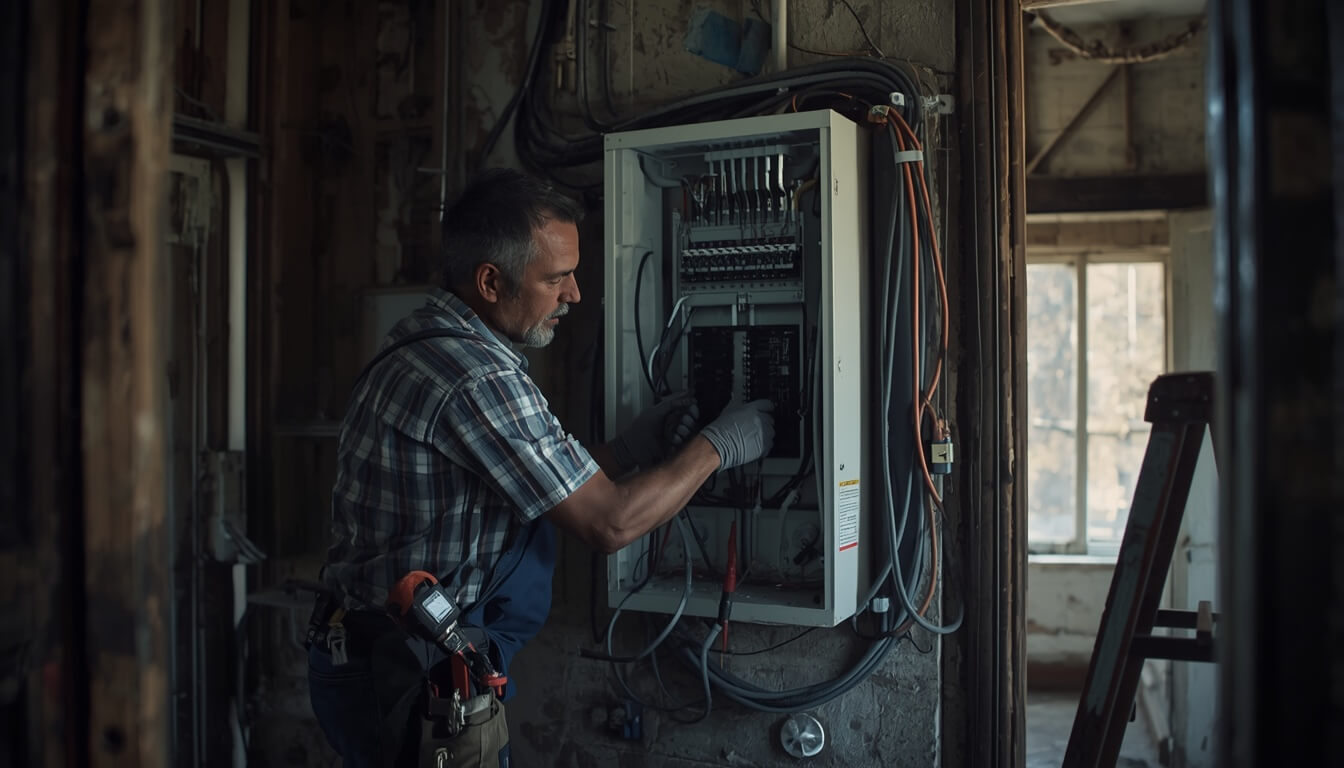
Jobs involving hands-on physical work, complex human interaction, unpredictable situations, and responsibility for people's safety are among the hardest to replace with artificial intelligence.
Electricians, plumbers, nurses, HVAC technicians, industrial maintenance specialists, and many construction workers are examples. AI can assist these professionals, but replacing their entire jobs is considerably harder than automating routine computer-based tasks.
Meanwhile, the AI boom is creating demand for workers who build and maintain the technology itself. Data centers need electrical systems, cooling equipment, communications networks, and skilled technicians.
For workers, the key question is which skills will remain valuable as AI improves. For investors, AI infrastructure expansion creates opportunities beyond software and semiconductor companies.
Which Jobs Are Least Likely to Be Replaced by AI?
No occupation is completely protected from technological change. However, jobs combining physical work, human judgment, and adaptation to unpredictable environments are generally harder to automate fully.
| Occupation | Why it is relatively resistant to AI | How AI may assist |
|---|---|---|
| Electricians | Physical installation and troubleshooting | Diagnostics and project planning |
| Plumbers | Work in unpredictable physical environments | Fault detection and maintenance planning |
| Nurses | Direct patient care and human judgment | Documentation and clinical support |
| Skilled construction workers | Hands-on tasks in changing environments | Planning and safety monitoring |
| HVAC technicians | Equipment installation, repair, and maintenance | Predictive maintenance |
| Social workers | Complex human relationships and judgment | Administrative assistance |
| Emergency responders | Physical action and high-stakes decisions | Dispatch and information analysis |
| Industrial maintenance technicians | Equipment repair and practical troubleshooting | Monitoring and diagnostics |
These occupations are not immune to automation. They involve essential tasks that current AI systems cannot easily perform independently.
For example, AI might help an electrician identify an electrical fault. But safely accessing equipment, handling unexpected problems, and completing the repair still require physical skills and professional judgment.
The most AI-resistant jobs often involve more than identifying a problem. Solving it safely in the real world is equally important.
Why Are Skilled Trades Among the Safest Jobs from AI?
Skilled trades are relatively resilient because much of their work takes place in physical environments that are difficult to predict or standardize.
Consider a plumber repairing a damaged pipe inside an older building. The worker may discover unexpected obstacles, unusual construction methods, or additional problems.
AI can suggest solutions, but completing the repair requires tools, physical access, experience, and responsibility for the outcome.
The same applies to electricians, HVAC technicians, and industrial maintenance workers.
Why Physical Work Is Difficult to Automate
AI can process information, generate text, and recognize patterns. Physical tasks require additional capabilities.
Robots need sensors, mechanical systems, mobility, and the ability to manipulate objects safely in changing environments.
These technologies can be expensive to develop, deploy, and maintain.
Even when automation is technically possible, it may not be economical. A company handling occasional repairs might find a human technician far more cost-effective than specialized robotic equipment.
Does This Mean Skilled Trades Will Never Be Automated?
No. Robotics and AI will likely automate more physical tasks over time.
Factories and warehouses already use automated systems for repetitive activities. But automating selected tasks is different from replacing an entire occupation.
Skilled trades involve responsibilities that change across locations and situations.
AI may improve diagnostics, repair planning, and equipment management long before it can replace most hands-on work.
Are Healthcare Jobs Safe from Artificial Intelligence?
Many healthcare occupations are relatively resistant to complete automation because they combine specialized knowledge, physical care, communication, and professional responsibility.
Nurses, physical therapists, and other healthcare workers interact directly with patients, assess changing conditions, provide treatment, and respond to emergencies.
AI can support these activities, but patient care often requires human judgment, accountability, and physical assistance.
Which Healthcare Tasks Could AI Automate?
AI may increasingly assist with:
- Medical documentation and administrative work.
- Appointment scheduling and routine communication.
- Medical image analysis.
- Clinical information retrieval.
- Patient monitoring and early-warning systems.
These applications could improve productivity and reduce administrative workloads.
For example, AI-assisted documentation may allow nurses and physicians to spend more time with patients.
However, improved efficiency does not guarantee stable or rising employment. Outcomes depend on how healthcare organizations use AI, alongside regulation, costs, and clinical reliability.
Which Office Jobs Are Most Exposed to AI?
Office jobs involving repetitive information processing, document preparation, and standardized communication are generally more exposed to AI automation.
Examples include routine data entry, basic customer support, document processing, and standardized reporting.
These activities overlap with capabilities already demonstrated by modern AI systems.
AI Usually Automates Tasks, Not Entire Jobs
Consider an accountant.
AI can help categorize transactions, process documents, and prepare standard financial reports.
But accountants also interpret regulations, advise clients, investigate unusual transactions, and take responsibility for professional decisions.
Similar distinctions apply to legal services, marketing, software development, and financial analysis.
AI may reduce time spent on routine work while increasing the importance of oversight, problem-solving, and client relationships.
A job can become significantly more productive without disappearing, although higher productivity may change how many employees a company needs.
Why Is the AI Chip Boom Creating New Jobs?
Artificial intelligence depends on physical infrastructure, including data centers, semiconductor factories, electrical networks, and cooling systems.
Advanced AI models run on powerful processors installed in facilities requiring construction, installation, maintenance, and continuous operation.
This supports demand for specialized workers across technology, manufacturing, construction, and industrial services.
AI Data Centers Need More Than Computer Engineers
Building and operating an AI data center involves several professions:
- Electrical engineers: Design power distribution and electrical infrastructure.
- Electricians: Install, inspect, and maintain electrical equipment.
- Cooling specialists: Manage systems that prevent computing hardware from overheating.
- Network engineers and technicians: Configure and maintain communications infrastructure.
- Construction workers: Build facilities and install supporting equipment.
- Maintenance personnel: Keep essential systems operating reliably.
AI can assist with planning, diagnostics, and monitoring, but these facilities still require physical installation and maintenance.
Why AI Computing Creates Demand for Electricity
AI processors consume substantial electricity, while cooling and networking systems add to total data center power requirements.
As computing demand increases, facilities may require additional substations, transformers, and power distribution equipment.
This can support demand for utilities, electrical contractors, engineering firms, and equipment manufacturers.
For investors, AI infrastructure represents both a technology trend and an industrial expansion involving electricity, construction, and specialized equipment.
Which Jobs Could Benefit Most from AI Data Center Growth?
Several occupations are directly connected to building and operating AI computing infrastructure.
1. Electricians and Electrical Engineers
Data centers require reliable electrical systems capable of supporting substantial computing loads.
Electrical professionals design, install, inspect, and maintain these systems.
Employment demand may increase in regions attracting data center investment, although opportunities depend on project approvals, construction schedules, and local infrastructure.
2. Cooling and HVAC Specialists
Powerful AI processors generate substantial heat.
Cooling specialists install and maintain equipment that keeps computing systems within safe operating temperatures.
As data centers adopt more demanding hardware, expertise in advanced cooling technologies may become increasingly valuable.
3. Network Engineers and Technicians
AI computing depends on fast, reliable communication between servers and storage systems.
Network professionals configure equipment, monitor performance, and resolve connectivity problems.
Although AI can automate routine monitoring, complex installations and troubleshooting still require technical expertise.
4. Semiconductor Manufacturing Technicians
Advanced semiconductor factories employ specialists who operate, maintain, and troubleshoot sophisticated equipment.
These facilities are extensively automated, but reliable production still depends on skilled employees managing equipment and resolving technical failures.
5. Construction and Industrial Workers
New data centers and semiconductor facilities require construction workers, equipment operators, and specialized contractors.
These opportunities can increase during infrastructure expansion, but construction employment is often project-based.
Demand may decline when facilities are completed or investments are delayed.
Could AI Create More Jobs Than It Eliminates?
It is too early to determine whether AI will create more jobs than it displaces across the economy.
The outcome depends on technological progress, business adoption, economic growth, worker training, and public policy.
AI could reduce demand for routine tasks while creating new products, services, and occupations.
Past technological changes transformed employment patterns, but that history does not guarantee a smooth transition or equivalent opportunities for displaced workers.
What Do Labor Market Studies Suggest?
Research from organizations including the International Labour Organization and International Monetary Fund indicates that AI exposure varies significantly across occupations.
Jobs involving routine information processing are often more exposed, while others may experience productivity improvements rather than complete replacement.
Estimates of AI exposure are not predictions of actual job losses. A highly exposed occupation may continue employing people while its responsibilities change.
For workers, developing skills that complement AI can improve adaptability. For investors, measurable productivity gains matter more than broad claims that a company will benefit from automation.
What Skills Will Be Most Valuable in an AI Economy?
Skills combining practical expertise, technological knowledge, and human judgment may remain particularly valuable.
Technical Skills
Workers do not necessarily need to become AI engineers.
Understanding how AI tools improve existing tasks can be useful across many professions.
For example, a maintenance technician might use AI-assisted diagnostics, while a financial analyst could use AI to organize information before evaluating investments.
Practical and Physical Skills
Equipment installation, maintenance, repair, and troubleshooting remain important because they require direct interaction with physical systems.
These skills are particularly relevant to industrial facilities, electrical infrastructure, and data centers.
Human Judgment and Communication
Many occupations require understanding people's needs, resolving conflicts, and making decisions under uncertainty.
AI can provide recommendations, but accountability, trust, and interpersonal relationships remain important in healthcare, education, management, and other professions.
Adaptability
Technology will continue changing how work is performed.
Workers who learn new tools and combine them with existing expertise may be better positioned than those relying entirely on repetitive activities.
How Does the AI Chip Supply Chain Affect Employment?
AI chip production supports employment across several industries and countries.
NVIDIA and AMD design processors, TSMC manufactures many advanced chips, and memory manufacturers provide essential components.
Other companies supply production equipment, materials, packaging, and testing services.
This supports demand for semiconductor engineers, manufacturing technicians, equipment specialists, and logistics professionals.
New semiconductor factories can generate construction jobs during development and specialized technical positions once production begins.
However, semiconductor manufacturing is highly automated. A large factory investment does not necessarily create a similarly large number of permanent jobs.
For investors, distinguishing capital investment from actual employment growth helps avoid exaggerated expectations.
The global manufacturing network is explained in Where Do Most AI Chips Come From? The Global Supply Chain Explained.
Which Companies Could Benefit from AI Infrastructure Employment Trends?
Investors cannot directly invest in an occupation, but they can invest in businesses supplying the equipment, technology, and services required for AI infrastructure.
Several industries have potential exposure to data center and semiconductor investment.
| Industry | Examples of companies | Potential connection to AI growth |
|---|---|---|
| AI processors | NVIDIA, AMD | Demand for computing hardware |
| Semiconductor manufacturing | TSMC, Intel | Chip production and factory investment |
| Electrical equipment | Eaton, Schneider Electric | Power distribution and infrastructure |
| Cooling infrastructure | Vertiv | Data center thermal management |
| Construction and engineering | EMCOR, Quanta Services | Electrical and infrastructure projects |
| Networking equipment | Arista Networks, Broadcom | Data center connectivity |
These companies have different business models and levels of exposure to AI investment.
For example, Eaton and Schneider Electric supply electrical equipment across multiple industries, while Vertiv has more direct exposure to data center power and cooling infrastructure.
Businesses benefiting from construction and equipment demand may experience revenue growth, but higher sales do not automatically produce attractive stock returns.
Investors should evaluate valuation, competition, profitability, and the sustainability of infrastructure spending.
Why Investors Should Look Beyond NVIDIA
NVIDIA is a prominent beneficiary of AI computing demand, but every new data center also needs electricity, cooling, networking, and physical infrastructure.
That creates potential opportunities for companies outside semiconductor manufacturing.
For a comparison of semiconductor businesses involved in AI, see What Is the Best AI Chip Stock to Buy? What Investors Should Know.
The broader AI investment opportunity includes computing technology and the industrial systems supporting it.
Could AI Infrastructure Jobs Eventually Be Automated Too?
Yes. The technologies driving AI infrastructure expansion could also automate activities within the industry.
AI already assists with equipment monitoring, maintenance planning, and energy optimization.
Robotics may gradually automate inspection and maintenance tasks, while semiconductor factories already rely heavily on automated production equipment.
However, these systems still require installation, supervision, repair, and upgrades.
Over time, data centers may need fewer workers for routine activities while increasing demand for specialists in electrical engineering, advanced cooling, and infrastructure management.
For investors, automation could improve operating efficiency. For workers, it reinforces the value of adaptable technical skills.
Are Jobs That Require Human Interaction Safer from AI?
Many occupations involving complex human relationships are relatively resistant to complete automation.
Nursing, counseling, social work, and certain educational roles require trust, communication, judgment, and professional responsibility.
AI can assist with information management and documentation, but replacing these relationships is harder.
However, not every job involving communication is equally protected.
Routine customer service requests may be automated more easily than supporting a patient during an emergency or helping someone navigate a complex personal situation.
The nature of human interaction matters more than whether a job simply involves talking to people.
Should Workers Avoid Careers Exposed to AI?
Not necessarily. A career's exposure to AI does not automatically determine its long-term value.
Software developers can use AI-assisted coding tools, engineers can use AI-supported design software, and financial professionals can automate parts of information analysis.
These technologies may change responsibilities while improving productivity.
Rather than avoiding every occupation exposed to AI, workers should consider whether a career offers opportunities to develop complementary skills.
Other important factors include labor market demand, wages, training requirements, career progression, and personal interests.
The most resilient career may not have the least AI exposure, but may offer the greatest opportunities to adapt.
What Does the Future of AI Jobs Mean for Investors?
AI could influence corporate profitability, employment, and investment spending across multiple industries.
Companies adopting AI may improve productivity and reduce operating costs, provided the benefits exceed implementation expenses.
Meanwhile, expanding AI infrastructure could support demand for industrial equipment, construction services, electrical systems, and technical maintenance.
However, not every business associated with AI will benefit equally.
Investors should examine whether a company has paying customers, whether demand is translating into revenue and profits, and whether its competitive position supports sustainable growth.
Valuation also matters. A company benefiting from AI can still be an unattractive investment if its stock price already assumes exceptional future performance.
So, Which Jobs Are Safest from AI?
Skilled trades, hands-on healthcare roles, complex human services, and occupations requiring physical problem-solving are among the most resistant to complete AI automation.
Electricians, plumbers, nurses, HVAC technicians, and industrial maintenance specialists perform tasks that cannot easily be replaced by software alone.
At the same time, AI infrastructure expansion is creating demand for workers who build and maintain data centers, semiconductor factories, electrical systems, and communications networks.
No occupation is permanently protected. Robotics will improve, businesses will adapt, and some tasks currently performed by people will become automated.
For workers, combining practical expertise with technological adaptability may provide greater resilience than avoiding AI entirely.
For investors, the AI boom extends beyond semiconductor companies into electricity, cooling, construction, manufacturing, and specialized industrial services.
AI may automate parts of the economy, but building and operating the infrastructure behind it will continue to require human expertise, even as the nature of that work changes.
Disclaimer: This article is for informational and educational purposes only and does not constitute financial or investment advice. Investing in stocks involves risk, including the possible loss of capital.