
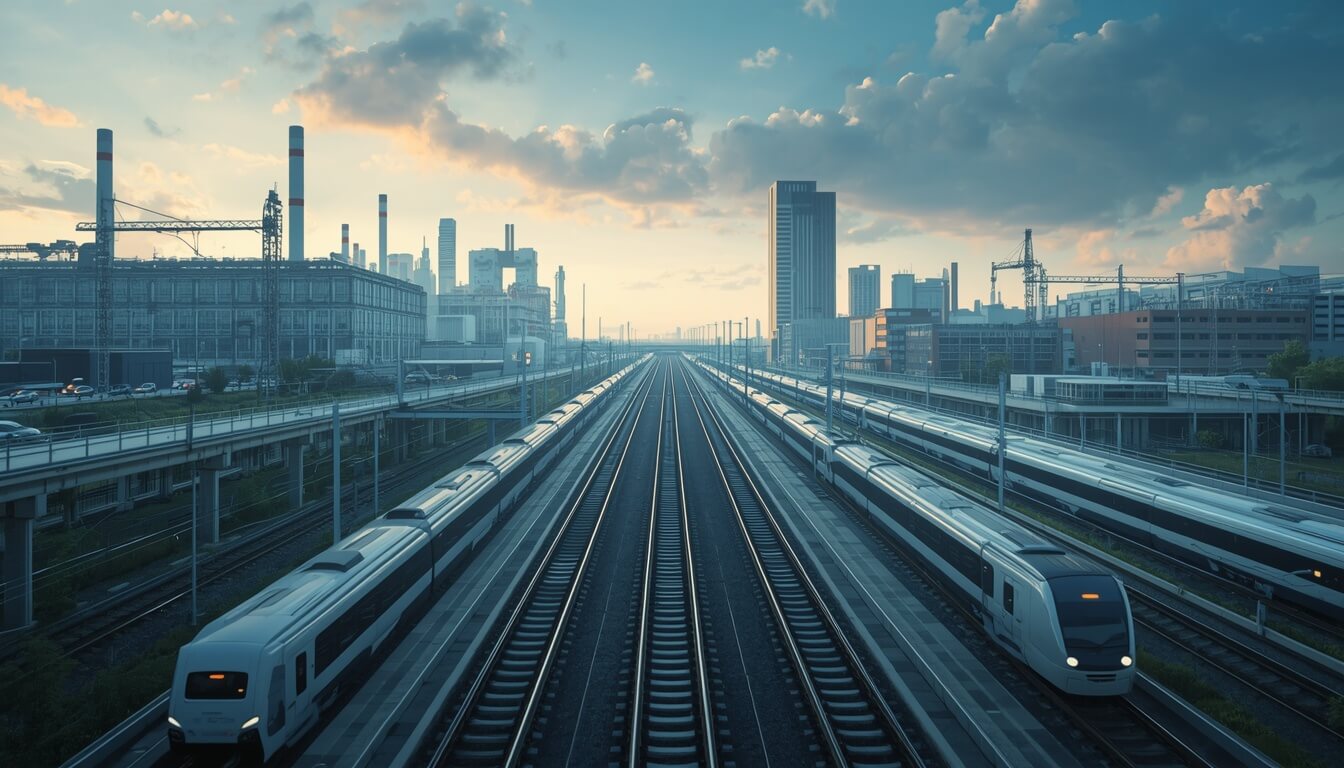
Electrification is moving beyond the power sector and increasingly becoming a force of change across the wider economy. Transportation, manufacturing, construction and infrastructure are all being affected as technologies that once depended directly on fossil fuels increasingly use electricity instead.
This transformation is closely connected to the growth of electricity demand. As more economic activities become electrified, electricity becomes a more important input into the operation of companies, cities and infrastructure networks.
The result is not simply a change in the type of energy being consumed. It can also change how industries are organized, where investment takes place and what infrastructure is required.
The scale and speed of these changes will differ significantly between sectors, but several major areas are already becoming part of the broader electrification process.
Transportation Moves Toward Electricity
Transportation is one of the clearest examples of electrification changing an established economic system.
For more than a century, road transportation has been built around internal combustion engines powered primarily by gasoline and diesel. Electric vehicles introduce a different model in which energy is supplied through charging infrastructure and converted into motion by electric motors.
The shift affects much more than the vehicle itself.
A growing electric vehicle fleet requires charging stations, connections to electricity networks and potentially additional generation capacity. Charging patterns can also influence electricity demand at different times of the day.
Private vehicles are only one part of this transformation:
- Public buses
- Delivery vehicles
- Commercial fleets
- Some heavy-duty transportation applications
Rail transportation provides another example. Electric rail systems have existed for decades in many countries, but continued investment in rail infrastructure can further increase the role of electricity in passenger and freight mobility.
The transition can therefore create new infrastructure requirements while reducing the role of traditional fuel distribution networks in certain segments.
Charging Infrastructure Becomes Part of the Transport System
The expansion of electric vehicles creates a new relationship between transportation infrastructure and the electricity grid.
Traditional vehicles can be refueled relatively quickly at dedicated fuel stations, where liquid fuels are stored and distributed. Electric vehicles instead depend on electrical connections that can range from household charging equipment to large high-power charging stations.
The location and capacity of charging infrastructure therefore become important considerations.
| Environment | Charging requirement |
|---|---|
| Urban areas | Substantial charging capacity where vehicles are concentrated |
| Highways | Strategically positioned fast-charging infrastructure |
| Commercial fleets | Dedicated facilities supporting many vehicles simultaneously |
This creates opportunities for companies involved in charging equipment, grid infrastructure, software and energy management.
It also means that transportation planning and electricity planning increasingly overlap.
Industry Faces a Different Electrification Challenge
Industrial electrification is more complex because manufacturing processes vary enormously.
Some industrial activities can adopt electric technologies relatively easily. Electric motors are already widespread, while electric furnaces, induction heating and other technologies can replace fossil-fuel-based processes in specific applications.
Other processes are considerably more difficult to electrify.
Industries that require extremely high temperatures or use fossil fuels as chemical feedstocks may need alternative technologies rather than simple substitution with electricity.
In these cases, hydrogen, synthetic fuels, carbon-management technologies or other approaches may become part of the transition.
This means industrial electrification is unlikely to follow a single technological path.
Different industries will combine direct electrification with other energy technologies depending on technical requirements, electricity prices, infrastructure availability and investment costs.
Electricity Could Influence Where Factories Are Built
As industrial processes become more dependent on electricity, access to power could become increasingly relevant to industrial location decisions.
A factory requiring substantial electricity capacity needs more than suitable land and transportation connections. It also needs a grid capable of supplying the required power reliably.
This can influence the attractiveness of different regions.
Areas with strong transmission networks, abundant generation capacity and competitive electricity prices may have an advantage when attracting electricity-intensive manufacturing projects. Conversely, regions with limited grid capacity may face delays even when companies are prepared to invest.
The issue becomes particularly important for industries such as:
- Semiconductor manufacturing
- Metals production
- Chemicals
- Advanced manufacturing
Industrial development and energy infrastructure can therefore become increasingly interconnected.
Data Centers Add a New Infrastructure Challenge
The digital economy provides another example of how electrification is changing infrastructure requirements.
Data centers require continuous electricity to operate servers, networking equipment and cooling systems. The expansion of cloud computing and artificial intelligence is increasing demand for computing capacity in many markets.
This creates a new type of infrastructure project in which access to electricity can be as important as access to telecommunications networks.
Large data centers may require significant power connections, dedicated substations and long-term electricity supply arrangements. Their development can therefore have consequences for local electricity systems.
The relationship between computing and electricity is particularly relevant as artificial intelligence expands.
More powerful AI systems require increasingly sophisticated computing infrastructure, while the construction of additional data-center capacity can increase electricity requirements in the regions where those facilities are located.
This illustrates how electrification is no longer confined to traditional industrial sectors. Digital infrastructure is becoming another important electricity-consuming component of the economy.
Buildings Become More Closely Connected to the Grid
Buildings are another major area where electrification can change energy consumption.
Heating has traditionally relied heavily on natural gas, oil and other fuels in many countries. Heat pumps provide an alternative by using electricity to transfer heat rather than producing it primarily through combustion.
Electric heating can increase electricity demand, particularly during periods of cold weather.
At the same time, buildings can increasingly become active participants in electricity systems.
- Smart thermostats
- Batteries
- Solar panels
- Managed charging
These technologies can allow electricity consumption to respond more dynamically to grid conditions. Instead of simply consuming electricity whenever it is required, some buildings may be able to shift part of their consumption to different periods.
This could become increasingly valuable as electricity systems incorporate larger amounts of variable renewable generation.
Infrastructure Must Expand Alongside Electrification
The transformation of individual sectors creates a broader infrastructure challenge.
Electrification requires electricity networks capable of supporting new patterns of consumption. Transmission lines may need to connect new generation facilities with demand centers. Distribution networks may require reinforcement in areas experiencing rapid growth in electric vehicles, heat pumps or industrial activity.
Substations, transformers and other components can also become important constraints.
Infrastructure development can be particularly challenging because electricity networks often require long planning, permitting and construction periods.
A company may be able to purchase electric vehicles relatively quickly, for example, while upgrading the local electricity network to support large-scale charging can take considerably longer.
This difference in timescales can create bottlenecks.
The relationship between growing electricity consumption and the wider energy system is examined in Why Electricity Demand Could Become a Defining Economic Trend.
Construction and Urban Planning Could Change
Electrification can also influence the physical structure of cities and industrial areas.
Charging stations require space and electrical connections. New substations may be needed to support expanding urban demand. Industrial parks may require dedicated grid infrastructure. Data centers can require large amounts of land and electricity capacity simultaneously.
Urban planners therefore increasingly have to consider electricity infrastructure alongside roads, buildings, telecommunications and public transportation.
The traditional distinction between energy infrastructure and other forms of infrastructure becomes less clear.
A new industrial district, for example, may depend on the availability of roads and railways, but also on sufficient electricity capacity. A residential development with widespread electric heating and vehicle charging may place very different demands on the local grid than an equivalent development built around gas heating and conventional vehicles.
Electrification Can Change Business Models
The shift toward electricity can also create new commercial opportunities.
Energy companies may expand into charging infrastructure, battery storage and distributed energy management. Technology companies can develop software that helps businesses optimize electricity consumption. Automotive manufacturers can become more closely connected to energy services through charging and vehicle-management platforms.
Industrial companies may invest in on-site generation and storage to improve energy resilience or manage costs.
Utilities, meanwhile, may increasingly interact with customers not only as electricity suppliers but also as providers of flexibility, grid services and energy-management solutions.
These changes can create new markets at the intersection of energy, transportation, technology and infrastructure.
The Role of Storage and Flexible Demand
Electricity systems supporting a more electrified economy also need greater flexibility.
Batteries can store electricity and release it when demand rises. Industrial consumers may be able to shift some electricity use to different periods. Electric vehicle charging can potentially be managed according to grid conditions.
These mechanisms can become particularly relevant when electricity generation depends more heavily on variable sources such as solar and wind.
Instead of designing the entire system around a constant relationship between generation and consumption, future electricity networks can increasingly combine generation, storage and flexible demand.
This could change how companies think about energy management.
Electricity consumption may become something that businesses actively optimize rather than simply pay for as a fixed operating expense.
Electrification Could Reshape Economic Geography
One of the broader consequences of electrification could be a change in the geographic distribution of economic activity.
Regions with abundant electricity generation, strong transmission infrastructure and access to new energy resources may become attractive locations for electricity-intensive industries.
This could include manufacturing, data centers, hydrogen production and other activities requiring substantial amounts of power.
At the same time, regions with constrained grids may face difficulties accommodating new projects regardless of other advantages.
Energy infrastructure could therefore become an increasingly important factor in competition between industrial regions.
The development of new power plants, transmission corridors, charging networks and storage facilities could influence where companies invest and where new economic clusters emerge.
A More Electrified Industrial System
The common element across these developments is the growing importance of electricity as an economic infrastructure.
Transportation depends increasingly on charging networks. Industry requires electricity for a wider range of processes. Buildings can shift heating and other consumption toward electricity. Data centers require continuous power for the digital economy. New infrastructure is needed to connect all of these activities to the grid.
This does not mean that fossil fuels will disappear at the same speed across every sector. Some applications remain difficult to electrify, while different countries will follow different technological and economic paths.
What is changing is the role electricity plays within the overall economic system.
- The first stage of this transformation is the expansion of electrification itself.
- The second is the resulting increase in electricity demand.
- The third is the adaptation of transportation, industry and infrastructure to an economy in which electricity becomes an increasingly central energy carrier.
The scale of that transformation will ultimately depend not only on the adoption of electric technologies, but also on the ability to build the generation, grids, storage and infrastructure required to support them. That makes electrification a long-term economic transformation involving far more than the energy sector alone.
For the broader evolution of the energy system, see The Global Electrification Trend and the Transformation of Energy Systems.