
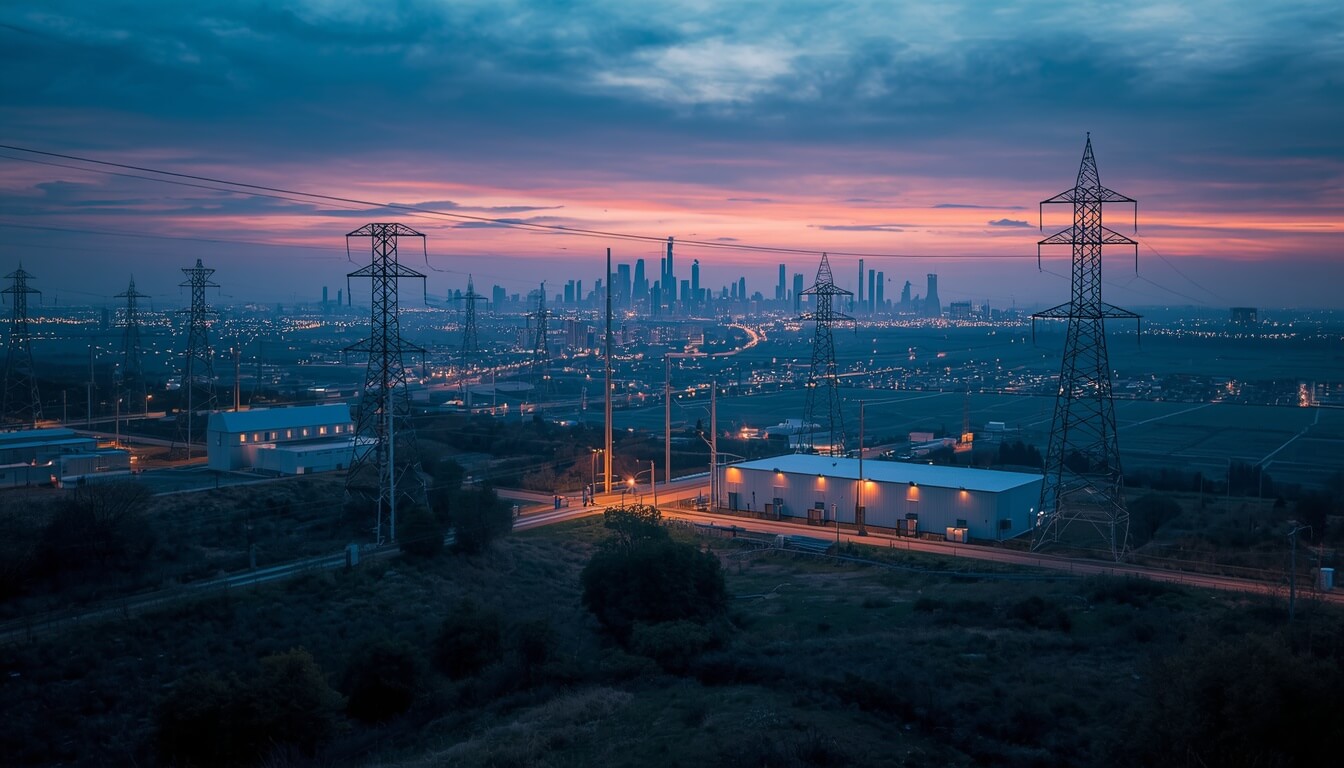
Electrification is becoming one of the most important structural changes taking place across the global economy. For more than a century, modern economic activity has depended heavily on fossil fuels, with coal, oil and natural gas supplying energy directly to factories, vehicles, buildings and power systems.
Today, a different model is gradually emerging: an increasing share of energy consumption is being delivered through electricity.
The transition is not simply about replacing gasoline cars with electric vehicles or installing more renewable power plants. It involves a broader transformation of how energy is produced, transported, stored and consumed. Electricity is increasingly becoming the common energy carrier connecting transportation, industry, buildings, digital infrastructure and emerging technologies.
This shift is creating new requirements for power generation and electricity networks while changing the relationship between energy production and economic activity.
From Fossil Fuels to an Increasingly Electric Economy
Historically, many forms of energy consumption have occurred without electricity. Cars burn gasoline or diesel inside internal combustion engines. Buildings often use natural gas or oil for heating. Industrial facilities can burn coal, natural gas or other fuels directly to generate high-temperature heat.
Electrification changes this structure by using electricity as an intermediate energy source.
An electric vehicle, for example, does not consume petroleum directly. Electricity generated somewhere else is transmitted through the grid and ultimately powers the vehicle's motor. Similarly, heat pumps use electricity to move heat rather than generating heat primarily through the combustion of natural gas or heating oil.
The economic significance of this process comes from its scale. Electrification connects sectors that were previously dependent on different fuel systems to the same electricity infrastructure.
As a result, changes in transportation, buildings and industry can increasingly influence electricity demand at the same time.
This creates a feedback loop between the expansion of electricity consumption and investment in the power system. As more activities become electrified, additional generation, transmission, distribution and storage capacity may be required.
The implications for electricity demand are explored in greater detail in Why Electricity Demand Could Become a Defining Economic Trend.
Renewable Energy and the Changing Generation Mix
Electrification does not automatically determine how electricity is produced. An electric vehicle, factory or building can consume electricity regardless of whether that electricity comes from coal, natural gas, nuclear power, hydroelectricity, wind or solar generation.
However, electrification is developing alongside a major transformation in the electricity-generation mix.
Solar and wind power have expanded substantially in many parts of the world, while nuclear power, hydropower and natural gas continue to play important roles in different electricity systems. The combination varies considerably between countries because energy resources, infrastructure, regulation and economic conditions differ.
This means the global electrification process is not following a single model.
- Some countries are expanding renewable generation rapidly.
- Others are investing in nuclear power or natural gas while maintaining existing generation capacity.
- Some electricity systems are simultaneously adding multiple technologies in an effort to improve reliability, reduce emissions or meet rising demand.
The result is a more complex electricity system in which generation capacity, transmission networks, storage and demand management become increasingly important.
Electricity Grids Become More Strategically Important
The traditional electricity grid was largely designed around a relatively predictable relationship between centralized power plants and consumers.
Electrification can make that relationship more complicated.
Renewable sources such as solar and wind are variable, while electricity consumption can increasingly fluctuate according to the charging of vehicles, operation of industrial equipment, heating and cooling demand, and the electricity requirements of digital infrastructure.
Grid infrastructure therefore becomes a critical component of the transition.
| Grid component | Role in electrification |
|---|---|
| Transmission networks | Connect areas with electricity generation to areas with consumption |
| Distribution networks | Require upgrades as households and businesses draw more electricity |
| Storage systems | Help shift electricity availability across time |
| Demand-response technologies | Can alter consumption patterns |
These investments can take years to plan and build, meaning that electricity infrastructure can become a constraint on the speed at which electrification develops.
Electrification and Digital Infrastructure
Another important development is the rapid growth of electricity-intensive digital infrastructure.
Data centers, artificial intelligence systems, cloud computing and telecommunications networks all depend on reliable electricity. As computing capacity expands, electricity increasingly becomes an essential input into digital economic activity.
This creates an increasingly interconnected relationship between two major infrastructure trends: electrification and digitization.
A modern economy requires both physical energy infrastructure and digital infrastructure. Electricity supports computing, while digital technologies can also improve the operation of electricity networks through forecasting, automation and real-time monitoring.
Artificial intelligence could further increase the importance of this relationship. Large-scale AI systems require substantial computing resources, and their expansion can contribute to additional demand for data-center electricity.
The result is that electricity is no longer simply an input for traditional industrial production. It is becoming an increasingly important foundation for services, communications and information processing.
Transportation as a Major Electrification Frontier
Transportation represents one of the most visible areas of electrification.
Electric cars, buses, trucks and rail systems are expanding the role of electricity in mobility. Charging infrastructure is developing alongside vehicle adoption, creating new interactions between transportation systems and electricity networks.
The shift also changes where energy is consumed.
- With conventional vehicles, energy is distributed through fuel stations and consumed directly by combustion engines.
- Electric vehicles instead rely on the electricity grid and charging infrastructure.
This creates opportunities as well as infrastructure challenges. Charging can potentially be scheduled according to electricity prices, grid conditions or renewable generation. At the same time, concentrated charging demand can place additional pressure on local electricity networks.
The transformation extends beyond passenger cars. Railways have long relied on electricity in many regions, while electrification is also being explored for commercial vehicles, ports, industrial machinery and other forms of transport.
Industry Faces a More Complex Transition
Industrial electrification is potentially more difficult than electrifying passenger transportation because many industrial processes require large amounts of energy and, in some cases, extremely high temperatures.
Nevertheless, electricity is becoming increasingly important in industrial applications.
Electric motors, induction heating, electric boilers and other technologies can replace some direct fossil-fuel consumption. In other cases, electricity can be used to produce fuels or industrial inputs that are difficult to obtain through direct electrification.
The consequences extend beyond individual factories.
Industrial electrification can influence the location of future manufacturing facilities because companies increasingly need access to reliable and competitively priced electricity. Regions with abundant generation capacity, strong grids and suitable infrastructure may therefore become more attractive for energy-intensive industries.
This is one reason why electrification is not only an environmental or technological issue. It can also influence industrial geography and long-term investment decisions.
The broader consequences for economic sectors are examined in How Electrification Could Reshape Transport, Industry and Infrastructure.
The Importance of Energy Storage
The growth of variable renewable generation has increased attention on electricity storage.
Batteries can store electricity when supply is available and release it when demand increases. Other technologies, including pumped-storage hydropower and emerging long-duration storage systems, can provide different forms of flexibility.
Storage is particularly relevant because electricity must generally be balanced continuously. Unlike many traditional fuel systems, electricity cannot simply be stockpiled in enormous quantities at every point of the network.
As electrification expands, storage can become part of a broader system that combines generation, transmission, distribution and flexible demand.
Electric vehicles may eventually contribute to this flexibility as well. Technologies such as managed charging and vehicle-to-grid systems could allow some vehicles to interact more dynamically with electricity networks, although their practical adoption depends on infrastructure, regulation, consumer behavior and economics.
A Transformation That Extends Beyond Energy
The global electrification trend should therefore be viewed as a transformation of economic infrastructure rather than as a single technology transition.
Electricity increasingly connects energy production with transportation, manufacturing, buildings, communications and digital services. At the same time, the generation of electricity is itself undergoing structural change.
This creates a system in which decisions made in one sector can increasingly affect others.
- Higher electric vehicle adoption can influence distribution networks.
- New industrial facilities can increase regional electricity demand.
- Data-center construction can affect generation requirements.
- Renewable expansion can increase the need for transmission and storage.
- Grid investments can determine how quickly new electricity-consuming technologies can be deployed.
The central question is therefore not simply how quickly individual technologies become electric. It is whether electricity systems can expand and adapt quickly enough to support the increasing number of economic activities that depend on them.
Conclusion
Electrification is gradually changing the architecture of the global energy system. Transportation, industry, buildings and digital infrastructure are becoming increasingly connected through electricity, while power generation itself is evolving through the expansion of renewable energy, nuclear power, storage and other technologies.
The transition will not occur at the same speed everywhere. Energy resources, infrastructure, government policies, investment conditions and economic structures differ significantly across countries and regions.
Nevertheless, the direction of change is significant: electricity is becoming an increasingly important platform for economic activity.
Understanding this transformation requires looking beyond individual technologies and examining the growth of electricity consumption itself. As more sectors become dependent on electricity, the scale and timing of future demand could become an increasingly important economic variable.
That question leads to the next stage of the analysis: Why Electricity Demand Could Become a Defining Economic Trend.