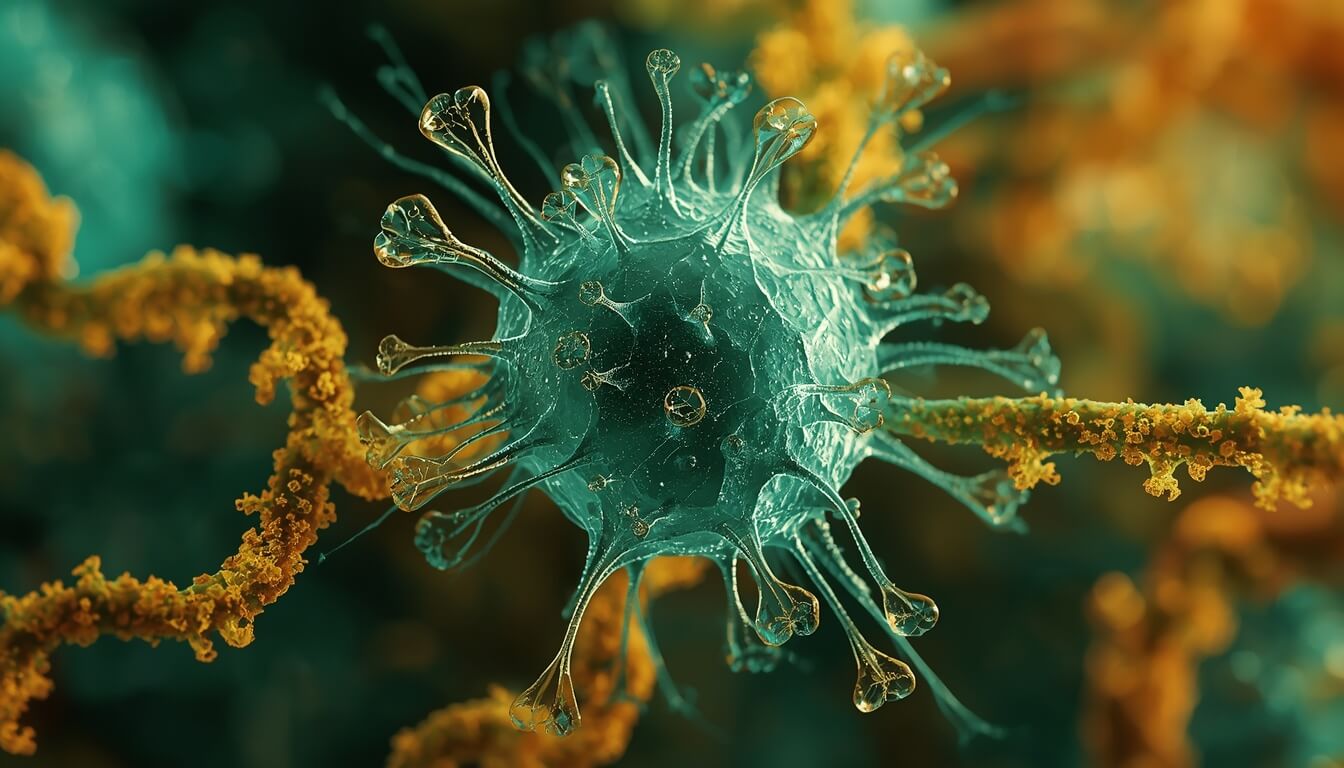
Biohub, the U.S. government, Google DeepMind, Isomorphic Labs and Meta announced an expanded $1.8 billion AI biology initiative on October 7, 2026, aimed at creating the scientific data needed to develop artificial intelligence models capable of predicting how living cells behave.
The project, known as the Virtual Biology Initiative, brings together government agencies, major technology companies and Biohub, the nonprofit research organization founded by Mark Zuckerberg and Priscilla Chan.
The $1.8 billion commitment includes funding, existing scientific datasets, computing resources and measurement technologies. The goal is to make biological research more predictive, potentially helping scientists understand diseases and identify promising treatments faster.
For investors, the announcement highlights a growing trend: artificial intelligence is expanding beyond chatbots and software into biotechnology, pharmaceuticals and healthcare research.
What Is the $1.8 Billion AI Biology Initiative?
The Virtual Biology Initiative was originally announced in April 2026 with a $500 million commitment from Biohub. The October 7 expansion brings additional government and technology partners into the effort.
The initiative focuses on one of the biggest challenges in modern medicine: understanding how living cells function and respond to diseases, genetic changes and potential treatments.
Researchers aim to develop AI systems capable of predicting cellular behavior. These systems are often described as virtual cell models.
Instead of relying entirely on laboratory experiments to understand how cells might respond to a particular drug, scientists could eventually use AI to predict possible outcomes before conducting physical tests.
For example, researchers studying a potential cancer treatment might use a virtual cell model to identify which biological responses deserve further investigation.
That would not eliminate laboratory experiments or clinical trials. It could, however, help researchers prioritize promising approaches and avoid spending resources on less useful experiments.
The immediate objective is to generate and organize large, standardized biological datasets that researchers can use to train and validate AI models.
The reported $1.8 billion is a combined commitment across multiple organizations, not revenue for any individual company or an amount already spent.
Who Is Providing the $1.8 Billion?
The initiative combines several types of public and private contributions.
- Biohub: The nonprofit committed $500 million to the Virtual Biology Initiative when it was announced in April 2026. Of that amount, $400 million supports new biological measurement technologies, while $100 million funds external research.
- Google DeepMind, Isomorphic Labs and Meta: The three organizations are collectively investing $300 million to support the development of biological datasets and technologies needed for predictive AI models.
- U.S. Department of Energy: The department will invest more than $500 million over five years in laboratory measurements, biological modeling and advanced computing.
- National Institutes of Health: The NIH will coordinate existing datasets, repositories and scientific resources developed through more than $500 million in previous federal investment.
The NIH contribution is particularly important to understand. It involves resources developed through earlier investments, rather than an entirely new $500 million funding commitment.
The combined initiative therefore represents a substantial commitment of money, scientific infrastructure, existing data and computing capabilities.
Why Are Google and Meta Investing in AI Biology?
Google and Meta have become major players in artificial intelligence, but their research interests extend beyond consumer applications.
Both companies see potential in applying advanced AI capabilities to scientific problems that are difficult to solve using traditional methods.
Google DeepMind has already demonstrated the usefulness of AI in biology through AlphaFold, a system designed to predict the three-dimensional structures of proteins.
Understanding protein structures can help researchers investigate diseases and identify potential targets for new medicines.
Isomorphic Labs, an Alphabet-affiliated company focused on AI-powered drug discovery, is also participating in the initiative.
Meta's involvement extends its AI research activities into a scientific field where large datasets, advanced models and computing infrastructure could enable new discoveries.
However, the companies are not necessarily pursuing identical commercial strategies.
Google and Isomorphic Labs have research and business activities connected to drug discovery, while Meta's participation also supports broader scientific research and AI development.
Our analysis of how OpenAI, Google, Anthropic and Meta are pursuing different AI strategies explores how major technology companies are competing through different approaches to artificial intelligence.
Participation in scientific research does not automatically create a profitable healthcare business. Commercial benefits will depend on whether the technology produces useful discoveries and whether companies can develop viable applications around those capabilities.
How Could AI Make Drug Discovery Faster and Less Expensive?
Developing a new medicine is a complicated process that can take many years.
Scientists must identify biological targets, discover or design potential treatments, conduct laboratory testing and eventually evaluate promising candidates in human clinical trials.
Many potential drugs fail before reaching patients.
One major challenge is that biological systems are extraordinarily complex. A treatment that looks promising in an early experiment may behave differently in a living organism.
AI could help researchers investigate some of these problems more efficiently.
1. Identifying promising drug targets
AI models could help scientists understand which genes, proteins or cellular processes are involved in particular diseases.
That could make it easier to identify areas where new treatments might be effective.
2. Predicting cellular responses
Virtual cell models could estimate how cells might respond to different compounds, genetic changes or environmental conditions.
Researchers could then prioritize laboratory experiments based on those predictions.
3. Reducing unnecessary experiments
If AI helps eliminate unlikely candidates earlier, scientists may spend less time and money investigating approaches with a low probability of success.
However, these are potential benefits rather than proven outcomes of the new initiative.
AI predictions must be validated against real biological evidence, and promising laboratory results do not guarantee successful clinical trials.
The initiative could improve early-stage research without necessarily eliminating the largest costs and uncertainties associated with developing approved medicines.
Why Is the U.S. Government Involved?
The participation of the U.S. Department of Energy and the National Institutes of Health makes the initiative a major public-private scientific collaboration.
The Department of Energy operates national laboratories with advanced computing systems and scientific equipment that can support large-scale biological research.
Through the Genesis Mission, the department plans to contribute more than $500 million over five years to laboratory measurements, data collection, modeling and computation.
These capabilities are valuable because developing predictive biological AI models requires enormous amounts of high-quality experimental data.
The NIH will contribute by coordinating biomedical datasets, repositories and knowledge resources created through previous federal research programs.
Biohub will work with the NIH to standardize those resources for AI model training.
The objective is to create an open scientific foundation that researchers across institutions can use to develop and improve biological models.
For investors, government participation may help accelerate the development of scientific infrastructure that individual companies would struggle to build independently.
However, public funding and access to research resources do not guarantee commercial success.
Why Could AI Biology Become an Important Economic Opportunity?
The pharmaceutical industry spends substantial amounts of money researching treatments, testing compounds and developing new medicines.
Even modest improvements in research efficiency could create economic value.
For example, if AI allows a pharmaceutical company to identify unsuccessful drug candidates earlier, it could redirect resources toward more promising research programs.
That may reduce wasted spending and improve the productivity of scientific teams.
AI biology could also create demand for specialized computing services, research software and biological data platforms.
This illustrates a broader economic shift: AI is moving into industries where its value may come from improving existing processes rather than replacing entire businesses.
Our article on how artificial intelligence is transforming the global economy examines how AI adoption could influence productivity and create opportunities across different industries.
Healthcare is particularly interesting because improvements in research and development can have consequences beyond the technology sector.
More efficient drug discovery could eventually benefit pharmaceutical companies, research organizations, healthcare providers and patients.
But the potential economic opportunity should not be confused with guaranteed investment returns.
Companies will still need to demonstrate that their AI tools produce reliable results and generate sustainable revenue.
Which Companies and Sectors Could Benefit?
The initiative could influence several areas of the technology and healthcare industries.
Alphabet (GOOGL)
Google DeepMind's experience in advanced AI models and Isomorphic Labs' focus on drug discovery position Alphabet within the emerging AI biology ecosystem.
Successful research could strengthen its scientific capabilities and potentially support future commercial partnerships.
However, the initiative does not establish how much additional revenue Alphabet might generate.
Meta Platforms (META)
Meta's participation in the collective $300 million investment highlights its interest in AI research beyond advertising and social media.
Scientific collaboration could expand the applications of its AI technology, although any direct financial benefit remains uncertain.
Pharmaceutical and biotechnology companies
Drug developers could eventually benefit from tools that improve biological target identification and early-stage research.
The impact will depend on whether these tools demonstrate measurable improvements over existing methods.
Cloud computing and semiconductor companies
Training advanced biological AI models requires substantial computing infrastructure.
Nvidia is supporting the initiative through accelerated computing infrastructure, specialized software and technical expertise.
More broadly, scientific AI could create additional demand for processors, cloud services and research computing platforms.
However, the announcement does not establish specific future hardware purchases or revenue amounts for these suppliers.
What Are the Biggest Risks and Limitations?
Despite its potential benefits, AI-powered biology faces significant challenges.
The first is scientific accuracy.
Human biology is complex, and an AI model trained on laboratory data may not accurately predict how a treatment behaves inside the human body.
A convincing prediction is not the same as a proven medical result.
The second challenge is data quality.
AI systems depend on reliable and representative information. Incomplete or inconsistent biological datasets can produce misleading predictions.
The initiative specifically aims to address this limitation by generating larger, more standardized datasets covering different cell types and experimental conditions.
The third is commercial uncertainty.
Even if researchers develop effective virtual cell models, companies must determine how to turn those capabilities into commercially valuable products or services.
There are also questions involving intellectual property, access to research data and regulatory requirements.
Finally, drug development remains subject to extensive clinical testing and regulatory approval.
AI may improve the research process, but it does not remove the need to demonstrate that medicines are safe and effective.
What Does the Initiative Mean for Investors?
For investors, the $1.8 billion Virtual Biology Initiative provides a concrete example of AI expanding into scientific research and healthcare.
It shows that major technology companies, government institutions and research organizations are committing substantial resources to developing the foundations of predictive biological AI.
However, the financial implications differ depending on the company.
For Alphabet and Meta, AI biology represents one part of much larger businesses. Their financial performance will continue to depend heavily on their existing operations, and the initiative does not establish an immediate new revenue stream.
For biotechnology and pharmaceutical companies, reliable AI models could eventually improve research productivity, reduce unnecessary experiments and support more efficient drug development.
For computing infrastructure providers, scientific AI could become another source of demand alongside conventional AI applications.
But investors should avoid assuming that every company associated with AI drug discovery will benefit financially.
The most important questions are whether the technology works, whether organizations will pay for its applications and whether companies can generate attractive returns from their investments.
What Happens Next?
The next stage will be turning the initiative's commitments into measurable scientific progress.
Biohub aims to make an initial large-scale dataset available within approximately one year, while developing more capable predictive biological models over a longer period of roughly five years.
Several developments will help determine whether the initiative succeeds.
Funding and implementation: The deployment of committed resources, expansion of laboratory capabilities and coordination among participating institutions will determine how quickly the project advances.
Biological datasets: Researchers will need to generate large amounts of reliable information covering how different cells respond to genetic changes, treatments and environmental conditions.
Scientific validation: Independent experiments will be essential to determine whether AI predictions accurately reflect real cellular behavior.
Pharmaceutical applications: Research partnerships and practical demonstrations could show whether the models can help identify promising drug candidates more efficiently.
Access to research data: The initiative aims to develop open scientific resources, making the availability and usability of its datasets important measures of progress.
The $1.8 billion commitment represents a substantial investment in the foundations of AI-powered biological research.
It does not mean that AI can already replace traditional drug development or that new treatments will reach patients immediately.
The real opportunity is to make biological research more predictive, helping scientists investigate diseases and potential treatments with better data and greater efficiency.
For investors, the initiative illustrates how artificial intelligence is spreading across the economy, while reinforcing an important distinction: scientific progress and financial returns are not the same thing.
This article is for informational purposes only and does not constitute investment advice. Always do your own research before making investment decisions.