
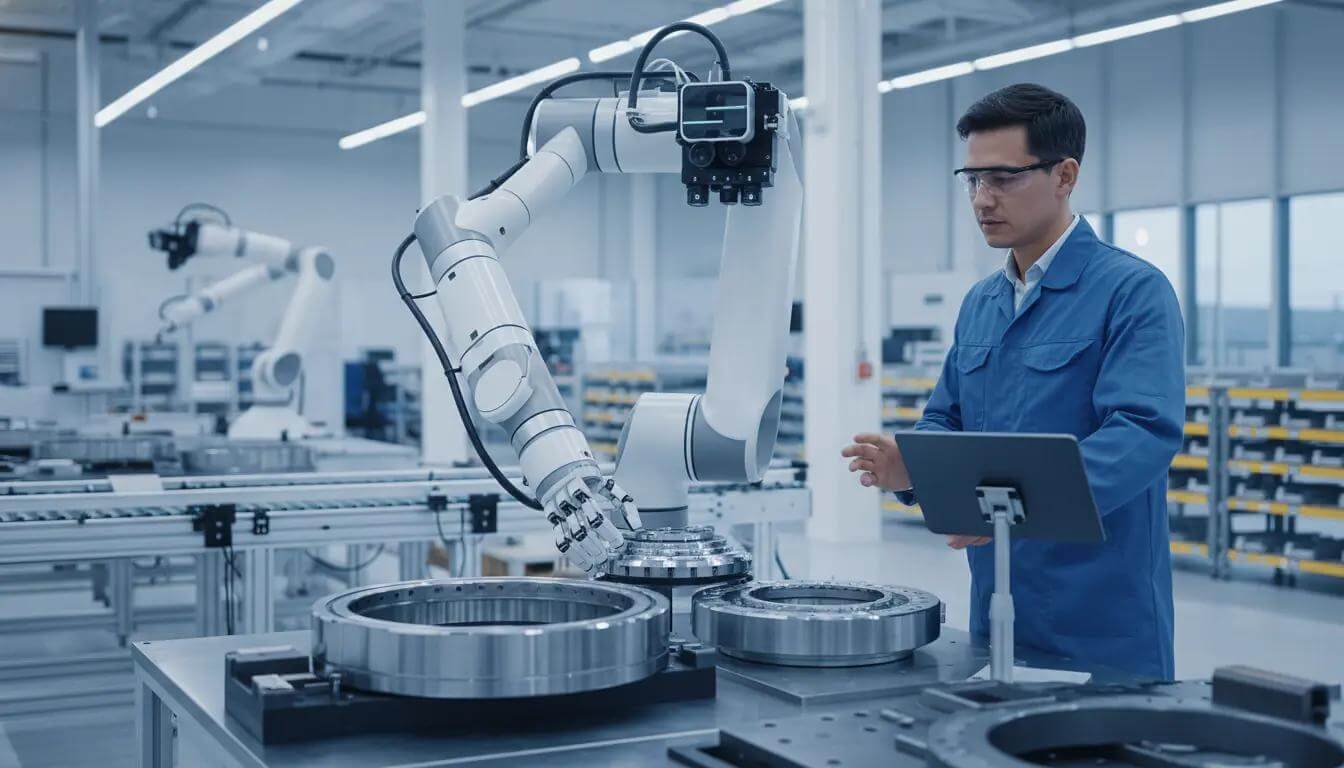
AI is most likely to replace or reduce jobs built around repetitive digital tasks, including data entry, routine administration, basic customer support, and standardized content production. Jobs requiring hands-on work, human judgment, personal relationships, and direct responsibility are generally harder to automate completely.
Electricians, plumbers, nurses, and skilled technicians may be more resilient, while software developers, accountants, and other professionals could see significant changes in how they work.
The key distinction is between AI replacing individual tasks and AI replacing entire jobs. Most occupations involve a combination of activities that can be automated and responsibilities that still require people.
For workers, understanding this difference helps identify valuable skills. For investors, it reveals which industries could face disruption and which businesses may benefit from changing labor demand.
Which Jobs Are Most at Risk From AI?
Jobs involving predictable, repeatable information processing face some of the greatest exposure to AI automation. Modern AI systems can summarize documents, generate text, classify records, analyze information, and answer routine questions.
These capabilities overlap with everyday responsibilities across many office-based occupations.
| Job category | AI exposure | Why |
|---|---|---|
| Data entry and routine clerical work | High | Many tasks involve structured, repetitive information |
| Basic customer support | High | Chatbots can handle common questions and standardized requests |
| Administrative assistance | High | Scheduling, document preparation, and routine communication can be automated |
| Basic content production | High | AI can generate drafts, descriptions, and standardized marketing material |
| Bookkeeping and routine accounting support | Moderate to high | Software can automate transaction processing and reconciliation |
| Software development | Significant task exposure | AI can generate code, tests, and documentation, but human oversight remains important |
| Legal support and document review | Significant task exposure | AI can summarize and classify documents, while legal responsibility remains human |
These are qualitative assessments of task exposure, not predictions of job losses. Actual outcomes depend on how employers deploy AI and reorganize work.
For example, an administrative employee who mainly enters information may face greater automation pressure than someone who coordinates teams, manages client relationships, and resolves unusual problems.
Why AI May Reduce Hiring Before Eliminating Jobs
AI does not need to replace an entire employee to affect employment.
Consider a customer support department with 100 workers. If AI begins handling routine requests, the company might serve more customers without hiring additional staff.
Management could redirect existing employees toward complex cases, slow recruitment, or eventually reduce headcount. The outcome depends on customer demand, service quality, and the company's business strategy.
As a result, AI's employment impact may first appear through slower hiring, changing job descriptions, and pressure on certain wages rather than immediate mass layoffs.
What Does the Research Say About AI and Employment?
Major research organizations agree that AI could affect a substantial share of work, although exposure estimates should not be confused with forecasts of unemployment.
The International Monetary Fund estimated in 2024 that nearly 40% of global employment is exposed to AI, rising to approximately 60% in advanced economies.
That does not mean 40% of jobs will disappear. Exposure includes occupations where AI could complement employees and improve productivity, as well as those where it could replace certain activities.
The International Labour Organization has similarly emphasized that generative AI is more likely to transform many occupations than eliminate them entirely, with clerical work facing particularly high exposure.
The World Economic Forum's Future of Jobs Report 2025 projected that labor-market changes could create 170 million jobs and displace 92 million by 2030, producing a net gain of 78 million jobs.
However, these projections cover multiple economic forces, including technological change, demographics, and the green transition. They are not estimates of jobs created or eliminated by AI alone.
The central conclusion is that AI could significantly disrupt employment without necessarily causing a permanent decline in the total number of jobs.
Which Jobs Are Likely to Survive AI?
Occupations involving unpredictable physical environments, hands-on care, human relationships, and responsibility for important decisions may be more resistant to complete automation.
These jobs are not immune to change. AI may increasingly support their daily activities without replacing the people performing them.
Skilled Trades: Electricians, Plumbers, and Technicians
Electricians, plumbers, mechanics, and maintenance technicians work in physical environments that are difficult to standardize.
A plumber repairing an older building may encounter unexpected conditions requiring physical inspection and practical problem-solving. An electrician installing equipment must work safely with real systems and follow applicable regulations.
AI can assist with diagnostics, planning, and documentation, but software alone cannot complete these physical tasks. Robotics may eventually automate more of this work, although operating reliably across varied environments remains challenging.
These occupations could also benefit from AI infrastructure expansion. Data centers require electrical installations, cooling systems, maintenance, and connections to power networks.
For an explanation of the electricity infrastructure behind this expansion, see AI Energy Explained: How Much Electricity AI Uses and Who Pays for It.
Healthcare: Nurses, Therapists, and Care Workers
Healthcare combines technical knowledge with physical assistance, communication, and responsibility for patients.
AI can support medical documentation, information analysis, and certain diagnostic activities. However, helping patients move, responding to unexpected situations, and building trust require capabilities that are harder to automate fully.
Nurses, physical therapists, and care workers may therefore remain relatively resilient, even as AI changes their workflows and staffing requirements.
Education and Human Development
Teachers and trainers can use AI to prepare lessons, develop learning materials, and explain difficult concepts.
But education also involves motivating students, managing classrooms, recognizing individual difficulties, and responding to emotional or social needs.
AI could change how lessons are delivered while leaving educators responsible for student development and learning outcomes.
Management and Complex Decision-Making
Managers who negotiate agreements, coordinate teams, resolve conflicts, and accept responsibility for important decisions may retain significant roles.
AI can automate reporting, scheduling, and parts of business analysis. However, organizations still need people to establish priorities, evaluate competing interests, and remain accountable for results.
The resilience of a management position depends on its actual responsibilities, not simply its title.
Will AI Replace Software Developers and Other Highly Skilled Workers?
Advanced qualifications do not necessarily protect workers from AI. Many highly skilled professions involve digital information that AI can process.
Software development illustrates this distinction.
AI coding tools can generate functions, suggest corrections, explain existing code, and help create tests. These capabilities can reduce the time required for some programming activities.
However, building reliable software also involves understanding business requirements, designing systems, evaluating security, integrating components, and maintaining applications.
AI-generated code can contain errors or security vulnerabilities, making human review and testing essential.
The likely outcome is therefore more complicated than programmers simply disappearing. Employers may place greater value on developers who can design systems, solve complex problems, and verify AI-generated work, while demand for some routine coding tasks could decline.
Similar changes may occur in law, accounting, and finance, where AI can assist with document review, research, and standardized analysis without assuming full professional responsibility.
Could AI Create More Jobs Than It Eliminates?
AI could create employment through infrastructure investment, technology deployment, and new products and services. Whether those opportunities outweigh displaced jobs remains uncertain.
Developing and operating AI systems requires computing equipment, electricity, networking, cooling, cybersecurity, and maintenance.
Potential areas of employment growth include:
| Potential growth area | Examples of relevant roles |
|---|---|
| Data center construction | Electricians, construction workers, project managers |
| Power infrastructure | Grid engineers, electrical technicians, utility workers |
| Data center operations | Maintenance specialists, cooling technicians, network engineers |
| AI deployment | Software engineers, systems integrators, cybersecurity professionals |
| AI governance | Risk managers, compliance specialists, auditors |
These opportunities include both specialized technology positions and established skilled trades.
However, new infrastructure jobs do not automatically compensate for losses elsewhere. A displaced administrative worker cannot immediately become an electrical engineer or data center technician without suitable training.
Geography also matters. Regions attracting major infrastructure projects may gain employment while areas dependent on routine office work experience weaker hiring.
How Will AI Affect Salaries and Career Opportunities?
AI could widen wage differences between workers who use the technology effectively and those whose tasks become easier to automate.
For example, an experienced financial analyst might use AI to review company documents more quickly while applying professional judgment to assess financial risks.
That combination of industry knowledge and technology could increase productivity and professional value.
Meanwhile, workers performing standardized activities may face greater competition if employers can automate substantial portions of their responsibilities.
However, higher productivity does not automatically produce higher salaries. Wage outcomes depend on labor demand, competition, bargaining power, and how employers distribute financial benefits.
Entry-level employment is another important concern. If businesses automate routine assignments traditionally given to junior employees, they may hire fewer beginners even while continuing to need experienced professionals.
This could make career development more difficult because many workers gain expertise by progressing from basic assignments to more complex responsibilities.
Which Industries Could Benefit From AI-Driven Job Changes?
For investors, AI-related changes in employment could create opportunities in enterprise software, industrial automation, workforce training, and physical infrastructure.
The investment case depends on whether businesses can convert AI adoption into measurable revenue growth, cost savings, or stronger profitability.
Enterprise Software and Automation
Microsoft, Salesforce, and ServiceNow offer business software platforms with AI-related capabilities.
Companies may adopt these tools to automate customer interactions, streamline administrative processes, and improve employee productivity.
However, investors should examine whether customers are paying for AI features and whether those features contribute meaningfully to revenue or profit margins.
Industrial Automation and Robotics
Manufacturers may invest in automation to address labor shortages, improve production efficiency, and reduce operating costs.
Rockwell Automation and ABB are examples of companies involved in industrial automation.
Investors should distinguish traditional factory automation from newer AI applications. Not every robotics investment is directly driven by generative AI, and the financial benefits depend on actual customer spending.
Education and Workforce Training
Changing job requirements could increase demand for technical education, professional certification, and employee retraining.
Training providers may find opportunities among companies seeking to develop workers' AI skills or prepare employees for new responsibilities.
However, growing demand for training does not guarantee that every education technology business will become profitable. Product effectiveness, competition, and customer willingness to pay remain important.
AI Infrastructure and Energy
AI adoption requires physical infrastructure regardless of whether individual applications reduce or increase employment.
Power generation, electrical equipment, cooling systems, and data center construction are essential parts of the investment cycle.
For retail investors, suppliers of these systems may offer exposure to AI-related spending without depending entirely on the commercial success of individual AI software products.
The investment landscape is explored in Who Owns AI Energy Infrastructure and How Retail Investors Can Get Exposure.
What Are the Risks for Investors?
Companies may improve productivity through AI, but successful automation does not guarantee higher profits or better stock performance.
Several risks deserve attention:
- Implementation costs: AI requires spending on software, computing resources, integration, employee training, and oversight. These expenses can reduce expected savings.
- Uncertain productivity gains: Completing individual tasks faster does not necessarily translate into higher company profits.
- Competitive pressure: If competitors adopt similar technology, cost savings may be passed to customers through lower prices rather than retained as higher profit margins.
- Regulatory requirements: Privacy, discrimination, transparency, and employment laws may restrict certain applications or increase compliance costs.
- Workforce restructuring: Retraining, organizational changes, and employee turnover can create additional expenses.
Investors should look beyond announcements about AI adoption and examine whether companies demonstrate improvements in operating margins, revenue per employee, or cash flow.
Even when these indicators improve, other business developments may contribute to the results. AI should not automatically receive all the credit.
Could Governments Slow AI-Related Job Displacement?
Governments can influence AI adoption through labor laws, privacy requirements, education policies, and regulations covering automated employment decisions.
For example, AI systems used in hiring or employee evaluation may face requirements related to fairness, transparency, and human oversight, depending on the jurisdiction.
Public investment in vocational education and retraining can also help workers adapt to changing job requirements.
Regulation is unlikely to eliminate technological change, but it may influence how quickly employers deploy AI and what safeguards they must implement.
For investors, these developments matter because compliance requirements and deployment restrictions can affect operating costs and the commercial opportunities available to AI providers.
For a broader discussion of government authority and the limits of AI regulation, see Who Controls AI and Can It Be Stopped? What Investors Should Know.
What Should Workers Do to Prepare for AI?
The most practical approach is to evaluate which responsibilities within a job are becoming easier to automate and which skills remain valuable.
Three questions can help:
- Which of my daily tasks can AI already perform? Routine writing, information processing, and standardized analysis may face increasing automation.
- Which responsibilities still require human judgment or physical presence? These activities may offer greater resilience against complete automation.
- How can I use AI to improve my work? Learning to apply, supervise, and verify AI tools may strengthen professional opportunities.
Technical literacy, problem-solving, communication, and industry-specific expertise can help workers adapt as job requirements evolve.
For some people, developing skills in healthcare, skilled trades, or infrastructure-related occupations may also be worth considering.
Career decisions should still account for local employment conditions, training costs, individual abilities, and long-term demand rather than assuming any occupation is permanently safe from automation.
The Bottom Line: AI Will Change More Jobs Than It Completely Replaces
AI is likely to place the greatest pressure on repetitive digital work, particularly routine administration, data entry, basic customer support, and standardized information processing.
Skilled trades, hands-on healthcare, education, and roles involving complex human judgment may be more resistant to complete automation, although their daily responsibilities will continue to evolve.
For investors, the implications extend beyond companies using AI to reduce labor costs. Enterprise software providers, industrial automation businesses, workforce training companies, and AI infrastructure suppliers could all benefit from changes in how work is performed.
However, the scale and timing of these opportunities remain uncertain, and productivity improvements do not guarantee investment returns.
The most important question is not which jobs AI will eliminate overnight, but how employers and workers will adapt as technology changes the value of different skills and tasks.
Disclaimer: This article is for informational and educational purposes only and does not constitute financial or investment advice. All investments involve risk, including potential loss of principal.