
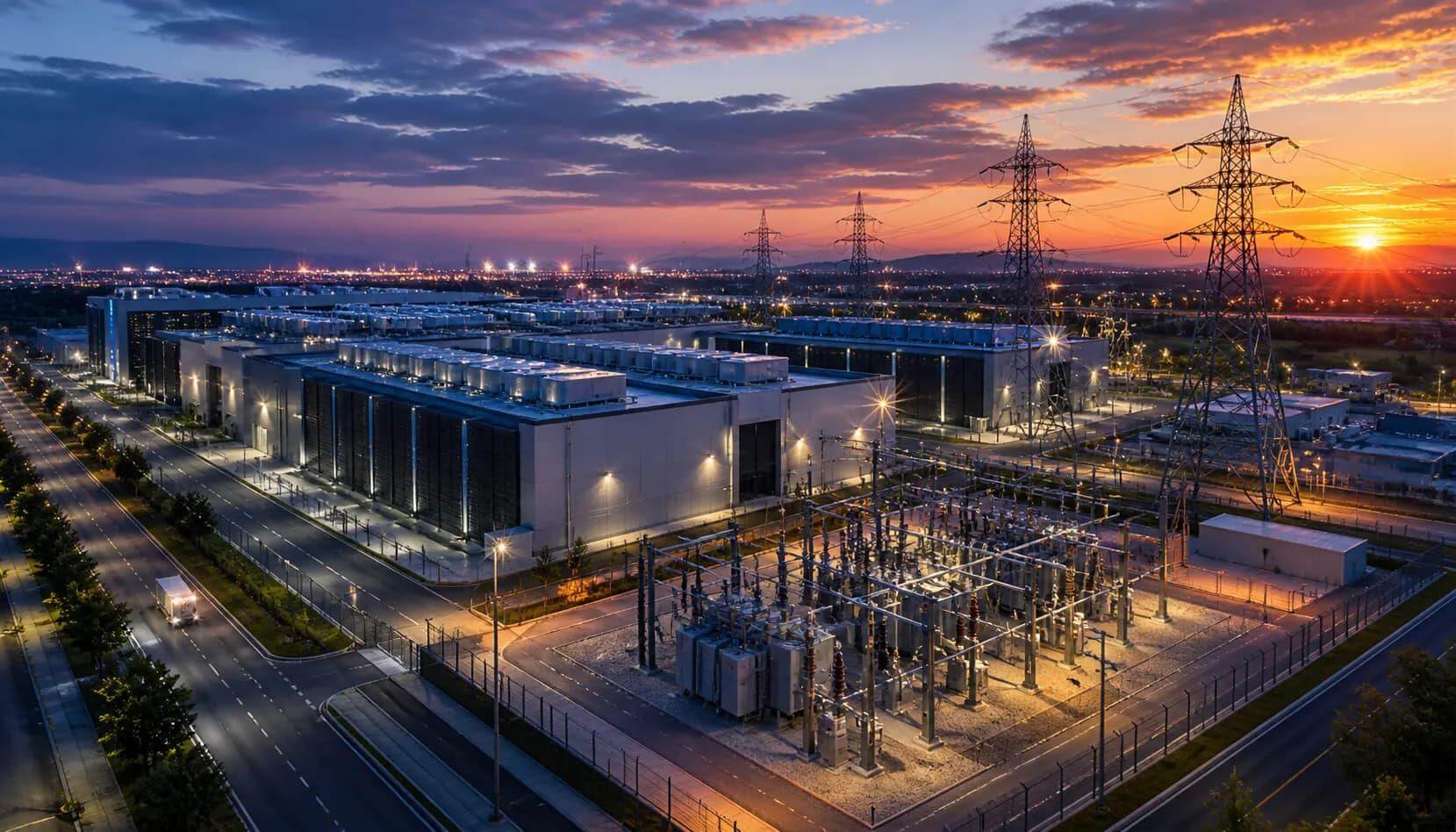
Artificial intelligence needs electricity to train AI models, run chatbots, generate images, and power business applications. That demand is growing, but measuring AI's electricity consumption requires distinguishing AI workloads from the broader data center industry.
According to the International Energy Agency (IEA), data centers worldwide consumed approximately 415 terawatt-hours (TWh) of electricity in 2024, or about 1.5% of global electricity consumption. In its 2025 outlook, the IEA projected that data center demand could reach approximately 945 TWh by 2030, with AI accounting for a major share of the increase.
These figures cover all data centers, including traditional cloud computing, business software, and online services—not AI alone.
Who pays for AI's electricity? Technology companies and data center operators generally pay for the power they consume. However, expanding electricity generation and power grids can create additional costs for utilities, businesses, and households, depending on how those investments are financed.
For investors, this growing demand creates potential opportunities in power generation, utilities, electrical equipment, and grid infrastructure. But higher electricity consumption does not automatically translate into higher corporate profits.
How Much Electricity Does AI Actually Use?
AI consumes electricity primarily through the computer chips and supporting equipment inside data centers.
When someone asks an AI chatbot a question, generates an image, or uses AI-powered software, specialized chips perform calculations. Cooling systems, networking equipment, and other infrastructure also require electricity.
AI computing has two main activities:
- Training: Developing or improving AI models using large amounts of data and computing power.
- Inference: Running trained models to answer questions, generate content, or complete tasks.
Training can consume substantial electricity during intensive computing periods. Inference happens whenever people and businesses use AI applications, so its total energy demand can grow as adoption increases.
There is no universally reliable electricity figure for every AI request. Consumption varies with the model, hardware, task complexity, and data center efficiency. Generating a short text answer and producing a complex AI video can require very different amounts of computing power.
How AI Fits Into Global Electricity Demand
The IEA's 2025 estimates and projections show the scale of worldwide data center electricity consumption:
| Year | Global Data Center Electricity Consumption | Status |
|---|---|---|
| 2024 | 415 TWh | IEA estimate |
| 2030 | 945 TWh | IEA projection published in 2025 |
The projected increase represents more than a doubling of data center electricity demand over six years.
However, it does not mean AI's own electricity consumption will necessarily grow at the same rate. AI is an important driver, but traditional computing remains part of the total.
For investors, this distinction matters: data center electricity spending is not the same as AI revenue, and projected electricity demand is not guaranteed future consumption.
Why Is AI Driving So Much New Electricity Demand?
AI electricity demand is increasing because technology companies are expanding computing capacity to support more powerful models and a growing number of applications.
Microsoft, Alphabet, Amazon, and Meta are investing heavily in data centers. Their infrastructure supports AI services alongside broader cloud computing and digital operations.
Three factors explain much of the demand:
1. More businesses are using AI. Applications now extend beyond chatbots into search, coding, customer service, healthcare, and business operations. Greater usage can increase the number of calculations performed by data centers.
2. Advanced AI systems require powerful hardware. Thousands of specialized chips can operate together inside large computing facilities, creating substantial electricity requirements.
3. Computing requires supporting infrastructure. Chips are only part of the electricity bill. Cooling, networking, storage, and power distribution also consume energy.
However, electricity demand does not necessarily rise in direct proportion to AI usage. More efficient chips, improved software, and better data center designs can reduce energy consumption per task.
The key uncertainty is whether those efficiency improvements can offset the growth in AI adoption.
Who Pays for the Electricity AI Uses?
The direct electricity bill is generally paid by the data center operator or the company responsible for purchasing its power.
But delivering that electricity can require investments extending far beyond the data center.
| Who pays? | Typical financial responsibility |
|---|---|
| Technology companies | AI computing services, electricity purchases, and infrastructure investments |
| Data center operators | Electricity, cooling, and facility operations |
| Utilities | Grid investments, with costs recovered through approved rates or other arrangements |
| Businesses using AI | AI subscriptions, cloud services, and computing charges |
| Consumers | AI services and potentially a share of electricity infrastructure costs |
The critical distinction is between paying for electricity consumed and financing the infrastructure needed to deliver it.
A data center might pay its own electricity bill while requiring upgrades to nearby substations, transmission lines, or power generation facilities.
Whether those additional expenses fall primarily on the data center or are shared among electricity customers depends on utility contracts, state regulations, and regulatory decisions.
For a closer examination of these costs, see Who Pays for AI's Electricity and Is It Raising Your Electric Bill?.
Is AI Increasing Electricity Bills for American Households?
AI-related data center expansion can contribute to higher electricity costs in some U.S. regions, particularly where new facilities require expensive grid upgrades or additional power generation.
However, AI is not responsible for every increase in household electricity bills.
Electricity prices also depend on:
- Natural gas and other fuel prices.
- Maintenance and replacement of aging infrastructure.
- Weather and seasonal electricity demand.
- Transmission and distribution investments.
- Demand from factories, data centers, and other large customers.
- State regulation and decisions about who pays infrastructure costs.
When utilities expand infrastructure to serve new data centers, regulators may allow some costs to be recovered through electricity rates.
However, large customers can also contribute directly through connection payments, special contracts, or dedicated electricity tariffs. In some circumstances, additional electricity sales can help spread existing fixed grid costs across more customers.
Consider two regions: one needs major transmission upgrades to connect several new data centers, while another has available generating capacity and sufficient grid infrastructure. Their electricity costs may respond very differently to similar increases in demand.
For households, the central question is whether large data center customers pay the additional infrastructure costs they create or whether those expenses are shared with other electricity users.
Where Will the Electricity for AI Come From?
AI data centers need reliable electricity, often 24 hours a day. As a result, power availability increasingly influences where companies build new computing facilities.
Several energy sources can contribute to meeting that demand.
| Energy Source | Potential Role | Main Limitation |
|---|---|---|
| Natural gas | Electricity generation that can respond to demand | Fuel costs and carbon emissions |
| Nuclear | Continuous, low-carbon electricity generation | High upfront costs and long development timelines |
| Solar | Additional renewable electricity generation | Output depends on sunlight |
| Wind | Renewable electricity generation | Variable output and geographic constraints |
| Hydropower | Reliable or flexible generation where available | Geographic and environmental limitations |
| Battery storage | Stores electricity for later use and supports grid flexibility | Limited storage duration |
No single energy source can meet every data center's requirements.
Natural gas may support near-term demand in some markets, while nuclear power offers continuous low-carbon generation but can require years of development.
Wind and solar can add substantial electricity supply, although their variable output requires complementary generation, storage, or other grid resources.
Companies can also purchase renewable electricity through long-term contracts. However, buying renewable power does not necessarily mean a facility physically receives renewable electricity every hour.
For investors, the opportunity extends beyond choosing between natural gas, nuclear, or renewable energy. Grid equipment, electricity transmission, and reliable power delivery are also essential.
Who Owns the Infrastructure Powering AI?
AI electricity infrastructure is owned and operated by several types of businesses, each with different revenue sources and investment risks.
- Regulated utilities: Duke Energy and Southern Company operate electricity infrastructure and invest in generation and networks. Their returns depend partly on regulatory approvals.
- Power producers: Constellation Energy and Vistra operate electricity generation assets. Their financial performance depends on electricity markets, contracts, and operating costs.
- Electrical equipment manufacturers: Eaton and GE Vernova supply products and technologies used in power generation, distribution, and electrical infrastructure.
- Technology companies: Microsoft, Alphabet, Amazon, and Meta purchase substantial computing capacity and arrange electricity supplies for their operations.
These businesses do not benefit from AI demand in the same way.
A regulated utility may earn an approved return on new infrastructure investment. An equipment manufacturer may receive additional orders for transformers or electrical systems. A power producer may benefit from favorable electricity contracts.
But stronger demand can also bring higher construction costs, financing requirements, competition, and execution risks.
Investors should therefore examine how each company converts infrastructure demand into actual earnings rather than treating every electricity-related stock as an AI investment.
For a deeper explanation of ownership and investment options, read Who Owns AI Energy Infrastructure and How Retail Investors Can Get Exposure.
What Is AI's Environmental Cost?
AI's environmental footprint extends beyond electricity consumption to include carbon emissions, water use, equipment manufacturing, and data center construction.
The impact depends heavily on where and how facilities operate.
For example, a data center connected to a relatively low-carbon electricity grid may generate fewer operational emissions than a similar facility relying heavily on fossil-fuel generation.
Water consumption also varies. Some cooling systems use water directly, while others rely more heavily on air cooling or alternative technologies. Electricity generation itself can also require water.
These differences make broad claims about AI's environmental impact difficult without considering location, energy sources, and operating conditions.
For investors, environmental constraints can influence construction permits, operating expenses, regulatory requirements, and community acceptance of new projects.
For a detailed examination, see AI's Environmental Impact: Water, Emissions, and How It Compares to Other Industries.
Could Electricity Supply Become a Bottleneck for AI Growth?
Yes. One of the biggest constraints on AI expansion could be securing enough reliable electricity where new data centers are planned.
Building a computing facility can take less time than constructing major transmission lines or new power generation infrastructure.
Even when a technology company can afford servers and buildings, its data center cannot operate at full capacity without sufficient electrical connections.
Several obstacles can delay projects:
- Limited capacity on existing electricity networks.
- Long waits for new grid connections.
- Shortages of transformers and other electrical equipment.
- Permitting delays for transmission and generation projects.
These delays have financial consequences. A completed data center waiting for power may postpone revenue while still creating financing and operating expenses.
Delays can also affect suppliers expecting orders for computing chips, cooling equipment, and other infrastructure.
Conversely, companies that provide essential electrical equipment or reliable power connections may benefit from efforts to overcome these constraints.
For investors, strong AI demand does not guarantee that every planned data center will open on schedule or generate its expected returns.
Who Controls AI's Energy Expansion?
No single company or institution controls the electricity infrastructure supporting AI.
Technology companies choose where to invest in computing facilities. Utilities manage electricity connections and infrastructure development, subject to applicable rules. Regulators oversee rates and approve certain investments, while governments influence energy policy and permitting.
These responsibilities affect both the cost and speed of AI expansion.
For example, a technology company may prefer one region for business reasons but choose another because reliable electricity connections are available sooner.
The relationship between corporate decisions, infrastructure providers, and government oversight is explored in Who Controls AI and Can It Be Stopped? What Investors Should Know.
AI infrastructure development also affects employment. New facilities require construction workers, electricians, engineers, and maintenance specialists, although those opportunities do not necessarily offset jobs displaced by automation.
For the broader employment implications, see AI and Jobs: Which Roles Are at Risk and Which Are Likely to Survive.
What Should Investors Watch as AI Electricity Demand Grows?
Rising electricity demand can support investment opportunities, but long-term returns depend on whether infrastructure spending produces sustainable earnings.
Five indicators are particularly useful.
1. Actual Electricity Demand Versus Forecasts
Compare projected data center construction with completed facilities, operating capacity, and actual electricity usage. Announced projects do not always become operating assets.
2. Utility Capital Spending
Infrastructure expansion can create opportunities for regulated utilities, but investors should examine financing costs, approved returns, and the possibility of higher customer rates attracting regulatory scrutiny.
3. Long-Term Power Contracts
Electricity supply agreements can provide greater revenue visibility for power producers. Contract prices, duration, customer creditworthiness, and project completion risks remain important.
4. Equipment Orders and Profitability
Manufacturers of transformers, switchgear, and other electrical equipment may benefit from grid expansion. However, growing order backlogs must eventually translate into delivered products, revenue, and profits.
5. Improvements in AI Efficiency
More efficient chips and software can reduce electricity consumption per AI task. That may moderate future demand, although lower computing costs could also encourage more AI usage.
Investors should consider these indicators alongside company valuations, debt levels, competitive advantages, and exposure to actual AI-related projects.
The Bottom Line: AI's Electricity Bill Is Becoming an Economic Issue
AI electricity consumption is growing as companies build more computing infrastructure and expand artificial intelligence services.
The IEA estimated that global data centers consumed 415 TWh in 2024 and projected in 2025 that consumption could reach approximately 945 TWh by 2030. These figures include all data center workloads, not AI alone.
Technology companies and data center operators generally pay for their direct electricity consumption. However, expanding power generation and electricity networks can create additional costs for utilities, businesses, and households.
For American consumers, the financial impact depends largely on local electricity markets, infrastructure requirements, and regulatory decisions about who pays.
For investors, potential beneficiaries include power producers, regulated utilities, and electrical equipment manufacturers. Yet higher demand alone does not guarantee stronger profits or attractive investment returns.
The essential questions are who will finance AI's electricity infrastructure, who will bear the costs, and which companies can turn growing power demand into sustainable earnings.
Disclaimer: This article is for informational and educational purposes only and does not constitute financial or investment advice. All investments involve risk, including potential loss of principal.