
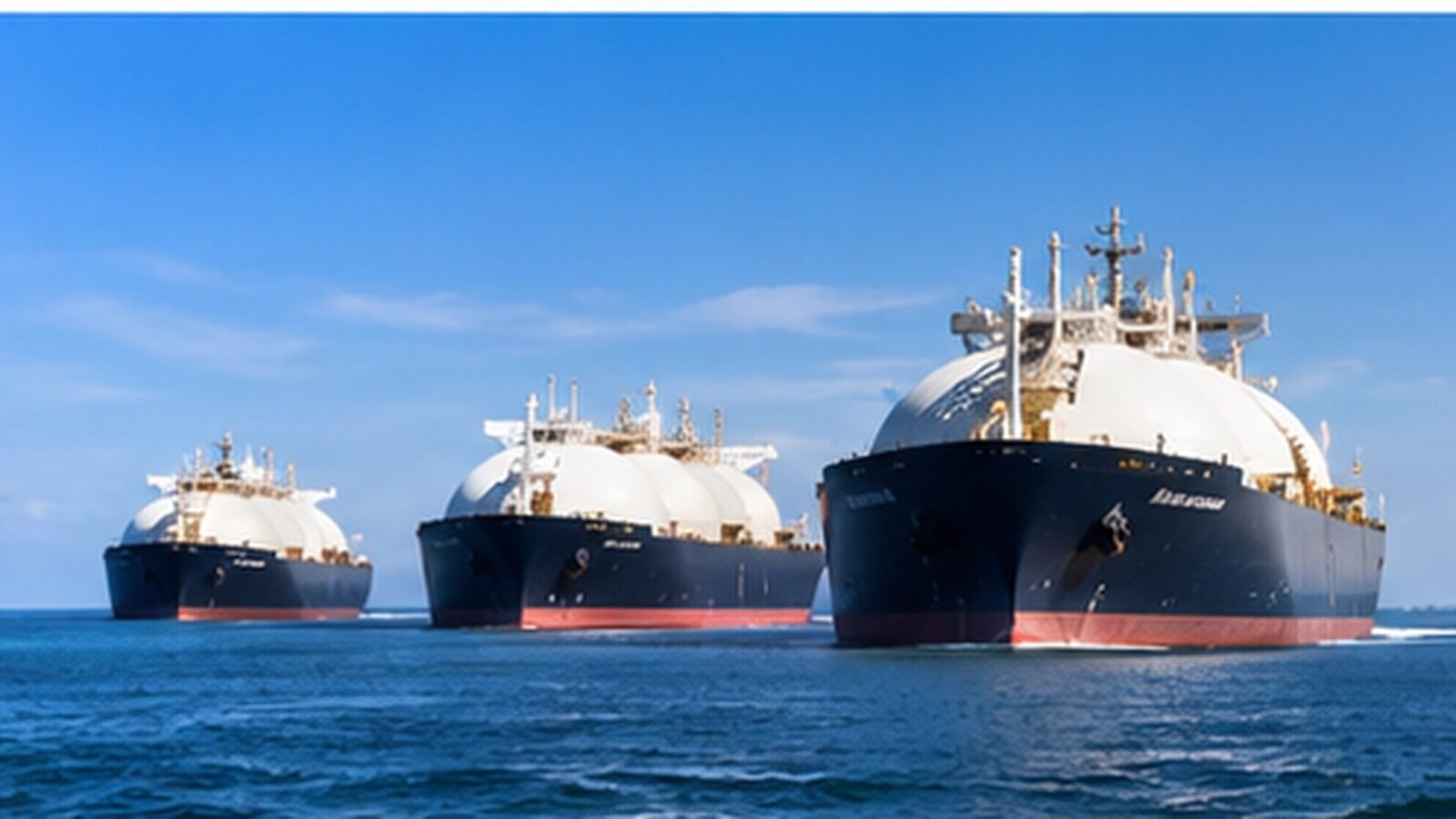
The global LNG fleet reached approximately 899 vessels at the end of 2025, according to the GIIGNL Annual Report 2026. However, this broader industry figure should not be confused with the number of conventional LNG carriers used specifically for ocean transportation.
Flex LNG's 2025 annual report estimated approximately 748 LNG carriers larger than 40,000 cubic meters at year-end 2025, while Nakilat reported a global LNG carrier fleet of approximately 790 vessels. These differences reflect the definitions and reporting methodologies used by each source.
For investors, the key question is not simply how many LNG ships exist, but whether fleet capacity is expanding faster or slower than demand for LNG transportation. This balance influences vessel utilization, charter rates, and shipping company profitability.
How Many LNG Ships Are There Worldwide?
There is no universally applied definition of the global LNG vessel fleet.
Industry organizations and shipping companies may use different vessel categories, capacity thresholds, and operational classifications when calculating fleet totals.
The following figures illustrate these differences.
| Source | Reported Fleet | Reference Period |
|---|---|---|
| GIIGNL Annual Report 2026 | 899 vessels | End of 2025 |
| Nakilat Annual Report 2025 | Approximately 790 LNG carriers | End of 2025 |
| Flex LNG Annual Report 2025 | Approximately 748 LNG carriers above 40,000 m³ | End of 2025 |
These figures should not be interpreted as conflicting estimates of an identical vessel population. Each source applies its own scope and classification rules.
Some statistics focus on conventional ocean-going LNG carriers, while broader industry datasets may include additional vessel categories.
The figures provide a documented year-end 2025 baseline, not a verified real-time fleet count for November 2026.
For investment analysis, consistency matters more than selecting the highest reported number. Comparing fleet growth over time requires using the same source and methodology.
What Types of LNG Carriers Make Up the Global Fleet?
LNG carriers vary in size, propulsion technology, and the transportation markets they serve.
Most large ocean-going vessels transport liquefied natural gas between export terminals and importing countries, but cargo capacities differ considerably.
| Carrier Category | Typical Cargo Capacity | Primary Role |
|---|---|---|
| Smaller LNG carriers | Below 100,000 m³ | Regional and specialized transportation |
| Older conventional carriers | Approximately 125,000–155,000 m³ | International LNG transportation |
| Modern conventional carriers | Approximately 170,000–180,000 m³ | Major international trade routes |
| Q-Flex carriers | Approximately 210,000–217,000 m³ | Large-scale LNG exports |
| Q-Max carriers | Approximately 263,000–266,000 m³ | Very large LNG cargo transportation |
Modern conventional LNG carriers commonly have a cargo capacity of approximately 174,000 cubic meters.
This size offers a balance between transportation capacity, terminal compatibility, and operational flexibility.
Larger carriers can transport more LNG per voyage but may face restrictions at certain terminals or along specific shipping routes.
Consequently, the largest vessel is not necessarily the most economical choice for every route.
What Is the Biggest LNG Ship in the World?
As of November 2026, the largest LNG carrier class in commercial service is the Q-Max, with cargo capacities reaching approximately 266,000 cubic meters.
These vessels were developed for Qatar's LNG export industry and are associated with Nakilat and QatarEnergy's transportation operations.
The Q-Max fleet includes 14 vessels, while the related Q-Flex class includes 31 vessels.
Q-Max carriers are substantially larger than conventional LNG ships.
The following comparison illustrates the difference.
| Vessel Class | Approximate Capacity |
|---|---|
| Modern conventional LNG carrier | 174,000 m³ |
| Q-Flex | 210,000–217,000 m³ |
| Q-Max | 263,000–266,000 m³ |
| QC-Max, under construction | 271,000 m³ |
The next generation of very large LNG carriers includes the QC-Max class, designed with approximately 271,000 cubic meters of capacity.
Construction of the first QC-Max vessel began in June 2026, with deliveries planned between 2028 and 2031.
These vessels should not be described as already operating commercially.
Distinguishing ships in service from vessels under construction is essential when evaluating available fleet capacity.
How Fast Is the Global LNG Fleet Growing?
The global LNG vessel fleet has expanded substantially alongside international natural gas trade.
GIIGNL reported approximately 8% fleet growth in 2025.
However, shipping capacity does not always expand at the same pace as LNG cargo volumes.
According to Flex LNG's 2025 annual report, approximately 79 LNG carrier newbuildings were delivered during 2025.
The same report identified an orderbook of approximately 280 vessels at year-end.
The orderbook represents ships contracted for construction but not yet delivered.
These orders indicate future additions to shipping capacity.
For investors, the construction pipeline is important because LNG carriers generally take several years to build.
Shipowners commit capital well before they know what charter rates will be when new vessels enter service.
How Many New LNG Carriers Are Scheduled for Delivery?
At the beginning of 2026, shipping market data indicated a substantial LNG carrier construction pipeline.
Clarksons Securities figures reported by Lloyd's List in January 2026 identified approximately 277 vessels in the remaining orderbook, excluding five vessels already delivered during the year.
The delivery schedule was estimated as follows:
| Delivery Period | Expected New LNG Carriers |
|---|---|
| 2026 | 107 |
| 2027 | 81 |
| 2028 | 63 |
| 2029–2030 | 31 |
Data note: These figures represent an early-2026 delivery schedule, not confirmed completed deliveries. The 2026 figure includes vessels already delivered at the time of the report. Actual deliveries may differ because of construction delays, cancellations, new orders, and revised schedules.
The schedule illustrates why vessel supply is a central concern for LNG shipping investors.
A large wave of deliveries can increase competition for charter contracts, particularly when LNG export projects begin operating later than expected.
Conversely, stronger transportation demand can absorb additional capacity and support vessel utilization.
Why Are So Many LNG Carriers Being Built?
New LNG carriers are ordered primarily because companies anticipate additional demand for international natural gas transportation.
Major LNG export projects require reliable access to shipping capacity.
Shipowners and energy companies may therefore arrange new vessels years before liquefaction terminals begin commercial operations.
Several factors support newbuilding demand.
Expansion of LNG Export Infrastructure
New liquefaction facilities increase the potential volume of natural gas available for international shipment.
Projects in the United States, Qatar, and other exporting countries can create demand for additional transportation capacity.
Long-Term Charter Agreements
Energy companies may secure vessels under long-term contracts to ensure transportation capacity is available when new production begins.
These agreements can also support financing for new ships.
Replacement of Older Vessels
Some older LNG carriers are less fuel-efficient than modern vessels.
Shipowners may order replacements to improve efficiency or meet evolving customer requirements.
Changing Global Trade Routes
Changes in LNG production and consumption patterns can alter shipping distances.
Longer voyages may require more vessel capacity even when total LNG trade volumes change relatively little.
However, these factors do not guarantee that every new carrier will secure profitable employment.
What Happens When Too Many LNG Carriers Enter the Market?
When available vessel capacity grows faster than transportation demand, LNG shipping companies can face downward pressure on charter rates.
This is one of the industry's most significant financial risks.
Consider a hypothetical market with 100 available vessels and enough transportation demand to employ 95 of them.
If another 20 carriers enter service while demand remains unchanged, competition for cargoes increases.
Some shipowners may accept lower charter rates to secure employment.
Consequently, vessels operating in the short-term charter market may experience declining revenue.
Ships covered by long-term contracts may be less immediately affected, although their owners remain exposed when existing agreements expire.
Oversupply can also reduce secondhand vessel values and discourage additional ship orders.
In 2025, the LNG shipping market experienced weakness despite continued growth in international LNG trade.
Nakilat's 2025 annual report described a soft shipping market influenced by vessel deliveries, project delays, and slower-than-expected demand growth.
This demonstrates why expanding LNG trade does not automatically translate into stronger financial performance for shipowners.
Why Do LNG Export Project Delays Matter?
LNG carriers and liquefaction terminals are capital-intensive assets with lengthy construction schedules.
Ideally, a new vessel enters service when the LNG project it is intended to support begins exporting cargoes.
In practice, construction schedules do not always align.
A carrier may be delivered before its associated export terminal becomes operational.
When this happens, the shipowner or charter customer may seek temporary employment for the vessel.
Additional carriers entering the short-term charter market can increase available capacity and put pressure on rates.
Alternatively, an export project may begin operations before sufficient shipping capacity becomes available, potentially increasing vessel demand.
The timing of ship deliveries relative to LNG production growth is therefore an important indicator of future market conditions.
How Do Older LNG Carriers Affect Fleet Supply?
Not all LNG carriers remain equally competitive throughout their operating lives.
Older vessels may have higher fuel consumption, greater maintenance requirements, and less efficient propulsion systems.
Modern LNG carriers often use advanced dual-fuel engines that improve efficiency compared with older steam-turbine ships.
As new vessels enter service, older carriers may become less attractive to charter customers.
Shipowners can respond in several ways:
- Continue operating older vessels under existing contracts.
- Seek employment in markets where older ships remain competitive.
- Invest in maintenance or technical upgrades.
- Sell vessels to other operators.
- Retire and recycle ships that are no longer economically viable.
According to Flex LNG's 2025 annual report, 15 LNG carriers were sold for recycling during 2025.
Recycling removes transportation capacity from the market.
However, when new deliveries substantially exceed retirements, the total fleet can continue expanding rapidly.
For investors, the net increase in available capacity matters more than the number of new vessels delivered in isolation.
How Does Fleet Capacity Affect LNG Shipping Rates?
Charter rates depend on the balance between available vessel capacity and transportation demand.
When shipping capacity is scarce, customers may compete for available carriers.
When capacity is abundant, shipowners may compete more aggressively for employment.
However, vessel count alone does not fully explain market conditions.
Other important variables include:
- Average vessel cargo capacity.
- Voyage distance and duration.
- Port congestion and waiting times.
- Seasonal changes in natural gas demand.
- Availability of vessels outside long-term contracts.
- Fuel efficiency and vessel operating costs.
- Geopolitical disruptions affecting shipping routes.
For example, longer voyages keep vessels occupied for more time.
This can increase demand for shipping capacity even when the volume of LNG transported remains unchanged.
Similarly, a fleet may appear large on paper while many vessels are committed to long-term contracts and unavailable for additional cargoes.
Investors should therefore distinguish total fleet capacity from the number of vessels actually available in the charter market.
Does a Larger LNG Fleet Mean Lower Transportation Costs?
A larger global fleet can increase competition and potentially reduce charter rates.
However, transportation costs depend on more than vessel availability.
Ship size, fuel consumption, voyage distance, financing, and port requirements also matter.
Larger vessels can offer economies of scale because they transport more LNG per voyage.
For example, a Q-Max carrier can transport substantially more LNG than a conventional 174,000-cubic-meter vessel.
However, larger carriers are not suitable for every terminal or shipping route.
A smaller vessel may provide greater commercial flexibility when serving ports with infrastructure restrictions or customers requiring smaller cargoes.
The most economical vessel depends on the specific transportation requirements.
For investors examining construction costs, daily operating expenses, and the relationship between charter revenue and profitability, read How Much Does an LNG Carrier Cost to Build and Operate?.
Who Controls the World's LNG Carrier Capacity?
Global LNG carrier capacity is distributed among diversified shipping groups, specialized gas carrier owners, energy companies, and joint ventures.
Major participants include MOL, NYK Line, Nakilat, Maran Gas Maritime, Seapeak, and other operators.
However, reported fleet size does not necessarily equal the number of vessels wholly owned by a company.
Some businesses include jointly owned ships or vessels managed on behalf of other investors.
This creates important distinctions between:
- Legal ownership of vessels.
- Commercial operation and charter management.
- Technical management.
- Economic ownership through joint ventures.
For example, two companies may each hold a 50% ownership interest in the same vessel while both include that ship in their fleet statistics.
Adding their reported fleet counts would therefore double-count the carrier.
For a detailed comparison of fleet ownership, vessel capacity, and the industry's largest operators, see Who Owns the Largest LNG Carrier Fleets?.
What Should Investors Monitor in Global LNG Fleet Growth?
For investors evaluating LNG shipping stocks, fleet statistics are most useful when combined with commercial and financial indicators.
| Indicator | Why It Matters |
|---|---|
| Active LNG carrier fleet | Shows existing transportation capacity |
| Newbuilding orderbook | Indicates future vessel supply |
| Annual vessel deliveries | Measures new capacity entering service |
| Vessel retirements | Shows capacity leaving the market |
| LNG export growth | Influences transportation demand |
| Average voyage distance | Affects vessel time required per cargo |
| Spot charter rates | Reflect short-term shipping market conditions |
| Long-term contract coverage | Indicates revenue visibility for individual operators |
These indicators help investors assess whether the market is moving toward tighter shipping capacity or greater vessel oversupply.
They also explain why individual shipping companies may perform differently despite operating in the same industry.
A company with modern carriers and long-term charter coverage may be less exposed to short-term market weakness than an operator heavily dependent on spot-market employment.
Will the Global LNG Carrier Fleet Keep Growing?
The global LNG carrier fleet is likely to expand as vessels already under construction enter service.
However, future growth rates and financial outcomes remain uncertain.
The substantial newbuilding orderbook provides visibility into planned capacity additions, but it does not guarantee that transportation demand will expand at the same pace.
Several factors will influence the market:
- The timing of major LNG export projects.
- Growth in international natural gas consumption.
- The number of new carriers delivered annually.
- Retirement of older and less efficient vessels.
- Changes in trade routes and voyage distances.
- Environmental regulations and fleet modernization.
- Availability of long-term charter contracts.
These factors will determine whether fleet expansion supports stronger shipping activity or creates additional pressure on charter rates.
For a deeper assessment of future transportation demand, vessel oversupply, environmental regulation, and investment risks, explore Does LNG Shipping Have a Future? Growth and Industry Risks.
What Global LNG Fleet Growth Means for Investors
The global LNG shipping industry operates hundreds of specialized vessels, with significant additional capacity under construction.
At the end of 2025, industry estimates ranged from approximately 748 LNG carriers above a defined minimum capacity to broader fleet totals approaching 900 vessels, depending on classification.
The industry continues to invest in new ships, including larger and more efficient carriers.
However, fleet growth is not automatically positive for shipping company profitability.
When new vessels enter service faster than transportation demand expands, charter rates can weaken. When demand absorbs available capacity, vessel utilization and charter economics may improve.
For investors, the most useful approach is to monitor vessel deliveries, retirements, LNG export growth, and charter-market conditions together.
To understand how these factors connect with shipping companies, global energy trade, and LNG transportation economics, read LNG Shipping Industry: Companies, Ships and Market Economics.
The number of LNG carriers matters, but the balance between available shipping capacity and transportation demand ultimately determines the economic value of that fleet to its owners.
Disclaimer: This article is for informational and educational purposes only and does not constitute financial or investment advice. LNG shipping investments involve market, operational, financing, and regulatory risks. Investors should conduct independent research before making investment decisions.