
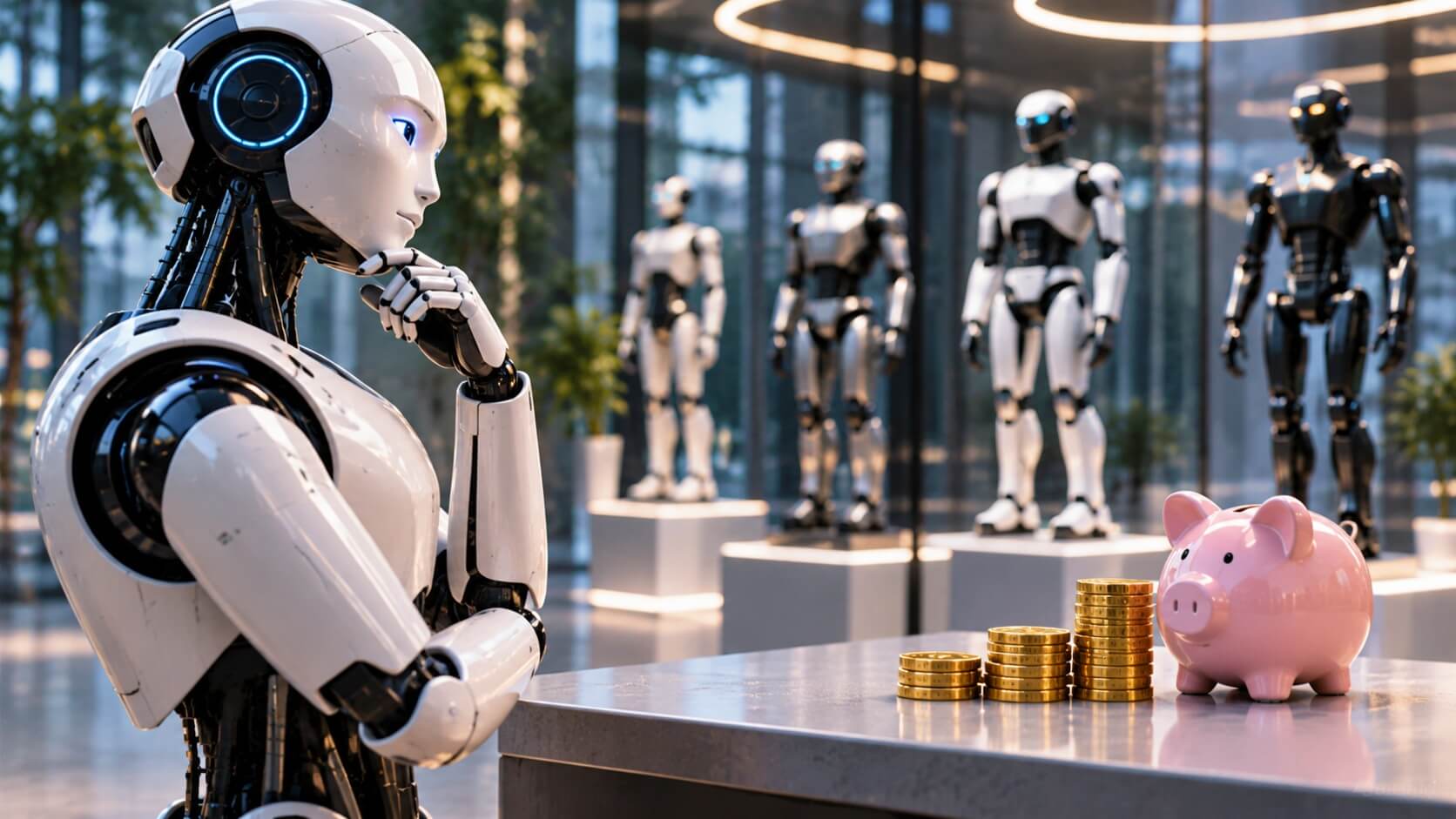
Humanoid robots can cost anywhere from several thousand dollars for smaller research-oriented platforms to more than $100,000 for sophisticated industrial systems. However, prices vary significantly depending on the robot's size, capabilities, software, intended application, and commercial availability.
Some humanoid robots can already be purchased by researchers, developers, and businesses. Others remain experimental platforms, are available only through commercial agreements, or have not entered general public sales.
Unitree has helped bring relatively lower-cost humanoid hardware to the market, while companies such as Tesla, Figure AI, Agility Robotics, Boston Dynamics, and Apptronik are developing more ambitious systems aimed at industrial or general-purpose applications.
The important distinction is that buying a humanoid robot is not the same as buying a fully autonomous robotic worker.
A robot may be capable of walking, maintaining balance, and performing programmed movements without being able to independently clean a house, work in a factory, or assist with everyday activities.
For consumers and businesses, the real question is not simply how much a humanoid robot costs, but what useful work it can perform for that price.
How Much Does a Humanoid Robot Cost Today?
The price of a humanoid robot depends heavily on its intended purpose.
Smaller platforms designed for education, experimentation, and robotics development are generally more accessible than advanced industrial systems.
The following ranges provide a broad illustration of the market rather than verified quotations for specific products.
| Humanoid robot category | Indicative price range | Typical purpose |
|---|---|---|
| Small educational or research humanoids | $3,000–$15,000 | Programming, education, and experimentation |
| More capable research humanoids | $15,000–$50,000 | Walking, manipulation, and robotics development |
| Advanced development platforms | $50,000–$100,000+ | Sophisticated research and specialized applications |
| Industrial humanoid systems | Custom pricing, potentially above $100,000 | Commercial tasks and industrial deployment |
| Future mass-market household humanoids | Not established | General-purpose home assistance |
These categories overlap, and individual products may fall outside the indicated ranges.
Industrial developers frequently use negotiated pricing, leasing arrangements, pilot programs, or service-based contracts rather than publishing a standard retail price.
It is also important to distinguish between the advertised price of a robot and the total cost of putting it to work.
A business may need additional software, engineering support, safety equipment, maintenance, and integration services.
For this reason, the cheapest robot to purchase is not necessarily the cheapest robot to operate.
What Is the Cheapest Humanoid Robot You Can Buy?
Some of the most accessible modern humanoid platforms come from manufacturers focused on research, education, and robotics development.
Unitree Robotics is a prominent example.
Its G1 humanoid has been marketed with an entry-level price starting at approximately $16,000, although actual pricing depends on configuration, availability, regional charges, and purchasing terms.
This is significantly less than the amounts often associated with advanced industrial humanoid development.
However, a relatively affordable humanoid platform should not be confused with a ready-to-use household assistant.
What Do You Get With a Lower-Cost Humanoid?
A lower-priced humanoid robot may offer capabilities such as walking, balancing, executing programmed movements, and supporting robotics software development.
Depending on the model and configuration, it may also provide cameras, sensors, joint control, and interfaces for researchers.
These features can be valuable for universities, robotics laboratories, software developers, and companies testing new applications.
But the buyer may still need substantial technical knowledge.
The robot might require programming, calibration, supervision, and additional software before it can perform useful tasks.
Certain advanced capabilities may also be limited to more expensive configurations.
The advertised starting price does not necessarily include every feature shown in promotional demonstrations.
Is the World's Cheapest Humanoid Robot Actually Useful?
That depends on the intended use.
For someone learning robotics, developing AI control software, or conducting experiments, an affordable humanoid platform can be highly useful.
For someone expecting a robot to cook meals, wash dishes, clean an entire house, or independently handle daily responsibilities, the same machine may offer very limited practical value.
The cheapest humanoid robot is therefore not automatically the best purchase.
The appropriate comparison is between the robot's capabilities and the tasks the buyer needs it to perform.
For a broader evaluation of competing platforms, see The Leading Humanoid Robots Today: A Practical Comparison.
How Much Does Tesla's Optimus Robot Cost?
Tesla's Optimus is one of the most widely discussed humanoid robots, partly because of the possibility that large-scale manufacturing could eventually reduce its cost.
Elon Musk has discussed ambitions for relatively affordable humanoid robots, including potential prices in the tens of thousands of dollars under future high-volume production scenarios.
However, these figures are projections, not established retail prices.
A projected manufacturing cost, an anticipated future selling price, and a price available to customers today are three different things.
Optimus has been developed as a general-purpose humanoid platform, with Tesla pursuing applications that could eventually extend from industrial work to other environments.
But commercial pricing depends on several unresolved factors.
These include manufacturing scale, component costs, software development, production yields, reliability, customer demand, and the amount of support required after delivery.
Why Could Tesla Potentially Lower Robot Costs?
Tesla has experience manufacturing complex products at substantial scale.
Its operations involve electric motors, batteries, electronics, sensors, software, and automated production systems.
Some of this expertise could support humanoid robot manufacturing.
Higher production volumes may also allow fixed development costs to be distributed across more units.
However, producing a humanoid robot introduces challenges that differ from vehicle manufacturing.
Robotic hands, balance systems, actuators, and general-purpose manipulation require specialized engineering.
Lower costs are possible, but they should not be assumed before manufacturing and commercial performance provide supporting evidence.
For investors, a low projected price matters only if the company can eventually produce and sell capable robots at sustainable margins.
How Much Do Industrial Humanoid Robots Cost?
Industrial humanoid robots are generally more complicated to price than consumer electronics.
Companies developing advanced systems may not publish a conventional retail price.
Instead, they may negotiate agreements with manufacturers, warehouse operators, or logistics companies.
These arrangements can involve pilot deployments, leasing, technical support, software services, or longer-term commercial contracts.
For example, companies such as Agility Robotics, Figure AI, and Apptronik have pursued industrial applications where the robot's value depends on performing specific workplace tasks.
A customer evaluating such a system needs to consider more than the price of the hardware.
What Is Included in an Industrial Robot Deployment?
A commercial deployment may require several elements beyond the physical robot.
These can include:
- Software configuration for the customer's workflow.
- Integration with warehouse or factory systems.
- Training and operational supervision.
- Safety testing and workplace adjustments.
- Maintenance and replacement components.
- Technical support and software updates.
- Charging infrastructure and operational monitoring.
The exact requirements vary by robot and application.
A business might purchase the hardware directly or pay for access through a service agreement.
In some cases, the manufacturer may retain ownership of the robot while the customer pays for its operation.
This makes comparing advertised robot prices with industrial contract values difficult.
Can You Buy a Robot That Looks Like a Human?
Yes. Humanlike robots are available for certain purposes, although their capabilities vary widely.
Some robots are designed to resemble people through facial expressions, head movements, eye contact, or conversational interaction.
Others resemble humans primarily because they have arms, legs, and a torso.
These are different categories of humanoid robotics.
A robot that looks realistic may have limited mobility.
A highly capable walking robot may have a mechanical appearance and no realistic face.
Realistic Humanlike Robots
Companies such as Engineered Arts have developed expressive humanoid robots designed for interaction, demonstrations, research, and entertainment.
Ameca is an example of a platform known for realistic facial movements and conversational interaction.
Such robots can be impressive in museums, exhibitions, research settings, and public demonstrations.
However, their humanlike appearance should not be interpreted as evidence that they can perform general household or industrial labor.
Realistic appearance and physical autonomy are separate technological challenges.
Functional Humanoid Robots
Other developers prioritize practical movement rather than appearance.
These robots may have exposed mechanical components, simplified faces, or no humanlike facial features at all.
Their designs focus on mobility, object handling, balance, and physical work.
For a factory or warehouse, a robot's appearance is usually less important than its ability to complete tasks safely and reliably.
A buyer should therefore decide whether realistic human interaction or physical task performance is the main objective.
Where Can You Buy a Humanoid Robot?
Humanoid robots can be obtained through several channels, depending on the manufacturer and intended use.
Some research-oriented models are offered through official manufacturer sales channels or authorized distributors.
Other platforms are available only to organizations that establish commercial relationships with developers.
Advanced humanoid robots may be restricted to research partnerships, industrial testing programs, or negotiated deployments.
Before purchasing, buyers should verify whether the advertised product is actually available, which configuration is included, and what technical support is provided.
What Should Buyers Check Before Ordering?
A humanoid robot is a complex machine, and its purchase conditions can be very different from those of ordinary consumer electronics.
Important questions include:
- Is the robot available for immediate delivery or only for preorder?
- Does the quoted price include all necessary hardware and software?
- Can the robot operate independently, or does it require remote control?
- Are programming tools and documentation included?
- What warranty and technical support are available?
- How are repairs and replacement parts handled?
- Are there restrictions on commercial use or software access?
- What shipping, import, tax, and installation costs apply?
Buyers should also distinguish between an official manufacturer offer and an unauthorized reseller or speculative preorder listing.
A low advertised price is not meaningful if the product cannot be delivered or does not include the capabilities the buyer expects.
Why Are Humanoid Robots So Expensive?
Humanoid robots combine several technologies that are individually complex and costly.
A modern humanoid must move, maintain balance, perceive its surroundings, process information, and coordinate physical actions.
Achieving these functions requires specialized hardware and software.
Motors and Actuators
Actuators are the components that create movement.
They allow robotic joints to bend, rotate, lift, and apply force.
A humanoid robot may contain numerous actuators distributed throughout its legs, arms, torso, and hands.
These components must balance power, precision, weight, efficiency, and durability.
High-performance actuation systems can contribute significantly to hardware costs.
Sensors and Cameras
Robots need information about their environment.
Cameras, depth sensors, motion sensors, and joint-position measurements help them navigate and manipulate objects.
More sophisticated perception systems may increase hardware and computing requirements.
Computing Hardware
Advanced robots require computing systems to process sensor data and control movement.
Artificial intelligence models may add substantial processing demands.
Some computation can occur directly on the robot, while other activities may involve external infrastructure.
The appropriate architecture depends on latency, reliability, connectivity, and the task being performed.
Batteries and Power Systems
Mobile humanoid robots require batteries capable of supplying sufficient energy without making the machine excessively heavy.
Walking, balancing, and manipulating objects consume power.
Battery capacity and efficiency affect operating time and productivity.
Research and Software Development
The cost of a humanoid robot is not limited to its physical components.
Developers invest in mechanical engineering, AI training, simulation, testing, software, and safety systems.
When production volumes are small, these costs must be supported by relatively few commercial units.
Larger production volumes could reduce certain costs, but only if demand and manufacturing performance justify the investment.
How Much Does It Cost to Operate a Humanoid Robot?
The purchase price is only the beginning.
For businesses, the more important measure is often the total cost of ownership.
This includes the expenses associated with purchasing, operating, maintaining, and supporting the robot throughout its useful life.
A simplified calculation can illustrate the difference.
Imagine a company purchases a humanoid robot for $50,000.
Assume it expects to use the robot for five years and incurs another $5,000 annually in maintenance, electricity, software, and support.
| Cost component | Illustrative amount |
|---|---|
| Initial purchase | $50,000 |
| Annual operating expenses | $5,000 |
| Five years of operating expenses | $25,000 |
| Total five-year cost | $75,000 |
This is a hypothetical example, not a quotation for an actual humanoid robot.
It excludes financing costs, potential major repairs, installation expenses, and any residual value.
If the robot performs 1,500 productive hours annually over five years, its simplified cost would be:
$75,000 ÷ 7,500 productive hours = $10 per productive hour.
That number may initially appear attractive.
However, it does not establish that the robot is cheaper than human labor or other automation.
The robot may perform tasks more slowly, require supervision, or complete only part of a worker's responsibilities.
The business must compare the cost of equivalent useful output rather than simply comparing hourly figures.
A robot that requires frequent intervention may deliver much less economic value than its advertised capabilities suggest.
Could Humanoid Robots Become Cheaper in the Future?
Humanoid robots could become significantly less expensive if manufacturing scales and technology improves.
Several developments may contribute to lower costs.
Larger Production Volumes
Producing more units can allow manufacturers to negotiate component prices, improve production efficiency, and distribute fixed development costs across more products.
However, higher volume does not guarantee profitability.
Manufacturers must still control defects, warranty expenses, and production complexity.
Standardized Components
If robot developers increasingly use common components and manufacturing methods, some hardware costs could decline.
Standardization may also make repairs and replacement parts more accessible.
Better Mechanical Designs
Improvements in actuators, transmissions, batteries, and structural materials could reduce the amount of hardware needed for certain capabilities.
Simpler designs may lower manufacturing and maintenance costs.
More Efficient Software
Better robotic AI could reduce the amount of manual programming required for each deployment.
This could make robots easier to install and operate across different environments.
However, more capable software may also require expensive computing resources and ongoing development.
The eventual cost reduction will depend on the balance between these factors.
For a closer look at adoption timelines and the conditions required for broader availability, read When Will Humanoid Robots Be Widely Available? What to Expect.
Will Humanoid Robots Eventually Cost as Much as a Car?
It is possible that some general-purpose humanoid robots could eventually reach prices comparable to consumer vehicles.
This is one of the industry's frequently discussed long-term ambitions.
However, affordability depends on more than manufacturing cost.
A household robot must also be safe, reliable, easy to operate, and capable of performing useful activities without constant supervision.
A $20,000 humanoid robot that cannot independently complete meaningful tasks may offer less practical value than a much cheaper specialized appliance.
Conversely, a more expensive robot could be economically attractive if it performs numerous valuable activities reliably.
The development of affordable hardware and the development of useful autonomy are related but separate challenges.
Both must progress before general-purpose household robots become widely practical.
Is Buying a Humanoid Robot Worth It?
For most ordinary consumers, buying an advanced humanoid robot remains difficult to justify purely on practical household value.
Available platforms are generally better suited to research, education, development, demonstrations, or specialized commercial applications.
For universities and robotics developers, the ability to experiment with a physical humanoid platform can justify substantial expense.
For industrial customers, the decision depends on measurable productivity and operating economics.
A robot may be worth purchasing if it can perform a defined task consistently and at a lower total cost than available alternatives.
But a humanoid robot is not automatically the best automation solution.
Fixed robotic arms, wheeled robots, conveyor systems, and other specialized equipment may perform many tasks more efficiently.
The human-shaped design becomes valuable when it provides flexibility or allows the robot to use existing infrastructure.
What Do Falling Humanoid Robot Prices Mean for Investors?
Lower humanoid robot prices could expand the potential customer base.
More affordable hardware may encourage experimentation, industrial adoption, and development of new applications.
However, lower prices do not automatically mean higher profits for robot manufacturers.
A company may sell more units while facing pressure on margins.
Competition could also reduce the prices manufacturers can charge.
Investors should consider several questions.
Can manufacturers reduce costs faster than selling prices decline?
This affects potential profitability.
Will lower prices lead to meaningful increases in demand?
Affordability matters, but customers must still find the robots useful.
Will software and services generate recurring revenue?
Some developers may pursue ongoing income from software, maintenance, support, or robotics services.
Which suppliers benefit from higher production volumes?
Manufacturers of actuators, sensors, semiconductors, and other components could potentially benefit from increased robot production.
Can companies demonstrate real commercial value?
The strongest evidence will come from paying customers, sustained deployments, and reliable productivity.
For investors, the important milestone is not simply when a humanoid robot becomes cheap.
It is when humanoid robots become economically useful enough to support sustainable demand and profitable business models.
What Price Would Make Humanoid Robots Mainstream?
There is no universal price that would make humanoid robots mainstream.
The answer depends on what the robot can do.
For a research laboratory, a $20,000 robot might be affordable if it provides valuable development capabilities.
For a warehouse operator, a much more expensive robot could be attractive if it delivers consistent productivity over several years.
For an ordinary household, even a relatively inexpensive humanoid may be difficult to justify unless it can safely perform useful tasks with minimal supervision.
This is why future adoption cannot be predicted from hardware prices alone.
Software capability, safety, reliability, maintenance, and real-world usefulness will matter just as much.
The most important question is not how cheaply a humanoid robot can be manufactured, but how much practical value it can deliver for its total cost.
For a broader overview of the industry, its leading companies, business models, and investment opportunities, see Humanoid Robots: How the Industry Works and What Investors Should Know.
As the technology develops, prices may decline and capabilities may improve. But the transition from expensive research platforms to affordable, dependable robotic workers will depend on sustained engineering and commercial progress.
Disclaimer: This article is for informational and educational purposes only and does not constitute financial or investment advice. Prices, product availability, and manufacturer plans may change. Investing in emerging technologies involves significant risks, including the potential loss of capital. Readers should verify current product information and conduct independent research before making purchasing or investment decisions.