
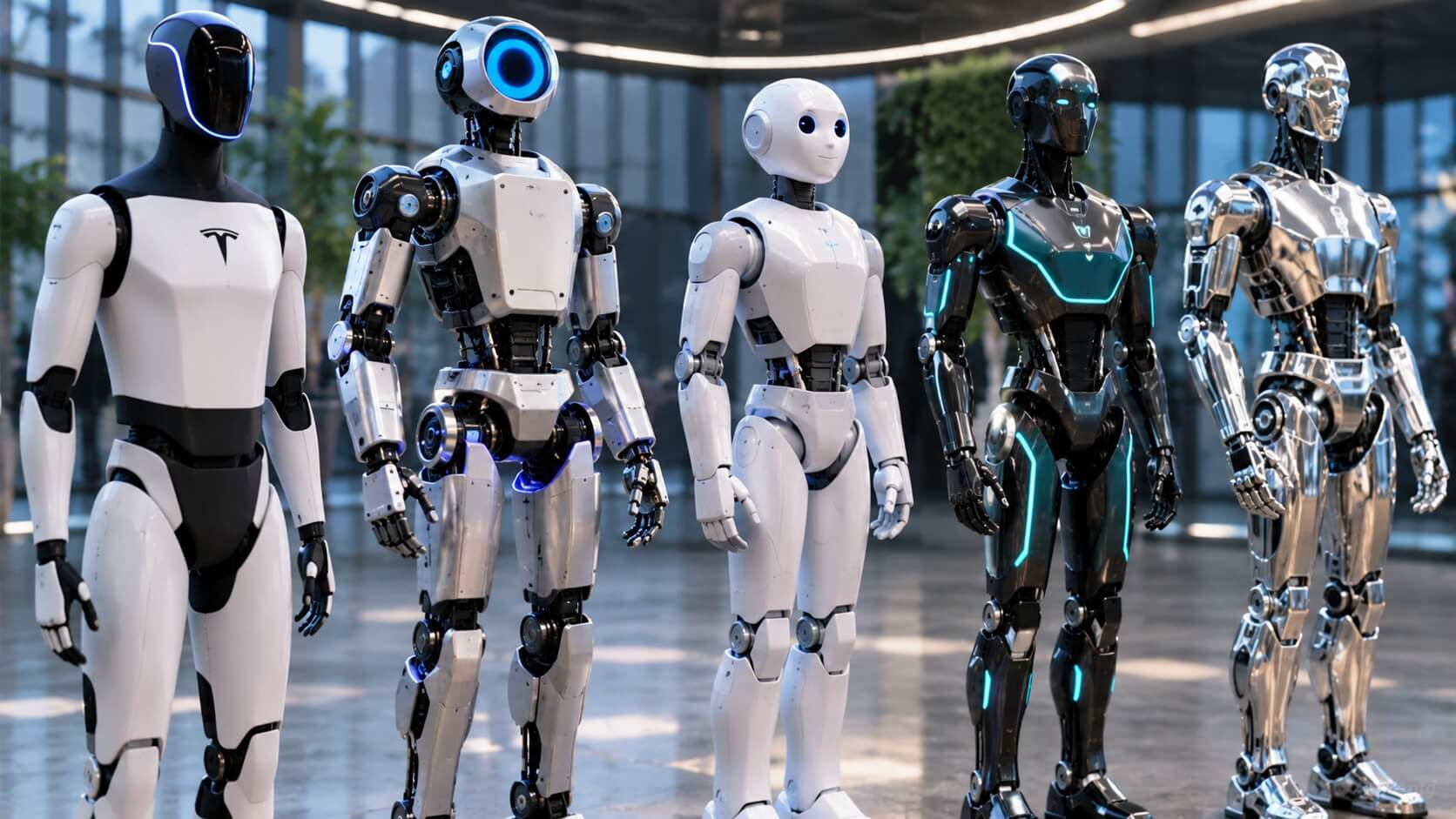
There is no single best humanoid robot for every purpose. The most advanced humanoid robots differ in mobility, artificial intelligence, object handling, reliability, and commercial readiness.
Boston Dynamics' Atlas stands out for its advanced physical capabilities. Figure AI is pursuing general-purpose robotic work through AI-driven humanoid platforms. Agility Robotics' Digit focuses on practical warehouse operations, while Tesla's Optimus represents an ambitious effort to develop humanoid robots for large-scale production.
Unitree offers comparatively accessible humanoid hardware for research and development, while Apptronik is developing Apollo for industrial applications.
The best choice depends on what a robot needs to accomplish.
A machine capable of performing impressive acrobatic movements may not be the most productive robot in a warehouse. Similarly, a robot designed for repetitive industrial tasks may lack the flexibility needed to operate in an unpredictable household.
For investors, the distinction between technological sophistication and commercial usefulness is especially important.
What Is Currently the Best Humanoid Robot?
The answer depends on how "best" is defined.
If the main criterion is advanced mobility, Boston Dynamics' Atlas is one of the most notable humanoid platforms.
If the goal is commercial warehouse automation, Agility Robotics' Digit deserves attention because its development emphasizes specific logistics tasks.
For general-purpose AI-enabled manipulation, Figure AI and Tesla are pursuing ambitious approaches, although their commercial maturity and demonstrated capabilities should be evaluated separately.
Unitree's humanoid platforms are particularly relevant to buyers interested in research, experimentation, and comparatively lower-cost hardware.
No company has conclusively demonstrated a humanoid robot that is simultaneously the best at walking, manipulation, autonomous decision-making, safety, affordability, and sustained commercial productivity.
These capabilities develop at different speeds, and public demonstrations do not always provide enough information for direct comparisons.
A meaningful evaluation should therefore consider the intended application rather than relying on a single ranking.
How Do the Leading Humanoid Robots Compare?
Several humanoid platforms have become prominent in the industry's development.
| Robot | Developer | Main strength | Main consideration |
|---|---|---|---|
| Atlas | Boston Dynamics | Advanced movement and physical control | Commercial performance must be distinguished from demonstrations |
| Figure humanoids | Figure AI | AI-driven manipulation and general-purpose tasks | Broad autonomy and long-term reliability remain important tests |
| Digit | Agility Robotics | Warehouse and logistics applications | Designed around a more focused range of tasks |
| Optimus | Tesla | General-purpose ambitions and potential manufacturing scale | Large-scale commercial economics remain uncertain |
| G1 and H1 | Unitree | Research platforms and accessible humanoid hardware | Capability varies by model and configuration |
| Apollo | Apptronik | Industrial work and human-centered design | Commercial deployment and operating performance need continued validation |
This comparison describes the platforms' principal development directions rather than establishing a definitive performance ranking.
There is no universally accepted benchmark that measures all humanoid robots under identical real-world conditions.
The most useful way to understand their differences is to examine what each developer is trying to achieve.
Boston Dynamics Atlas: Advanced Mobility and Physical Control
Boston Dynamics has built a reputation for developing robots capable of sophisticated movement.
Its Atlas platform is particularly well known for demonstrating dynamic balance, coordinated motion, and complex physical behaviors.
The company introduced an all-electric Atlas in 2024, moving beyond the earlier hydraulic research platform.
Electric actuation is relevant because it can support a design better suited to future industrial applications.
What Makes Atlas Different?
Atlas emphasizes sophisticated whole-body movement.
A humanoid robot must constantly coordinate its joints and balance while walking, turning, lifting, or reaching.
Atlas demonstrates how advanced control systems can manage demanding physical movements.
This is important because industrial environments are not always perfectly predictable.
Robots may need to move around equipment, reposition themselves, and manipulate objects without losing balance.
However, mobility is only one component of commercial usefulness.
A robot that performs complex movements must also demonstrate reliable task execution, acceptable maintenance requirements, and competitive operating costs.
Is Atlas the Most Advanced Humanoid Robot?
Atlas is a strong contender when evaluating advanced physical movement.
But describing it as the overall best humanoid robot would require comparisons across additional dimensions, including autonomous operation, dexterity, commercial productivity, and reliability.
Its technical achievements should not automatically be interpreted as evidence of superior economic performance.
For investors, Boston Dynamics also presents an ownership distinction: the company is part of Hyundai Motor Group rather than an independently listed robotics business.
Exposure through a larger corporate group is not equivalent to investing directly in a dedicated humanoid robot manufacturer.
Figure AI: Building General-Purpose Humanoid Intelligence
Figure AI is developing humanoid robots intended to perform physical tasks in human-designed environments.
Its strategy combines robotic hardware with artificial intelligence systems capable of interpreting surroundings and controlling actions.
The company's ambition extends beyond programming a robot for one repetitive movement.
It aims to develop systems that can adapt to different physical tasks.
Why Is Figure AI Important?
One of the central challenges in humanoid robotics is transferring AI capabilities into physical action.
A robot may recognize an object through a camera, but it must also determine how to approach, grasp, lift, and move that object.
This requires coordination between perception, decision-making, and mechanical control.
Figure has demonstrated humanoid manipulation capabilities and pursued industrial applications.
Its work is relevant because progress in general-purpose robotic intelligence could reduce the amount of task-specific programming needed for deployment.
However, demonstrations must be distinguished from independently verified performance during extended commercial operations.
What Could Make Figure Competitive?
A successful general-purpose robotics platform could potentially perform multiple activities using the same hardware.
This would be economically attractive if customers could reassign robots to different tasks without extensive reprogramming.
The challenge is achieving that flexibility without sacrificing safety, speed, or reliability.
Figure AI is privately held, meaning ordinary retail investors generally cannot buy its shares directly on a public stock exchange.
Investors should also distinguish between financial backing from other companies and meaningful economic exposure to Figure's potential future success.
Agility Robotics Digit: A Focus on Warehouse Work
Agility Robotics takes a more application-focused approach through Digit.
Digit is a bipedal robot developed for tasks in logistics and industrial environments.
Rather than emphasizing a fully humanlike appearance, its design prioritizes movement and handling activities relevant to warehouse operations.
What Can Digit Do?
Digit has been developed for activities involving the movement and handling of materials.
Warehouses contain repetitive processes that can be difficult to automate using conventional fixed equipment.
A mobile robot may be useful when goods need to move between locations designed around human workers.
Digit's development has included real-world industrial testing and commercial deployment initiatives.
These activities are important because they move robotics evaluation beyond laboratory demonstrations.
However, the presence of a robot in a commercial facility does not, by itself, establish that the deployment is profitable or operating without human assistance.
Why Could Digit Have a Commercial Advantage?
A narrowly defined task can be easier to automate than a wide range of unpredictable activities.
A robot designed for a specific warehouse workflow does not necessarily need to cook meals, clean a home, or manipulate every possible object.
This narrower operating environment may help developers improve reliability and demonstrate customer value.
For investors, the important indicators are sustained productive operation, customer demand, repeat deployments, and total operating costs.
Agility Robotics is privately held, so direct public-market investment opportunities are limited.
Tesla Optimus: The Ambition to Scale Humanoid Robotics
Tesla's Optimus is among the most widely discussed humanoid robot projects.
The company aims to develop a general-purpose robot capable of performing useful physical work.
Tesla's broader manufacturing experience makes the project particularly interesting.
Unlike a small robotics startup, Tesla already operates large manufacturing facilities and has experience producing complex electromechanical products at scale.
What Makes Optimus Different?
Tesla's potential advantage is not simply the appearance or movement of the robot.
It is the possibility of combining artificial intelligence, robotic hardware, and large-scale manufacturing.
If Tesla develops a commercially reliable humanoid platform, its manufacturing capabilities could become relevant to production costs and deployment scale.
However, this outcome is not guaranteed.
Building vehicles and manufacturing general-purpose humanoid robots involve overlapping technologies but also different engineering challenges.
Optimus must demonstrate reliable manipulation, safe movement, autonomous operation, and economic usefulness.
Is Tesla Optimus Already a Commercial Success?
Optimus has demonstrated various robotic capabilities, but demonstrations and development milestones should not be confused with proven large-scale commercial success.
Investors should look for evidence of sustained productive operation, verified deployment volumes, actual customer demand, and meaningful financial contributions.
Tesla's projections and ambitions should be treated as forward-looking statements rather than established commercial outcomes.
The distinction matters because future humanoid robotics revenue could become significant—or remain much smaller than optimistic expectations.
For a closer examination of Tesla's technology, commercial plans, and investment implications, read Tesla's Optimus Robot: What It Can Do and What It Means for Investors.
Unitree G1 and H1: Making Humanoid Hardware More Accessible
Unitree Robotics has attracted attention by developing humanoid platforms that are comparatively accessible to researchers, developers, and organizations experimenting with robotics.
Its G1 and H1 platforms serve different needs and price categories.
What Makes Unitree Different?
One of the major barriers to humanoid robotics development is hardware cost.
Building a sophisticated robot requires motors, sensors, structural components, control electronics, and software.
Lower-cost platforms can allow more organizations to experiment with walking, balance, manipulation, and robotic learning.
This could support a broader development ecosystem.
However, purchasing a humanoid robot does not automatically provide a machine capable of independently performing useful household or industrial work.
Some platforms require substantial programming, integration, and technical expertise.
Is Unitree the Best Humanoid Robot for Buyers?
Unitree may be attractive to buyers prioritizing research access and hardware affordability.
But the best platform depends on the buyer's technical requirements.
A university research laboratory, robotics startup, and warehouse operator may need very different capabilities.
For ordinary consumers, the availability of a humanoid robot does not necessarily mean it can function as a practical personal assistant.
Price, support, safety, and software capabilities must all be considered.
Apptronik Apollo: Humanoid Robots for Industrial Tasks
Apptronik is developing Apollo, a humanoid platform designed with industrial applications in mind.
Its approach emphasizes robotic systems that can operate in workplaces alongside existing infrastructure.
The company's development strategy reflects a broader industry trend: beginning with relatively structured environments before pursuing more complicated applications.
Why Is Apollo Relevant?
Industrial facilities provide opportunities to automate activities that involve handling materials and moving objects.
A humanoid robot could become useful if it can operate at existing workstations without extensive redesign.
However, the economic case depends on the actual task.
Specialized industrial robots may remain more efficient when the activity is highly repetitive and the environment can be adapted around the machine.
Apollo's long-term potential therefore depends on identifying applications where humanoid flexibility creates enough additional value.
As with other emerging platforms, investors should distinguish development partnerships, testing programs, and commercial-scale deployments.
Which Humanoid Robot Looks the Most Human?
The most humanlike robot is not necessarily the most advanced robot.
Some developers prioritize realistic facial expressions, skin-like materials, eye movement, and conversational interaction.
Others focus on physical mobility and industrial productivity.
Companies such as Engineered Arts have developed expressive humanoid systems, including Ameca, that emphasize human-robot interaction.
These robots can appear particularly realistic because of their facial movements and communication capabilities.
However, realistic appearance does not automatically indicate advanced walking, autonomous manipulation, or industrial usefulness.
Similarly, a robot with a mechanical appearance may possess sophisticated movement and control capabilities.
For commercial applications, appearance often matters less than task performance.
A warehouse operator generally needs a robot that handles materials reliably, not one that closely resembles a person.
In customer-facing environments, humanlike interaction may be more relevant.
The best design depends on the intended use.
How Should Humanoid Robots Be Compared?
A practical comparison should examine several performance categories.
Mobility and Balance
Can the robot walk, turn, recover from disturbances, and navigate obstacles?
Movement demonstrations can reveal technical progress, but reliable operation over extended periods is more important for commercial deployment.
Hand Dexterity
Can the robot grasp objects of different shapes and sizes?
Can it handle delicate materials, adjust gripping force, and manipulate tools?
These capabilities are especially important for general-purpose industrial and household applications.
Autonomous Operation
How much of the robot's work is completed independently?
Some demonstrations may involve remote operation, human assistance, predefined routines, or controlled conditions.
These methods can be useful during development, but they are not equivalent to unrestricted autonomy.
Reliability
Can the robot repeat tasks consistently without frequent failures?
An industrial customer needs dependable performance, not occasional success.
Reliability also affects maintenance costs and operational interruptions.
Speed and Productivity
How quickly does the robot complete useful work?
A humanoid robot may successfully perform a task but still be economically unattractive if it is much slower than available alternatives.
Safety
Can the robot operate around people and equipment without creating unacceptable risks?
Safety requirements become particularly important as robots move beyond controlled testing environments.
Commercial Readiness
Is the robot available only as a research platform, undergoing industrial trials, or being deployed for paid commercial work?
These are different stages of development.
A platform's technical sophistication does not necessarily correspond to its commercial maturity.
How Much Do the Best Humanoid Robots Cost?
Price is another important difference between leading humanoid platforms.
Research-oriented robots, industrial prototypes, and commercially supported systems can have very different pricing structures.
Some developers publish prices for particular configurations, while others negotiate directly with commercial customers or do not offer general public sales.
A quoted hardware price may exclude software, maintenance, integration, technical support, and other operating expenses.
This makes direct comparisons difficult.
For example, a lower-priced research robot may require substantial engineering work before performing a useful task.
A more expensive industrial platform might include deployment services or specialized software, but that does not guarantee a favorable return on investment.
The relevant comparison is therefore not simply the initial purchase price.
Businesses need to evaluate the total cost of ownership and the amount of productive work delivered over the robot's operating life.
For a detailed breakdown of pricing, availability, and what different buyers can expect, see How Much Does a Humanoid Robot Cost? Prices and What You Get.
Are Humanoid Robots Better Than Traditional Industrial Robots?
Not necessarily.
Traditional industrial robots are already widely used for welding, assembly, material handling, and other repetitive tasks.
These machines often operate in carefully designed environments where their movements can be optimized for speed and precision.
Humanoid robots attempt to solve a different problem.
Instead of redesigning the workplace around a specialized machine, developers want robots that can operate within environments originally designed for humans.
This could offer flexibility, particularly when tasks change frequently.
However, humanoid robots introduce additional mechanical and software complexity.
Two-legged movement, balance, and humanlike manipulation are not always necessary for industrial automation.
A wheeled mobile robot or fixed robotic arm may perform the same task more efficiently.
The commercial opportunity for humanoids is strongest where their ability to use human-designed infrastructure creates meaningful economic advantages.
What Do These Differences Mean for Investors?
Humanoid robotics is not a single uniform market.
Different companies are pursuing different technological and commercial strategies.
Some prioritize advanced physical capabilities.
Others focus on artificial intelligence, industrial deployments, lower-cost hardware, or future mass production.
For investors, evaluating these strategies requires separating three questions.
First, does the robot work?
This concerns technical capabilities such as walking, manipulation, perception, and task completion.
Second, does the robot work reliably enough to be useful?
This involves autonomy, safety, uptime, and consistent performance outside controlled demonstrations.
Third, can the company make money from the robot?
This depends on manufacturing costs, customer demand, pricing, maintenance, competition, and operating margins.
A company can perform exceptionally well on the first question while remaining far from answering the third.
Investors should also distinguish between private robotics developers and publicly traded companies.
Many specialized humanoid robotics companies are not directly accessible through ordinary stock exchanges.
Publicly traded companies involved in the sector may derive most of their revenue from other activities.
For a broader understanding of the industry, its supply chain, adoption challenges, and investment opportunities, see Humanoid Robots: How the Industry Works and What Investors Should Know.
Which Humanoid Robot Is Most Likely to Succeed?
The eventual commercial leaders may not be the robots that generate the most impressive videos today.
Success will depend on whether developers can transform technical achievements into reliable products that customers are willing to pay for.
Boston Dynamics demonstrates advanced physical robotics capabilities. Figure AI is pursuing AI-driven general-purpose manipulation. Agility Robotics emphasizes logistics applications. Tesla is pursuing a potentially scalable general-purpose platform, while Unitree and Apptronik address other important areas of the market.
Each approach has opportunities and uncertainties.
The industry may ultimately support several successful platforms rather than one dominant humanoid robot.
Different applications could favor different designs, software systems, and commercial models.
For businesses, the best humanoid robot will be the one that performs the required work safely and economically. For investors, the strongest company will be the one that converts those capabilities into sustainable financial results.
Those two outcomes are related, but they are not necessarily the same.
Disclaimer: This article is for informational and educational purposes only and does not constitute financial or investment advice. Investing in emerging technologies involves significant uncertainty and potential loss of capital. Investors should conduct independent research before making investment decisions.