
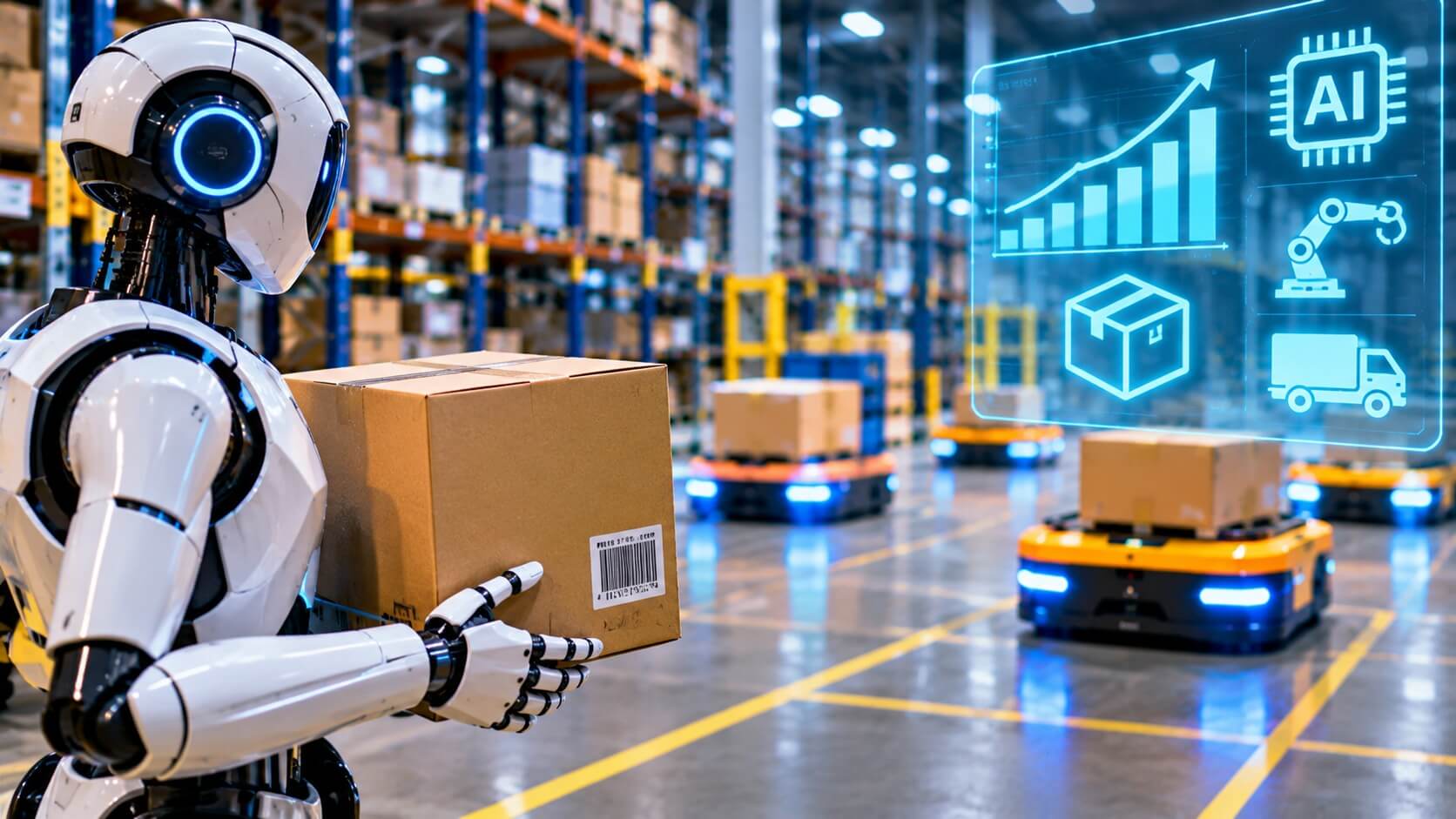
A warehouse can be profitable when the revenue it generates exceeds the costs of operating the facility, including labor, rent, equipment, utilities, technology, and transportation-related expenses.
However, warehouse profitability varies significantly depending on the business model.
A third-party logistics provider earns revenue by storing, handling, and fulfilling products for customers. A retailer operating its own warehouse may not generate direct warehouse revenue at all. Instead, the facility creates economic value by supporting sales, reducing fulfillment costs, and improving inventory availability.
Warehouse automation can improve profitability by reducing repetitive labor, increasing throughput, improving storage efficiency, and lowering certain operating expenses.
But automation also introduces substantial equipment costs, maintenance requirements, software expenses, and financial risks.
For investors, understanding warehouse economics is essential because the financial benefits of automation ultimately determine how much businesses are willing to spend on robotics and logistics technology.
How Profitable Is a Warehouse Business?
Warehouse profitability depends on the services provided, operating efficiency, customer demand, and cost structure.
There is no single profit margin that accurately represents every warehouse business.
A basic storage facility has a different financial model from an e-commerce fulfillment center or a highly automated distribution operation.
The following examples illustrate how warehouse business models differ.
| Warehouse Business Model | Main Revenue or Economic Benefit | Major Cost Drivers |
|---|---|---|
| Storage warehouse | Storage fees and space rental | Property, utilities, maintenance, labor |
| Third-party logistics provider | Storage, handling, and fulfillment fees | Labor, equipment, technology, transportation coordination |
| E-commerce fulfillment center | Fulfillment services or internal retail cost savings | Picking, packing, inventory handling, software |
| Retail distribution center | Lower supply chain costs and better store replenishment | Labor, automation, equipment, facilities |
| Cold storage warehouse | Temperature-controlled storage and handling fees | Refrigeration, energy, equipment, maintenance |
| Automated warehouse | Operating savings, additional capacity, or customer service revenue | Capital investment, maintenance, software, financing |
The distinction between revenue-generating warehouses and internal distribution facilities is particularly important.
A logistics company can measure profitability by comparing customer revenue with operating expenses.
A retailer may evaluate its warehouse based on cost per order, inventory accuracy, delivery performance, and the efficiency of its overall supply chain.
Both models can benefit from automation, but their financial results must be analyzed differently.
What Is a Good Profit Margin for a Warehouse?
A good warehouse profit margin depends on the services offered, the amount of capital invested, and the financial risks involved.
There is no universal industry benchmark that applies equally to storage businesses, fulfillment providers, and integrated logistics companies.
Profitability can also be measured in different ways.
Gross Profit Margin
Gross profit margin measures the revenue remaining after direct costs associated with providing services.
For a warehouse business, these costs may include direct labor, handling expenses, and certain facility operating costs.
The exact classification depends on the company's accounting policies.
Operating Profit Margin
Operating profit margin considers operating expenses such as administration, technology, maintenance, and other business costs.
It provides a broader view of operational profitability.
EBITDA Margin
EBITDA represents earnings before interest, taxes, depreciation, and amortization.
Some logistics businesses use EBITDA to compare operating performance.
However, EBITDA does not capture the full economic cost of warehouse automation.
Robots, conveyors, and automated storage systems require capital investment and eventually need replacement.
Depreciation and capital expenditure therefore remain important.
Net Profit Margin
Net profit margin measures the percentage of revenue remaining after all recognized expenses, including interest and taxes.
This provides a more complete accounting measure of profitability.
However, net margins can be affected by financing structures and other factors unrelated to day-to-day warehouse efficiency.
Why Comparing Margins Can Be Misleading
Consider two warehouse operators.
One relies heavily on employees and rents most of its equipment.
The other owns an automated facility requiring substantial capital investment.
The automated operator may report lower labor costs and a stronger EBITDA margin.
However, it may also have higher depreciation, financing expenses, and capital replacement requirements.
A higher EBITDA margin does not necessarily mean the automated warehouse generates a better return on invested capital.
Investors should evaluate profitability together with cash flow and capital intensity.
How Do Warehouses Make Money?
Commercial warehouses generate revenue by providing storage, handling, and logistics services.
The exact revenue model depends on customer contracts and the services offered.
Storage Fees
Warehouse operators may charge customers based on occupied space, pallet positions, storage duration, or inventory volume.
A facility with high occupancy can generate more revenue from its available capacity.
However, high occupancy is not always beneficial if it creates congestion or reduces operating flexibility.
Receiving and Handling Fees
Warehouses may charge for unloading goods, inspecting shipments, and moving products into storage.
Fees can depend on the number of pallets, cartons, containers, or individual items handled.
Order Fulfillment Fees
Fulfillment providers earn revenue by preparing customer orders.
This can include picking products, packing shipments, labeling packages, and preparing goods for transportation.
Pricing may depend on order volume, product characteristics, and service complexity.
Value-Added Services
Some warehouses provide additional services such as product labeling, kitting, returns processing, inspection, and specialized packaging.
These services can create additional revenue opportunities.
However, they also require labor, equipment, and operational coordination.
Long-Term Customer Contracts
Commercial warehouse operators may establish ongoing relationships with retailers, manufacturers, and e-commerce businesses.
Long-term contracts can provide revenue visibility.
However, profitability depends on contract pricing, volume commitments, inflation adjustments, and operating performance.
A contract that generates substantial revenue may still be unattractive if the cost of providing services is too high.
What Are the Biggest Costs of Running a Warehouse?
Warehouse expenses can be divided into several major categories.
The importance of each category depends on the facility's business model and level of automation.
Labor Costs
Labor is often a major operating expense in manually operated warehouses.
Employees may perform receiving, inventory movement, picking, packing, shipping, and administrative tasks.
Labor costs include more than hourly wages.
Employers may also incur payroll taxes, benefits, training expenses, overtime, and recruitment costs.
Warehouses with high employee turnover may face additional costs associated with hiring and training replacements.
Property and Facility Costs
Warehouse operators must pay for buildings, land, rent, or property ownership expenses.
Additional costs can include property taxes, insurance, repairs, and facility maintenance.
Location matters because warehouses near major population centers or transportation networks may have higher property costs.
However, these locations can also reduce transportation times and improve customer service.
Equipment Costs
Forklifts, pallet handling equipment, conveyors, storage racks, and other machinery require investment and maintenance.
Equipment costs increase when warehouses adopt more sophisticated automation.
Utilities and Energy
Warehouses require electricity for lighting, equipment, charging systems, and building operations.
Cold storage facilities can have particularly significant energy requirements.
Automation may increase electricity consumption while reducing certain labor expenses.
Technology and Software
Warehouse management systems, inventory tracking tools, network infrastructure, and automation software create both initial and recurring costs.
Highly automated facilities may also require specialized control systems and technical support.
Insurance and Compliance
Warehouses face risks involving employee safety, property damage, inventory loss, and equipment operation.
Insurance, safety programs, and regulatory compliance contribute to operating expenses.
Understanding these costs is necessary before evaluating whether automation can improve profitability.
How Does Warehouse Automation Improve Profitability?
Warehouse automation can improve profitability through several mechanisms.
However, the benefits must exceed the cost of implementing and operating the technology.
Lower Labor Hours per Order
Robots and automated equipment can reduce the manual work required to move, retrieve, and sort products.
A warehouse may process the same number of orders with fewer labor hours.
Alternatively, it may process more orders without increasing staffing proportionally.
The financial benefit depends on the actual labor savings and whether the automation system introduces additional operating costs.
Higher Throughput
Throughput measures how much work a warehouse completes within a given period.
Automation can improve throughput by reducing delays and coordinating product movements.
For example, automated sorting equipment may process packages more consistently than manual sorting during high-volume periods.
Higher throughput can allow a facility to serve more customers or support greater sales volume.
However, additional capacity only creates economic value if there is sufficient demand.
Better Storage Density
Automated storage systems can use warehouse space more efficiently.
This may allow businesses to store more inventory within an existing building.
In markets with expensive warehouse real estate, improved storage density can be financially valuable.
However, the benefit depends on whether the company actually needs additional storage capacity.
Fewer Handling Errors
Automated systems may reduce certain inventory and fulfillment mistakes.
Fewer errors can lower the cost of correcting shipments, locating missing products, and processing returns.
However, automation does not eliminate errors entirely.
Software problems, equipment failures, and incorrect data can still create operational issues.
More Predictable Operations
Automation can make certain warehouse processes more consistent.
This may improve planning and reduce variability in processing times.
More predictable operations can support better customer service and resource allocation.
The financial impact should be measured through actual performance rather than assumed.
Example: How Automation Changes Warehouse Profitability
Consider a hypothetical third-party logistics warehouse evaluating an automation investment.
Before automation, the facility generates $5 million in annual revenue and incurs $4.5 million in annual operating expenses.
Its operating profit is therefore $500,000.
The operating margin is:
$500,000 ÷ $5,000,000 × 100 = 10%
The company considers installing automated equipment costing $1.5 million.
Management estimates that the technology could reduce annual labor and handling expenses by $400,000.
However, the system would introduce $100,000 in additional annual maintenance, software, and operating expenses.
The annual net operating cost reduction before depreciation and financing would be:
$400,000 − $100,000 = $300,000
Assume the equipment is depreciated on a straight-line basis over ten years, with no residual value.
Annual depreciation would be:
$1,500,000 ÷ 10 = $150,000
Under these simplified assumptions, operating profit would increase by $150,000 annually.
| Financial Metric | Before Automation | After Automation |
|---|---|---|
| Annual revenue | $5,000,000 | $5,000,000 |
| Operating expenses, excluding new depreciation | $4,500,000 | $4,200,000 |
| New automation depreciation | $0 | $150,000 |
| Operating profit | $500,000 | $650,000 |
| Operating margin | 10% | 13% |
The operating margin increases from 10% to 13%.
However, the company must invest $1.5 million to obtain these benefits.
The simplified annual cash operating benefit is $300,000, producing a payback period of:
$1,500,000 ÷ $300,000 = 5 years
This example illustrates an important distinction.
Automation can improve reported operating profitability while requiring substantial upfront capital.
A five-year payback period may or may not be attractive depending on financing costs, equipment reliability, technology risk, and alternative investment opportunities.
The example excludes taxes, working capital changes, financing costs, and the time value of money.
It also assumes that revenue and operating volumes remain unchanged.
Real projects require more detailed financial analysis.
What Is the Break-Even Point for an Automated Warehouse?
The break-even point is the level of activity at which revenue covers costs.
Automation can change the break-even point by increasing fixed costs while reducing variable operating expenses.
Consider a warehouse that relies primarily on manual labor.
When order volume increases, the business may need additional employees.
Labor expenses therefore tend to rise with activity.
An automated warehouse may require substantial investment before processing its first order.
However, once the system is operating, it may handle additional volume with relatively smaller increases in labor costs.
This creates operating leverage.
Why Operating Leverage Matters
Operating leverage can improve profitability when demand increases.
If a warehouse processes more orders without a proportional increase in operating expenses, profit margins may expand.
However, operating leverage also creates risk.
When demand declines, the company may still need to pay for equipment, maintenance, software, and financing.
An underutilized automated facility can therefore experience financial pressure.
Automation Does Not Guarantee a Lower Break-Even Point
Automation may reduce the variable cost per order while increasing fixed costs.
The new break-even point depends on the size of both changes.
A facility with strong, predictable demand may benefit from automation.
A warehouse with highly variable order volumes may struggle to justify the investment.
Businesses must therefore forecast realistic utilization rather than assuming maximum operating capacity.
Is Owning a Warehouse More Profitable Than Renting One?
Owning and renting warehouse property involve different financial considerations.
Ownership can provide long-term control over the facility and potential exposure to property appreciation.
However, purchasing or constructing a warehouse requires significant capital.
Owners also bear property-related risks and maintenance responsibilities.
Renting generally reduces the initial capital required for real estate.
It may also provide greater flexibility when business requirements change.
However, rent increases and lease restrictions can affect long-term costs.
Automation complicates this decision.
Some automated systems require substantial building modifications.
A company operating in a leased facility may need permission to install equipment or modify infrastructure.
It must also consider what happens to the automation system when the lease expires.
A highly specialized installation may be expensive to relocate.
The more capital-intensive the automation project, the more important the relationship between facility ownership, lease duration, and equipment life becomes.
How Profitable Is a Fully Automated Warehouse?
A highly automated warehouse can achieve strong productivity, but it is not automatically more profitable than a manually operated facility.
The financial outcome depends on utilization, equipment costs, maintenance, and customer demand.
Highly automated facilities often require substantial capital expenditure.
They may use robotic storage systems, automated conveyors, sorting equipment, and sophisticated software.
These technologies can reduce labor requirements and increase processing capacity.
However, they also introduce fixed costs and technical dependencies.
Potential Advantages
A highly automated facility may process large order volumes efficiently.
It may achieve better storage density and more consistent material handling.
Automation can also reduce exposure to certain labor shortages.
Potential Disadvantages
Equipment failures can interrupt operations.
Maintenance may require specialized technicians.
Software integration can be complex.
Large initial investments can become financially unattractive if demand falls below expectations.
The Importance of Utilization
Utilization measures how effectively the facility uses its available capacity.
A robotic system designed to process 100,000 units per day may deliver poor financial returns if actual demand averages only 25,000 units.
The same system may become economically attractive at substantially higher volumes.
This is why large retailers and logistics providers often evaluate automation around expected throughput.
The goal is not to install the maximum possible amount of technology.
It is to deploy the amount of automation that produces the best economic outcome.
How Do Warehouse Companies Calculate Return on Investment?
Warehouse operators use several financial measures to evaluate automation projects.
Payback Period
The payback period estimates how long it takes for project cash benefits to recover the initial investment.
It is relatively simple to calculate.
However, it does not account for the time value of money or benefits received after the payback period.
Net Present Value
Net present value, or NPV, measures the present value of expected future cash flows minus the initial investment.
A positive NPV indicates that a project is expected to create value under the assumptions used.
However, the result depends on cash flow forecasts and the selected discount rate.
Internal Rate of Return
The internal rate of return, or IRR, is the discount rate at which a project's net present value equals zero.
It can help compare investment opportunities, although it has limitations when cash flow patterns are unusual or projects differ substantially in scale.
Return on Invested Capital
Return on invested capital evaluates how effectively a company generates operating profit from the capital committed to its business.
This is particularly relevant for automated warehouses because equipment investments can be substantial.
A business may report rising operating profits while generating disappointing returns if the amount of capital required grows even faster.
Cash Flow
Cash flow is essential because automation projects often require large payments before their benefits are realized.
Businesses must consider whether they can finance installation, manage implementation delays, and support ongoing operations.
For a more detailed explanation of equipment pricing and project costs, read How Much Does Warehouse Automation Cost? A Practical Breakdown.
Can You Make Money by Starting a Warehouse Business?
A warehouse business can generate revenue by providing storage and logistics services to other companies.
However, profitability depends on customer demand, location, pricing, operating costs, and competition.
A business owner must first identify the services customers need.
Some customers require basic storage.
Others need inventory management, order fulfillment, returns processing, or specialized handling.
The warehouse's financial model should reflect these requirements.
Customer Demand
A facility needs sufficient demand to cover its fixed costs.
Empty storage capacity generates little or no revenue while rent, utilities, and maintenance expenses continue.
Pricing
Warehouse operators must price services to cover operating costs and generate an acceptable return.
Low prices may attract customers but produce weak margins.
Location
Facilities near transportation networks and major customer markets may offer operational advantages.
However, these locations can also have higher property costs.
Operational Efficiency
Efficient inventory handling, accurate fulfillment, and reliable service can improve profitability.
Automation may support these objectives, but it is not necessarily the best initial investment for a new business.
Financial Planning
Starting a warehouse business can require substantial working capital.
Costs may arise before customer revenue becomes stable.
A realistic business plan should account for lease commitments, staffing, insurance, equipment, technology, and potential periods of low occupancy.
Automation should be introduced when its expected economic benefits justify the investment.
Which Warehouse Automation Companies Benefit From More Profitable Warehouses?
Warehouse profitability influences demand for automation technology.
When businesses can demonstrate that robotics and automated equipment improve financial performance, they may become more willing to invest.
This creates opportunities for different types of suppliers.
Industrial Automation Companies
Companies such as Daifuku and Dematic provide material handling and integrated automation solutions.
Their customers may invest in large projects designed to improve storage, transportation, and order processing.
These suppliers can benefit from demand for complex warehouse systems.
However, large contracts may involve substantial engineering costs and implementation risks.
Specialized Robotics Companies
Companies such as AutoStore and Symbotic focus on particular warehouse automation technologies.
Their growth opportunities depend on customers adopting robotic storage, handling, and distribution systems.
However, strong technology adoption does not guarantee attractive supplier margins.
Software Providers
Warehouse management and execution software can improve operational coordination.
Software companies may benefit from recurring subscriptions, maintenance agreements, and implementation services.
However, customer retention, competition, and integration requirements affect profitability.
Systems Integrators
Systems integrators combine equipment and software into operational warehouse solutions.
They can generate revenue from engineering, installation, and support.
But complex projects may create risks involving cost overruns, delays, and performance guarantees.
For an overview of the competitive landscape, see Who Leads Warehouse Automation? The Companies Behind the Industry.
What Are the Biggest Financial Risks of Warehouse Automation?
Warehouse automation introduces several risks that can affect both operators and technology suppliers.
Overinvestment
A business may purchase more automation capacity than it needs.
If order volumes fail to meet expectations, the equipment may remain underutilized.
Implementation Delays
Complex installations can experience technical problems, software integration difficulties, or construction delays.
These issues may increase costs and postpone expected savings.
Technology Obsolescence
Robotics and software capabilities continue evolving.
An expensive system may become less competitive as newer technologies emerge.
However, technological progress does not automatically make existing equipment economically obsolete.
Maintenance and Downtime
Automated equipment requires maintenance.
Unexpected failures can disrupt operations and create additional expenses.
Financing Costs
Higher interest rates can make capital-intensive projects more expensive.
This may reduce the number of automation investments that meet a company's required return.
Customer Concentration
Warehouse operators may depend on a small number of large customers.
Automation suppliers can face similar risks when a substantial share of revenue comes from a few major contracts.
These factors explain why automation should be evaluated through detailed financial analysis rather than assumptions about inevitable productivity gains.
Will Warehouse Automation Make Warehouses More Profitable in the Future?
Warehouse automation has the potential to improve profitability as robotics, software, and equipment capabilities advance.
More flexible robots may reduce the need for expensive fixed infrastructure in certain applications.
Improved robotic picking could expand automation into tasks that currently require substantial manual labor.
Better software may help warehouses coordinate equipment and reduce operational bottlenecks.
However, future profitability will depend on technology costs and competitive conditions.
If automation becomes widely available, the benefits may be shared with customers through lower service prices.
In that scenario, warehouse operators could become more productive without retaining all the resulting financial gains.
Competition among automation suppliers may also reduce equipment prices and pressure margins.
For investors, industry growth and shareholder returns are therefore separate questions.
A growing automation market can create substantial opportunities, but not every participant will capture lasting economic value.
What Investors Should Understand About Warehouse Profitability
Warehouse profitability depends on the relationship between revenue, operating expenses, capital investment, and utilization.
For commercial warehouse operators, revenue comes from services such as storage, handling, and fulfillment.
For retailers operating internal distribution centers, economic value comes primarily from supporting sales and reducing supply chain costs.
Automation can improve profitability by lowering labor hours per order, increasing throughput, improving storage efficiency, and reducing certain operational errors.
However, it also increases capital requirements and introduces equipment, software, and maintenance costs.
A profitable automation investment must generate financial benefits that exceed these costs over time.
For investors evaluating warehouse robotics companies, this creates an important connection between customer economics and supplier growth.
Automation companies can expand sustainably only if enough customers find their technologies economically attractive.
The most important question is not whether a warehouse can operate with fewer employees or more robots.
It is whether the combination of technology, capital, and operational efficiency produces stronger long-term cash flows and returns on invested capital.
Disclaimer: This article is for informational and educational purposes only and does not constitute financial or investment advice. Financial examples are hypothetical and should not be interpreted as industry benchmarks or investment forecasts. Investing involves risk, including the potential loss of capital.