
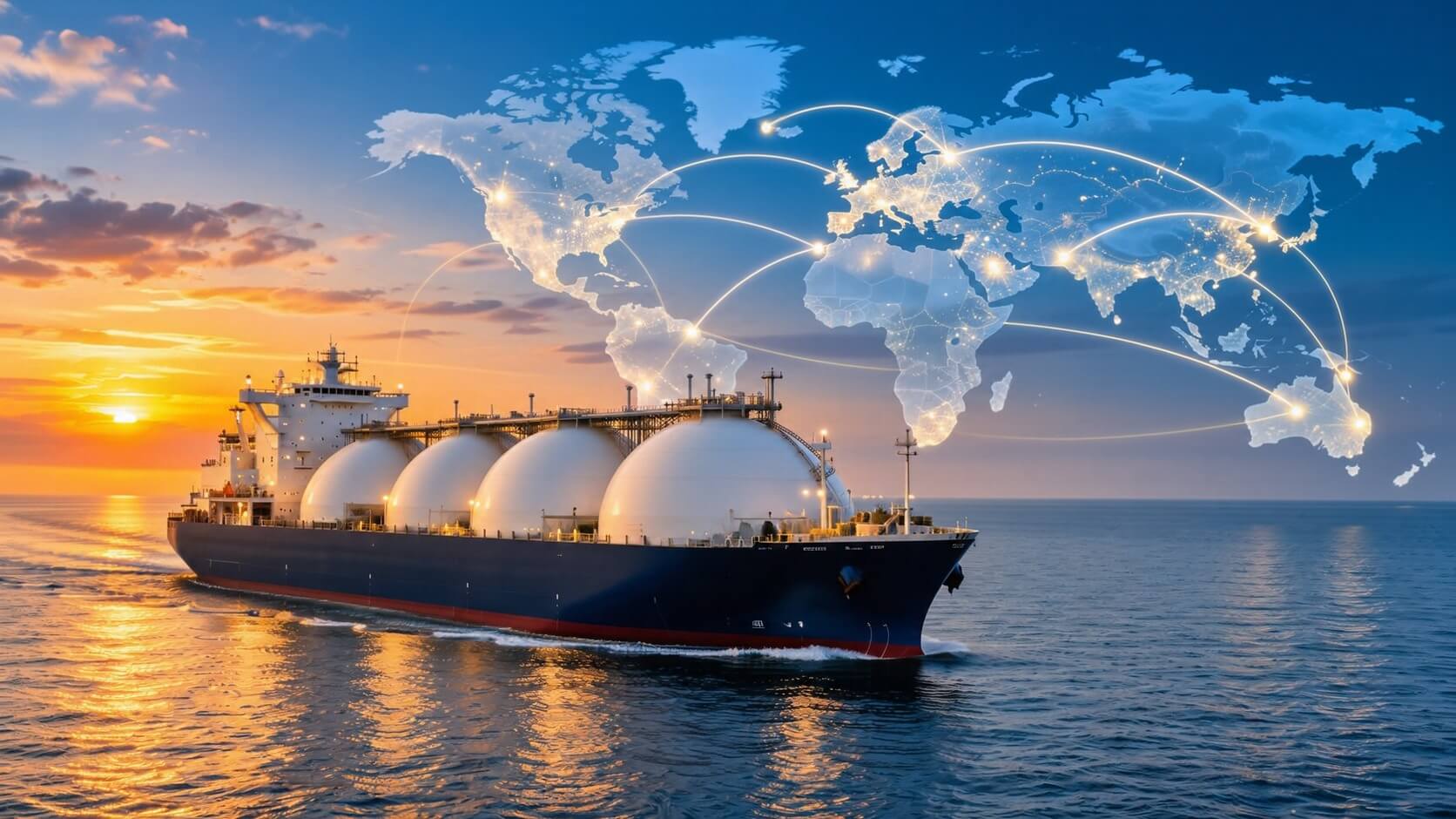
Sabine Pass LNG in Louisiana is the largest established LNG export plant in the United States by operating liquefaction capacity. Operated by Cheniere Energy, the facility has six production trains with a combined nominal capacity of approximately 30 million metric tons of liquefied natural gas per year.
Located in Cameron Parish near the Texas border, Sabine Pass began exporting LNG in 2016 and helped establish the United States as a major supplier to international markets. Its scale, pipeline connections, and access to Gulf Coast shipping routes make it a key part of American energy infrastructure.
However, the largest operating facility is not necessarily the fastest-growing one. New projects and expansions could change capacity rankings, so it is important to distinguish operating capacity from production that is planned, under construction, or still being commissioned.
How Large Is the Sabine Pass LNG Export Facility?
Sabine Pass is a large industrial complex that receives natural gas through pipelines, converts it into LNG, stores it, and loads it onto specialized carriers for export.
Its principal operating characteristics include:
- Operator: Cheniere Energy, through its affiliated operating structure.
- Location: Cameron Parish, Louisiana.
- Operating liquefaction trains: Six.
- Nominal LNG production capacity: Approximately 30 million metric tons annually.
- Natural gas processing: More than 4.7 billion cubic feet per day.
- LNG storage: Five large storage tanks.
- Marine infrastructure: Three berths for loading LNG carriers.
- First LNG exports: 2016.
A liquefaction train is a production unit that cools natural gas to approximately minus 260 degrees Fahrenheit, turning it into liquid. Liquefaction reduces the gas's volume by roughly 600 times, making long-distance transportation by ship practical.
Operating six trains at one location allows Sabine Pass to share pipelines, storage tanks, loading facilities, and maintenance resources. These advantages support large-scale production, although actual output still depends on equipment availability and operating conditions.
Why Is Sabine Pass Located in Louisiana?
Sabine Pass benefits from Louisiana's access to natural gas supplies, extensive pipeline networks, established energy infrastructure, and international shipping routes through the Gulf of Mexico.
Four advantages help explain the location:
- Pipeline connectivity: Connections to multiple gas-producing regions reduce dependence on a single supply source.
- Coastal access: LNG carriers can reach international shipping routes without navigating extensive inland waterways.
- Industrial infrastructure: The Gulf Coast offers an experienced energy workforce, specialized contractors, and supporting services.
- Expansion potential: Existing pipelines and marine facilities may support additional capacity, subject to technical and regulatory requirements.
Sabine Pass belongs to a broader concentration of LNG infrastructure along the Gulf Coast. For a geographic overview of operating facilities, see Where Are LNG Export Terminals Located in the US?.
How Does Sabine Pass Compare With Other Major US LNG Plants?
Sabine Pass is a benchmark for large-scale US LNG production, but other Gulf Coast terminals are expanding or bringing additional capacity online.
The following comparison highlights their different operating and development profiles rather than treating planned capacity as existing production.
| LNG Facility | Location | Operating Company | Industry Position |
|---|---|---|---|
| Sabine Pass LNG | Louisiana | Cheniere Energy | Largest established operating export facility |
| Corpus Christi LNG | Texas | Cheniere Energy | Major operating terminal with continuing expansion |
| Plaquemines LNG | Louisiana | Venture Global | Large developing facility with production ramp-up |
| Freeport LNG | Texas | Freeport LNG | Major established export terminal |
| Cameron LNG | Louisiana | Cameron LNG | Large operating export facility |
| Calcasieu Pass LNG | Louisiana | Venture Global | Operating facility using modular liquefaction technology |
Capacity figures require careful comparison. LNG companies may report nominal production capacity, peak output, permitted export volumes, or expected capacity after expansion. These measures are not interchangeable.
For example, a terminal may hold authorization to export more LNG than its currently installed equipment can produce. Similarly, a project under construction may have substantial planned capacity without generating commercial output from all its proposed production units.
Investors should compare operating capacity, actual production, and committed expansion separately. This helps distinguish existing business performance from future growth expectations.
Which Company Operates the Largest LNG Export Plant?
Cheniere Energy operates Sabine Pass and is a leading participant in the US LNG export industry. The company also operates Corpus Christi LNG in Texas, giving it a substantial presence at two major Gulf Coast export locations.
Cheniere's business involves purchasing natural gas, liquefying it, and supplying LNG to international customers under commercial agreements.
Many of these agreements include long-term purchase commitments. Depending on contract terms, customers may pay fixed liquefaction fees or purchase LNG at prices linked to natural gas benchmarks.
Long-term contracts can improve revenue visibility and support project financing. However, their financial value depends on pricing terms, customer reliability, operating costs, and the exporter's remaining commodity exposure.
For a broader comparison of companies operating American LNG export infrastructure, see Who Are the Largest LNG Exporters in the US?.
Could Another LNG Plant Become Larger Than Sabine Pass?
Yes. Major LNG developments could challenge Sabine Pass's position as additional liquefaction capacity enters commercial operation.
Three projects are particularly relevant when evaluating future US export capacity.
Plaquemines LNG
Venture Global's Plaquemines LNG facility in Louisiana is designed as a large export complex using multiple liquefaction units.
Its phased development allows production to increase as additional equipment is commissioned and brought into service.
However, installed equipment, completed commissioning, and sustained commercial production are different milestones. Investors should assess actual output rather than assuming the entire planned capacity is immediately available.
Corpus Christi LNG
Cheniere's Corpus Christi facility in Texas is expanding beyond its original three large-scale liquefaction trains through additional midscale production units.
Expansion at an established terminal can benefit from existing infrastructure and operating experience. Nevertheless, new trains require construction, testing, and integration before contributing fully to commercial output.
Corpus Christi's growing capacity also strengthens Cheniere's overall production portfolio, regardless of whether an individual facility exceeds Sabine Pass.
Sabine Pass Expansion
Cheniere is also pursuing additional liquefaction capacity at Sabine Pass.
Its expansion plans include new production trains and supporting infrastructure developed in phases. The first phase is designed around a seventh train, with expected peak production capacity exceeding 6 million metric tons annually, including anticipated optimization opportunities.
Further expansion would depend on regulatory approvals, financing, commercial agreements, and final investment decisions.
These projects illustrate why capacity rankings can change. Announced capacity should not be counted as operational until the relevant equipment enters service.
Why Does LNG Plant Capacity Matter to Investors?
Production capacity indicates the potential scale of an LNG export business, but it does not directly measure profitability or cash flow.
Four factors help determine whether a large facility can translate its capacity into attractive financial performance.
1. Capacity Utilization
A terminal with nominal annual capacity of 30 million metric tons does not necessarily produce that amount every year.
Maintenance, equipment availability, gas supply interruptions, and operational constraints can reduce production.
Comparing actual LNG output with available capacity helps investors evaluate operating performance and identify whether production growth comes from improved utilization or newly installed equipment.
2. Long-Term Customer Contracts
Long-term agreements with utilities, energy companies, and international buyers can support financing and provide more predictable revenue.
However, contract structures differ. Some exporters have substantial fixed-fee arrangements, while others retain greater exposure to domestic gas prices or international LNG markets.
Investors should examine contract duration, pricing formulas, and customer credit quality rather than assuming all LNG export volumes generate similar margins.
3. Construction and Expansion Costs
Liquefaction trains, storage tanks, pipelines, and marine facilities require billions of dollars in capital investment.
Expansion can increase future production and revenue potential, but construction delays, cost overruns, and additional borrowing may reduce expected shareholder returns.
A project's financial attractiveness depends on whether future cash flows justify its construction and financing costs.
4. Access to Natural Gas
Reliable natural gas supplies are essential for continuous LNG production.
Export terminals need sufficient pipeline capacity and competitively priced feedgas, the natural gas delivered to a facility for liquefaction.
Growing LNG export demand can increase competition for gas with power generators, industrial users, and other domestic consumers. Pipeline constraints or higher feedgas costs can affect operating economics.
For a closer examination of these supply conditions, see Does the US Have Enough Natural Gas to Support LNG Exports?.
Does the Largest LNG Plant Have the Highest Profits?
Not necessarily. A larger LNG facility does not automatically generate higher profit margins or better shareholder returns.
A smaller terminal with favorable contracts, controlled costs, and manageable debt may produce stronger financial returns relative to the capital invested.
Conversely, a larger facility may face significant financing expenses, maintenance requirements, or less favorable commercial arrangements.
When comparing LNG companies, investors should examine:
- Actual LNG production and export volumes relative to available capacity.
- Contract duration, pricing structures, and customer credit quality.
- Operating expenses and maintenance requirements.
- Debt obligations and financing costs.
- Capital spending and expected returns from expansion projects.
- Operating cash flow, free cash flow, and shareholder distributions.
- Exposure to domestic natural gas and international LNG prices.
These measures provide a more useful assessment of financial performance than facility size alone.
What Makes Sabine Pass Important to the US LNG Industry?
Sabine Pass helped establish the commercial model for large-scale US LNG exports by connecting domestic natural gas supplies with international customers through liquefaction and marine transportation infrastructure.
Its operating history demonstrates the value of established pipeline connections, functioning production equipment, shipping access, and long-term customer relationships.
It also illustrates an important distinction for investors: an established terminal with proven production capabilities has a different risk profile from a proposed project that still requires financing, construction, and commissioning.
Sabine Pass remains a benchmark for US LNG export infrastructure, but production capacity alone does not determine investment quality. Contract economics, operating efficiency, capital requirements, and cash flow ultimately matter more when evaluating an LNG business.
For a complete explanation of how terminals, exporters, domestic gas producers, and international customers interact, see US LNG Exporters and Terminals: How the Industry Works.
Disclaimer: This article is for informational and educational purposes only and does not constitute financial or investment advice. Energy investments involve market, operational, regulatory, and financial risks.