
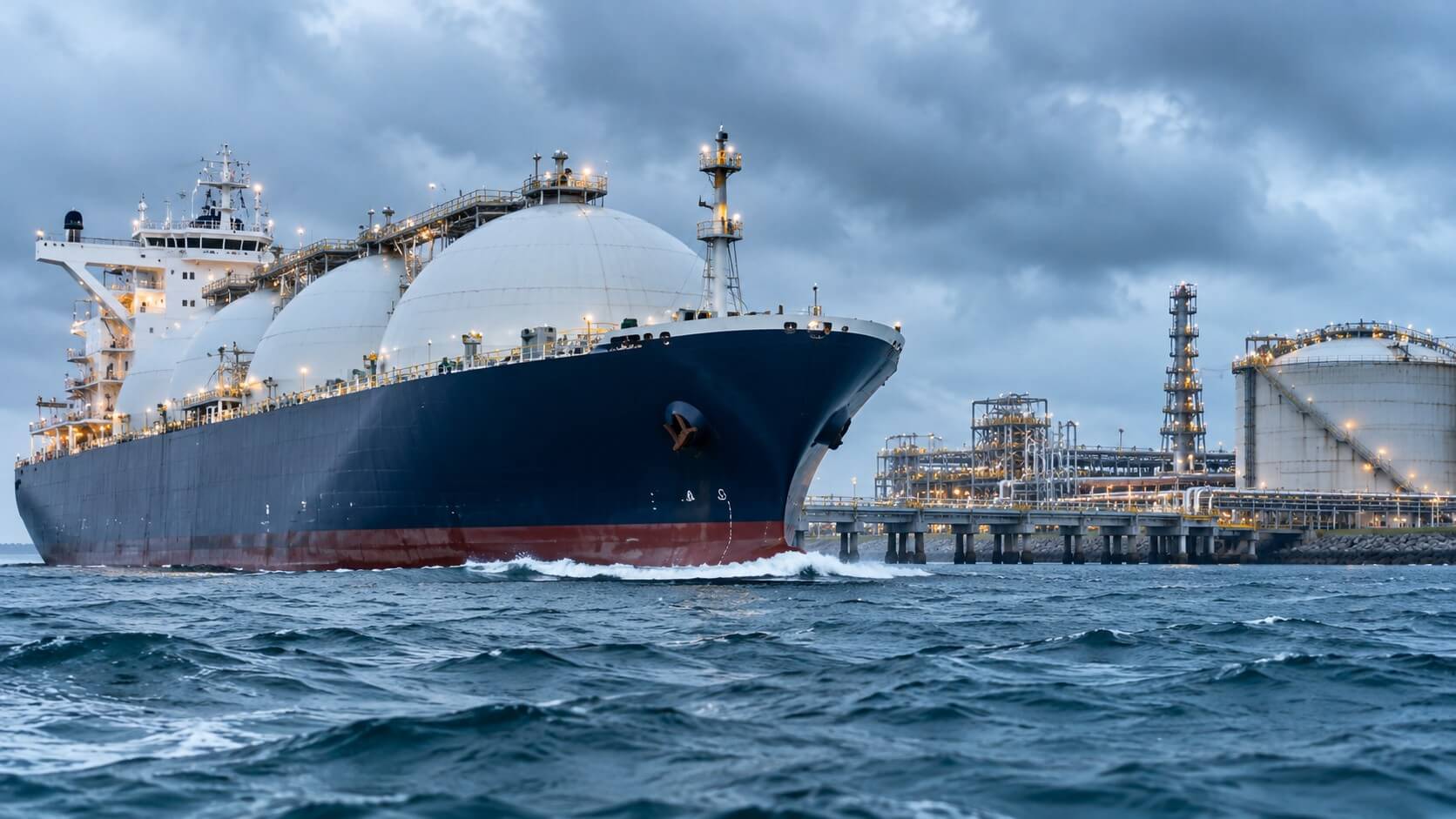
China, Japan, and South Korea are among the world's largest importers of liquefied natural gas (LNG), while Europe represents another major source of global demand. China has frequently ranked as the largest individual LNG importing country, although Japan has also held the top position. Rankings change with energy consumption, prices, and market conditions.
These countries import LNG to support electricity generation, industrial production, heating, and other energy needs. Some have limited domestic natural gas resources, while others use LNG to supplement local production and pipeline imports.
For US investors, these markets matter because international demand influences export terminal utilization, long-term supply contracts, shipping activity, and investment in new LNG infrastructure.
Which Countries Import the Most LNG?
Global LNG imports are concentrated in major Asian economies and European markets. Annual rankings vary with weather, industrial activity, domestic energy production, and international gas prices.
The following countries are among the most important LNG importing markets.
| Country | Market Position | Main Demand Drivers |
|---|---|---|
| China | One of the world's largest LNG importers | Industrial demand, electricity generation, and gas distribution |
| Japan | Major established LNG importer | Power generation and limited domestic energy resources |
| South Korea | Major Asian LNG importer | Electricity generation, heating, and industrial demand |
| India | Large importer with long-term growth potential | Industrial activity, fertilizers, city gas, and energy demand |
| Taiwan | Important Asian LNG market | Electricity generation and energy security |
| France | Major European LNG importing market | Gas supply diversification and regional infrastructure |
| Spain | Established European LNG importer | Gas-fired electricity, industrial use, and import diversification |
| Netherlands | Important European LNG entry point | Domestic demand and regional gas distribution |
This comparison identifies major importing markets rather than providing a fixed annual ranking. Import volumes fluctuate, and a country's position can change from year to year.
It is also important to distinguish individual countries from regional markets. The European Union collectively imports substantial LNG volumes, but it is not a single country.
Why Does China Buy So Much LNG?
China imports large quantities of LNG because its industrial economy and energy system require substantial natural gas supplies.
Natural gas supports manufacturing, chemical production, electricity generation, commercial buildings, and residential heating. LNG supplements China's domestic gas production and pipeline imports.
Five factors influence Chinese LNG purchases:
- Industrial production: Manufacturing and chemical industries consume significant amounts of natural gas.
- Electricity demand: Gas-fired power plants supply electricity and provide flexibility when power demand changes.
- Domestic production: Chinese gas production reduces but does not eliminate the need for imports.
- Pipeline supplies: Gas imported from neighboring countries competes with seaborne LNG.
- International prices: Higher LNG prices can discourage purchases by price-sensitive customers.
China's position as a major buyer does not guarantee annual import growth. Economic conditions, domestic production, pipeline deliveries, renewable electricity expansion, and government policies can all change its requirements.
For US exporters, China offers a large potential customer base, but its purchasing activity can vary significantly with market conditions.
Why Are Japan and South Korea Major LNG Buyers?
Japan and South Korea have long been important LNG markets because both countries have limited domestic natural gas resources and depend heavily on imported energy.
Japan's LNG Demand
Japan imports LNG primarily for electricity generation and industrial consumption.
Its demand is closely connected to nuclear power availability. When nuclear reactors generate more electricity, gas-fired generation may decline. Nuclear outages or periods of unusually high electricity demand can increase gas consumption.
Renewable energy production, efficiency improvements, and industrial activity also influence LNG requirements.
Japan therefore remains a major established buyer, although its import volumes do not necessarily increase every year.
South Korea's LNG Demand
South Korea imports LNG for electricity generation, residential and commercial heating, and industrial production.
Consumption is sensitive to seasonal temperatures, particularly during cold winters and periods of high electricity demand.
Nuclear generation, renewable power expansion, and national energy policies also affect future gas requirements.
Both Japan and South Korea are important customers for LNG exporters because they have established import terminals, experienced energy buyers, and a long history of purchasing LNG under multi-year supply agreements.
Why Is Europe Such an Important LNG Market?
Europe became an increasingly important LNG destination as countries sought alternatives to Russian pipeline gas following disruptions to traditional energy supply relationships.
LNG allows European buyers to purchase natural gas from multiple exporting countries, including the United States, Qatar, and other international suppliers.
Major European LNG markets include France, Spain, the Netherlands, Italy, Belgium, and the United Kingdom. Germany has also developed floating LNG import infrastructure to diversify its gas supplies.
European LNG demand depends on several factors:
- Winter temperatures: Colder weather increases heating requirements.
- Industrial activity: Manufacturing output influences natural gas consumption.
- Gas storage: Storage levels affect the timing and volume of additional imports.
- Renewable electricity: Wind and solar generation can reduce demand for gas-fired power.
- Energy policy: Efficiency measures and decarbonization policies may reduce long-term gas consumption.
Europe is therefore a major commercial market for LNG suppliers, but its future import requirements remain sensitive to energy policy, weather, and economic activity.
Importing countries also need facilities capable of receiving LNG and converting it back into gas for domestic use. The differences between import and export infrastructure are explained in Which Countries Have LNG Terminals and Why Do They Matter?.
Which Countries Supply the Most LNG to Europe?
The United States has become one of Europe's leading LNG suppliers, supported by large Gulf Coast export facilities and flexible commercial arrangements.
Other important suppliers include Qatar, Algeria, Nigeria, and Russia, although their relative contributions vary over time.
European buyers generally prioritize reliable deliveries, competitive prices, diversified supply sources, and contractual flexibility.
US LNG exporters can serve both European and Asian customers, depending on contractual obligations, shipping costs, and regional price differences.
However, stronger European demand does not automatically produce higher profits for every American exporter. Some companies earn substantial revenue through long-term liquefaction contracts, while others have greater exposure to international LNG prices.
For an overview of the companies operating major American export facilities, see Who Are the Largest LNG Exporters in the US?.
Is India Becoming a Major LNG Growth Market?
India is already an important LNG importer and represents a potential source of additional long-term demand.
Its expanding economy, industrial development, and energy requirements create opportunities for increased natural gas consumption.
Gas is used in fertilizer manufacturing, industrial processes, and city gas distribution, including supplies for households, businesses, and vehicles.
However, LNG affordability remains a major constraint. When international prices rise sharply, some Indian customers may reduce purchases or switch to alternative fuels where practical.
Import terminal capacity, domestic gas production, pipeline infrastructure, and government policies also influence growth.
For LNG exporters, India offers potential demand expansion, but projected consumption should not be treated as guaranteed future purchases.
How Does Global LNG Demand Affect US Exporters?
International demand influences the financial and operating environment for American LNG export companies through four main channels.
1. Long-Term Supply Agreements
Building an LNG export facility requires substantial capital investment, often amounting to billions of dollars.
Long-term purchase agreements with international customers can provide revenue visibility and help developers secure financing.
Contract terms vary. Some include fixed liquefaction fees, while others use commodity-linked pricing or additional commercial arrangements.
Demand from established and emerging importing markets can create opportunities for exporters to secure new contracts.
2. Export Terminal Utilization
International demand can influence LNG production and shipping volumes, particularly where exporters have flexibility to sell cargoes into different markets.
However, actual output also depends on maintenance, equipment performance, natural gas availability, and contractual commitments.
A terminal with substantial nominal capacity does not necessarily operate at maximum production throughout the year.
3. New LNG Infrastructure
Expectations of sustained international demand can encourage companies to develop additional liquefaction trains or entirely new export terminals.
Before making major investments, developers must evaluate construction costs, financing, regulatory requirements, and customer commitments.
Even when global demand appears favorable, individual projects may face delays, cost overruns, or insufficient commercial returns.
4. International Price Differences
Natural gas and LNG prices can differ substantially between the United States, Europe, and Asia.
US gas prices are commonly referenced against Henry Hub, while European and Asian LNG markets use benchmarks such as TTF and JKM.
Price differences can create opportunities to purchase gas in the United States, liquefy it, and sell LNG internationally.
However, liquefaction fees, shipping expenses, fuel consumption, and contractual terms affect the economics of each transaction.
Not every LNG exporter captures the full difference between domestic and international prices. The financial benefit depends on who owns the gas, who sells the cargo, and how the contract allocates market exposure.
Could Global LNG Demand Decline?
Yes. LNG remains important to international energy trade, but its future consumption is not guaranteed to increase continuously.
Several developments could reduce demand or slow its growth:
- Renewable energy expansion: Wind, solar, and energy storage can reduce gas-fired electricity generation in some markets.
- Nuclear power: Reactor restarts and new nuclear capacity may replace some gas-fired generation.
- Energy efficiency: Improved buildings and industrial processes can reduce fuel consumption.
- Economic weakness: Slower manufacturing activity can reduce industrial gas demand.
- High LNG prices: Expensive imports may discourage purchases in price-sensitive markets.
- Alternative gas supplies: Domestic production and pipeline imports can replace some LNG deliveries.
At the same time, LNG may remain attractive to countries seeking reliable electricity, industrial fuel, and diversified energy supplies.
Future demand will depend on how these competing forces develop across individual markets rather than following a uniform global trend.
Does the US Have Enough Natural Gas to Meet International Demand?
The United States has substantial natural gas production from regions including the Appalachian Basin, Permian Basin, and Haynesville Shale.
This production base has supported the expansion of American LNG exports, but abundant gas resources do not guarantee unlimited export growth.
Domestic natural gas is also consumed by power plants, industrial facilities, households, and commercial customers.
Pipeline constraints, drilling economics, weather, and production growth can affect the availability and cost of gas delivered to export terminals.
For investors, these supply conditions matter because they influence LNG operating costs, infrastructure requirements, and the economics of future export expansion.
The relationship between domestic production and LNG exports is examined in Does the US Have Enough Natural Gas to Support LNG Exports?.
What Should Investors Watch in the Global LNG Market?
Country import rankings provide a useful picture of existing demand, but they do not reveal whether an LNG company represents an attractive investment.
Investors should monitor several indicators:
- Asian LNG demand: Import trends in China, Japan, South Korea, and India.
- European gas demand: Storage levels, seasonal consumption, and changes in supply sources.
- Long-term contracts: New purchase agreements that support export infrastructure investment.
- Global export capacity: Additional liquefaction projects entering commercial operation.
- Natural gas prices: Differences between US feedgas costs and international LNG prices.
- Shipping conditions: Carrier availability, freight costs, and international trade routes.
- Energy policies: Government decisions affecting natural gas consumption and import infrastructure.
The timing of supply growth relative to demand is particularly important.
If new LNG export capacity expands faster than global consumption, competition among suppliers may increase and international prices may weaken.
If demand grows faster than available supply, buyers may face higher prices and greater competition for cargoes.
These conditions affect LNG producers, export terminal operators, shipping companies, and infrastructure developers differently, depending on their contracts and exposure to market prices.
Why Global LNG Buyers Matter to the US Energy Industry
China, Japan, and South Korea remain central to international LNG trade, while Europe and emerging Asian markets provide additional sources of demand.
The importance of these buyers extends beyond current import volumes. Their energy policies, infrastructure investments, and purchasing decisions influence future LNG trade flows and export development.
For US exporters, international demand helps determine opportunities for long-term contracts, existing terminal operations, and new capacity investments.
However, investment performance also depends on domestic natural gas costs, contract structures, construction spending, financing, and competition.
Global LNG demand creates opportunities for American energy companies, but the value of those opportunities depends on how efficiently individual businesses convert demand into sustainable cash flow.
To understand how these factors connect across the American export industry, see US LNG Exporters and Terminals: How the Industry Works.
Disclaimer: This article is for informational and educational purposes only and does not constitute financial or investment advice. LNG and energy-related investments involve commodity price, operational, regulatory, and market risks.