
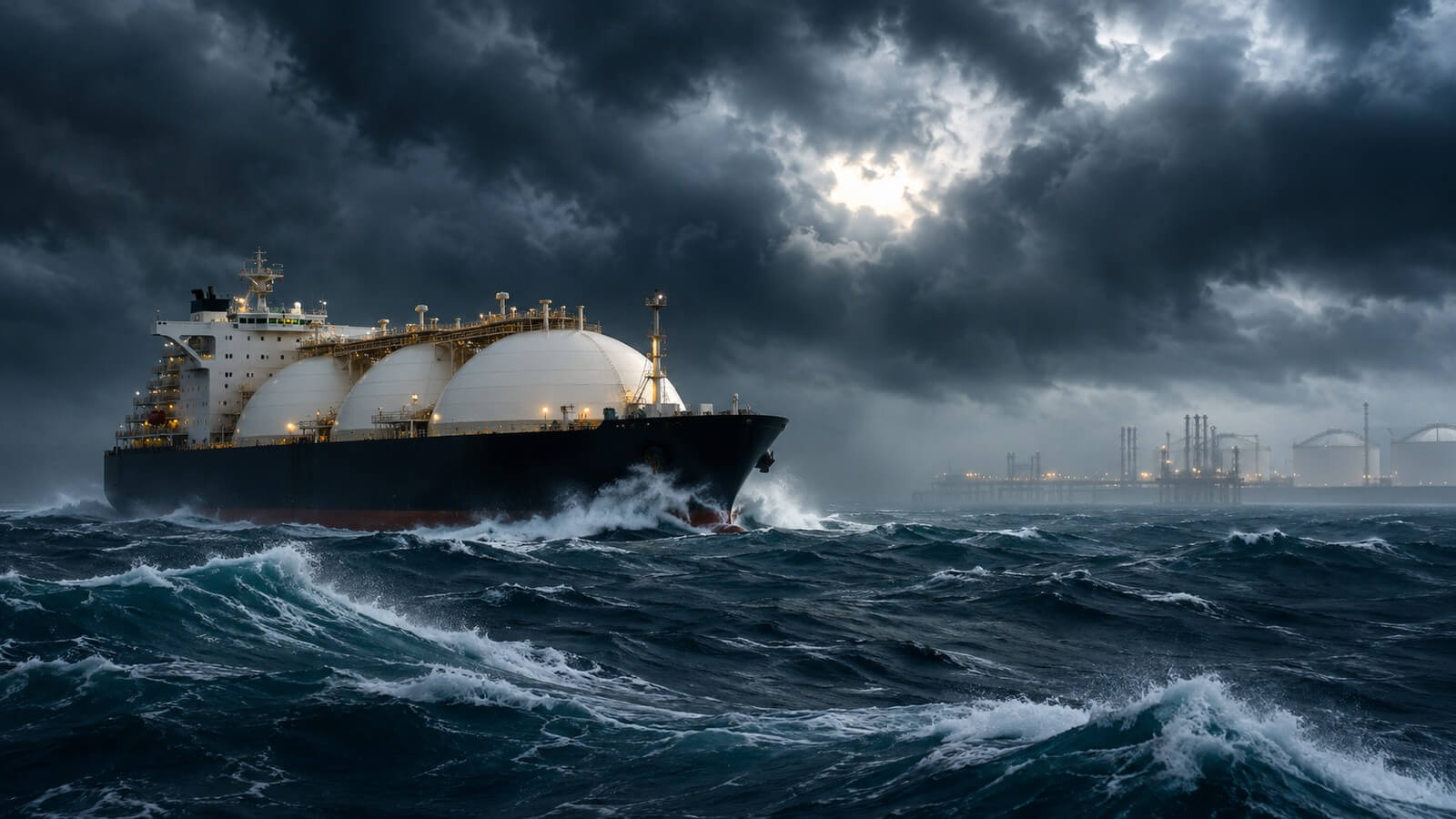
Yes, LNG shipping has a future, supported by international natural gas trade, new export infrastructure, and the continuing need to transport energy between producing and consuming countries. However, a growing LNG market does not automatically translate into higher profits for LNG carrier owners.
The industry's long-term outlook depends on whether demand for LNG transportation grows fast enough to absorb new vessels entering the global fleet. Charter rates, environmental regulations, financing costs, and changes in energy policy will also influence profitability.
For investors, LNG shipping provides exposure to international energy transportation rather than simply to natural gas prices. Understanding that distinction is essential when evaluating the industry's opportunities and risks.
What Is the Future of LNG Shipping?
The LNG shipping industry is likely to remain an important part of international energy trade because liquefied natural gas allows countries to transport natural gas across oceans without relying on pipelines.
Natural gas is cooled to approximately minus 162 degrees Celsius, reducing its volume by roughly 600 times and making long-distance maritime transportation practical.
Specialized LNG carriers transport the fuel from liquefaction terminals to importing countries, where it can be converted back into gas for electricity generation, industrial activity, and other uses.
The industry's future is shaped by three major developments:
- New LNG export projects: Additional liquefaction capacity can create demand for maritime transportation.
- Changing international trade routes: Shifts in supply and demand can alter voyage distances and vessel requirements.
- Fleet modernization: Newer vessels are replacing or competing with older, less efficient LNG carriers.
These developments support continued activity in the sector, but they also introduce uncertainty.
If vessel deliveries exceed transportation demand, shipping companies may face weaker charter rates despite growth in global LNG trade.
Will Global LNG Demand Continue to Grow?
Several major energy outlooks anticipate additional LNG demand over the coming years, although their projections differ considerably.
The International Energy Agency's Gas 2025 report projected that global LNG supply capacity could increase by approximately 300 billion cubic meters annually by 2030 compared with 2024 levels.
The agency also warned that the scale of new supply could create pressure on prices and require additional demand to absorb the available volumes.
This distinction matters for LNG shipping investors.
More liquefaction capacity creates the potential for additional cargoes, but it does not guarantee that every new facility will operate at full capacity or that all planned projects will begin exporting on schedule.
Actual transportation demand depends on natural gas consumption, LNG prices, competition from other energy sources, and the commercial viability of new projects.
What Supports LNG Demand?
Several factors could support international LNG trade:
- Growth in natural gas consumption in developing economies.
- Industrial demand for reliable energy supplies.
- Expansion of LNG import terminals and distribution infrastructure.
- Energy security policies encouraging diversified supply sources.
- Replacement of some coal-fired electricity generation with natural gas.
- Development of new LNG export facilities.
However, these drivers do not affect every country equally.
Some markets may increase LNG imports while others reduce purchases because of domestic gas production, pipeline availability, renewable energy growth, or changes in electricity generation.
Which Regions Could Drive Future LNG Shipping Demand?
Asia and Europe are expected to remain central to international LNG trade, although their demand profiles differ.
Asia: Industrial Growth and Energy Security
China, Japan, South Korea, India, and Taiwan are major LNG importing markets.
China is particularly important because changes in its LNG purchasing activity can influence global cargo flows.
India and other developing Asian markets may offer opportunities for additional natural gas demand as infrastructure expands.
However, LNG imports remain sensitive to energy prices, domestic production, and competition from other fuels.
Japan and South Korea represent established importing markets, where future demand will also depend on nuclear power, renewable electricity, and broader energy policy.
Europe: Diversification and Changing Energy Needs
Europe has increased its reliance on LNG as countries seek alternatives to certain pipeline gas supplies.
Additional import terminals and floating regasification facilities have expanded access to international LNG cargoes.
However, European energy policy also emphasizes efficiency, renewable energy, and long-term reductions in fossil fuel consumption.
These competing forces create uncertainty around the region's future LNG import requirements.
For shipping companies, European demand can remain important even without continuous growth, particularly when international supply patterns change.
For a detailed comparison of importing markets and how their purchasing decisions affect transportation routes, read Which Countries Drive Global LNG Shipping Demand?.
Why Could LNG Shipping Demand Grow Faster Than LNG Trade?
LNG shipping demand is influenced by both cargo volumes and transportation distances.
A useful industry measure is tonne-mile demand, which represents the quantity of cargo transported multiplied by the distance traveled.
Longer voyages keep vessels occupied for more time, potentially increasing the number of ships required to move a given volume of LNG.
Consider a hypothetical example involving two LNG cargoes of identical size.
| Scenario | Voyage Distance | Transportation Requirement |
|---|---|---|
| Shorter trade route | 3,000 nautical miles | Lower vessel-time requirement |
| Longer trade route | 9,000 nautical miles | Higher vessel-time requirement |
The second voyage covers three times the distance.
Assuming similar operating conditions, it requires substantially more sailing time.
If global LNG trade shifts toward longer routes, the market may require additional shipping capacity even without a proportional increase in cargo volumes.
Conversely, a shift toward shorter routes can reduce the vessel time needed to transport the same amount of LNG.
This is why investors should monitor trade patterns alongside global LNG production and consumption.
Could Too Many LNG Carriers Create Oversupply?
Yes. Vessel oversupply is one of the most significant risks facing the LNG shipping industry.
Shipping companies often order new vessels several years before delivery.
These investment decisions are based on expectations about future LNG production, transportation requirements, and charter demand.
However, market conditions can change before the vessels enter service.
If LNG export projects are delayed or demand grows more slowly than anticipated, additional ships may enter an already competitive market.
This can reduce vessel utilization and put pressure on charter rates.
Why Is the LNG Carrier Orderbook Important?
The orderbook represents vessels contracted for construction but not yet delivered.
A large orderbook indicates substantial future shipping capacity.
At the end of 2025, Flex LNG's annual report identified an LNG carrier orderbook of approximately 280 vessels.
This represented a significant construction pipeline relative to the existing global fleet.
However, the orderbook is not a guarantee that every vessel will enter service on its originally scheduled date.
Shipyard delays, contract changes, and new orders can alter the delivery schedule.
Investors should examine how new vessel deliveries compare with expected growth in LNG transportation demand.
For a detailed analysis of global fleet size, newbuilding deliveries, and the relationship between shipping capacity and charter rates, read How Many LNG Carriers Are in the Global Fleet?.
How Does Vessel Oversupply Affect Charter Rates?
Charter rates are influenced by the balance between available ships and demand for transportation.
When LNG carriers are scarce, customers may compete to secure vessels.
When many ships are available, shipowners may accept lower rates to obtain employment.
Consider three hypothetical market conditions.
| Market Condition | Vessel Availability | Potential Charter Rate Effect |
|---|---|---|
| Tight shipping market | Limited available vessels | Upward pressure |
| Balanced shipping market | Supply broadly matches demand | Relatively stable conditions |
| Oversupplied market | Excess available vessels | Downward pressure |
These relationships are directional rather than guaranteed outcomes.
Actual charter rates also depend on vessel technology, cargo routes, contract duration, seasonal demand, and geopolitical conditions.
Modern, efficient LNG carriers may attract stronger commercial interest than older vessels.
However, even technologically advanced ships can face weaker earnings when the market has substantial excess capacity.
Are Long-Term LNG Shipping Contracts Safer Than Spot Charters?
Long-term charter contracts can provide greater revenue visibility than short-term employment.
Under a long-term agreement, a customer commits to using a vessel according to defined commercial terms.
These arrangements may support financing because lenders can evaluate expected future charter payments.
However, long-term contracts do not eliminate financial risk.
Shipowners still face operating expenses, maintenance obligations, financing costs, and counterparty exposure.
In addition, a vessel may need to secure a new contract when its existing charter expires.
| Characteristic | Long-Term Charter | Spot or Short-Term Employment |
|---|---|---|
| Revenue visibility | Generally higher | Generally lower |
| Exposure to rising market rates | Usually limited during fixed-rate periods | Potentially greater |
| Exposure to falling market rates | Often reduced during the contract | Potentially greater |
| Contract renewal risk | Concentrated around expiration | More frequent |
| Financial predictability | Generally stronger | More variable |
For investors, the most attractive contract structure depends on the charter rate secured, the company's financial obligations, and prevailing market conditions.
A long-term contract signed at an unfavorable rate may limit profitability, while a short-term strategy can generate substantial earnings during strong markets but exposes the owner to greater volatility.
What Are the Disadvantages of LNG?
LNG offers important commercial advantages, including the ability to transport natural gas across oceans and provide greater energy supply flexibility.
However, it also has disadvantages that influence the industry's long-term outlook.
Greenhouse Gas Emissions
Natural gas combustion produces carbon dioxide.
Although natural gas can produce less carbon dioxide per unit of energy than coal when burned, its overall climate impact depends on emissions across the supply chain.
Methane leakage is particularly important because methane is a powerful greenhouse gas.
Emissions can occur during natural gas production, processing, transportation, and distribution.
The climate performance of LNG therefore depends on more than combustion emissions alone.
Energy-Intensive Liquefaction
Cooling natural gas to approximately minus 162 degrees Celsius requires substantial energy.
Additional energy is required for shipping and regasification.
These processes increase the total energy requirements associated with LNG supply.
High Infrastructure Costs
LNG production and transportation require expensive infrastructure, including liquefaction plants, specialized ships, and receiving terminals.
Large capital investments create financial exposure when energy demand or market conditions change.
Commodity Price Volatility
International LNG prices can fluctuate because of weather, supply disruptions, storage levels, and changes in demand.
Price volatility can influence the willingness of importing countries to purchase LNG.
Long-Term Energy Transition Risk
Government policies supporting renewable energy, electrification, and emissions reductions may affect long-term natural gas consumption.
For LNG shipping investors, these risks can influence future cargo demand and the economic value of transportation assets.
How Will Environmental Regulations Affect LNG Carriers?
Environmental regulation is becoming increasingly important for international shipping.
The International Maritime Organization has established measures addressing vessel energy efficiency and carbon intensity.
Two important frameworks are the Energy Efficiency Existing Ship Index (EEXI) and the Carbon Intensity Indicator (CII).
These measures influence how shipping companies assess vessel performance and operational efficiency.
Energy Efficiency Existing Ship Index
EEXI establishes technical energy-efficiency requirements for existing ships covered by the rules.
Older vessels may need technical or operational adjustments to meet applicable standards.
Carbon Intensity Indicator
CII evaluates operational carbon intensity for covered vessels.
Ships receive performance ratings based on their reported efficiency.
Poor performance can create additional compliance obligations and encourage operational improvements.
European Union Emissions Trading System
The EU Emissions Trading System has been extended to maritime transportation.
Covered shipping activities are subject to emissions-related compliance requirements.
These requirements can influence transportation costs and commercial arrangements between shipowners and charterers.
The financial impact depends on voyage patterns, contractual responsibilities, and the applicable regulatory framework.
Investors should monitor these regulations because they can affect operating costs, vessel competitiveness, and future capital expenditures.
Will Older LNG Carriers Become Obsolete?
Older LNG carriers may face increasing competition from modern vessels with more efficient propulsion systems.
Some older ships use steam-turbine propulsion, while many newer carriers employ more advanced dual-fuel technologies.
Newer systems can improve fuel efficiency and reduce certain operating costs.
However, vessel age alone does not determine whether a ship remains commercially useful.
An older LNG carrier may continue operating successfully when it has a suitable charter contract, acceptable operating costs, and adequate technical performance.
Nevertheless, older vessels may face several challenges:
- Higher fuel consumption.
- Increasing maintenance requirements.
- More demanding environmental compliance.
- Reduced competitiveness against modern ships.
- Lower demand from certain charter customers.
- Potential pressure on secondhand market values.
These factors can encourage fleet renewal and vessel recycling.
For investors, the average age and propulsion technology of a company's fleet are important indicators of future competitiveness.
How Do Geopolitical Risks Affect LNG Shipping?
LNG shipping operates across international trade routes, making it sensitive to geopolitical developments.
Disruptions can affect transportation costs, voyage distances, and vessel availability.
Shipping Route Disruptions
Restrictions or security concerns affecting major maritime routes can force vessels to travel longer distances.
Longer voyages may increase transportation costs and keep ships occupied for additional time.
This can temporarily increase demand for available shipping capacity.
Trade Restrictions and Sanctions
International sanctions and trade policies can influence where LNG is produced, sold, and transported.
Changes in trade relationships may redirect cargoes toward different markets.
Regional Energy Security
Countries may increase LNG purchases to diversify energy supplies during periods of geopolitical uncertainty.
However, geopolitical disruptions can also reduce demand, delay projects, or increase operating risks.
For shipping companies, geopolitical developments can create opportunities and financial exposure simultaneously.
Could Renewable Energy Replace LNG Shipping?
Renewable energy growth can reduce demand for natural gas in some electricity markets.
However, the pace of change varies across countries and sectors.
Electricity systems require reliable supply, and natural gas may continue to play a role in certain markets alongside renewable generation, storage, and other energy technologies.
Industrial natural gas demand can also differ from electricity-sector demand.
For LNG shipping, the key issue is not whether renewable energy expands, but how that expansion affects international LNG trade volumes over time.
Some countries may reduce LNG imports as renewable generation increases.
Others may continue importing LNG because of industrial demand, energy security requirements, or limited alternatives.
This creates a market in which demand can grow in certain regions while declining in others.
Investors should avoid assuming either uninterrupted LNG growth or an immediate disappearance of natural gas transportation.
What Makes an LNG Shipping Company a Stronger Investment Candidate?
The financial strength of an LNG shipping company depends on more than the industry's overall growth outlook.
Investors should evaluate the company's fleet, charter contracts, financing structure, and exposure to market volatility.
| Investment Factor | What Investors Should Examine |
|---|---|
| Fleet age | Efficiency, maintenance requirements, and competitiveness |
| Propulsion technology | Fuel consumption and environmental performance |
| Charter coverage | Contract duration and revenue visibility |
| Customer quality | Financial strength of charter counterparties |
| Debt levels | Interest expenses and repayment obligations |
| Newbuilding commitments | Future capital requirements |
| Spot-market exposure | Sensitivity to changing charter rates |
| Liquidity | Ability to withstand weaker market conditions |
| Fleet ownership structure | Economic exposure through wholly owned and joint-venture vessels |
A company with modern vessels, manageable debt, and long-term charter coverage may offer greater financial predictability than a heavily leveraged operator dependent on short-term charter rates.
However, stronger financial stability does not automatically make a stock attractively valued.
Investors must also consider the price paid for the company's shares and the cash flows expected from its assets.
For a comparison of major LNG shipping companies and the differences between their business models, read Major LNG Shipping Companies and How They Compete.
What Could Improve LNG Shipping Profitability?
Several developments could support stronger financial results for LNG carrier owners.
Faster Growth in LNG Transportation Demand
Additional cargo volumes can increase demand for vessels, particularly when shipping capacity is limited.
Longer Average Voyage Distances
Longer trade routes require more vessel time per cargo and can increase effective transportation demand.
Slower Fleet Growth
Reduced newbuilding deliveries or increased retirement of older vessels can help balance available shipping capacity.
Improved Vessel Efficiency
More efficient propulsion and technical management can reduce certain operating expenses.
Favorable Long-Term Contracts
Charter agreements with reliable customers can provide stable revenue and support financing.
However, these benefits must be weighed against construction costs, financing obligations, and the possibility of weaker future market conditions.
What Could Weaken the LNG Shipping Outlook?
The industry's long-term prospects could deteriorate if transportation capacity expands significantly faster than demand.
Other risks include:
- Delays or cancellations of LNG export projects.
- Lower natural gas consumption in major importing markets.
- Rapid expansion of competing energy technologies.
- High financing costs and refinancing difficulties.
- Stricter environmental requirements.
- Weak spot charter rates.
- Reduced secondhand vessel values.
- Unexpected changes in international trade routes.
These risks can affect individual shipping companies differently.
A company with substantial long-term charter coverage may experience less immediate revenue volatility, while an operator dependent on spot employment may be more sensitive to market conditions.
Three Possible Scenarios for LNG Shipping
Because future LNG demand and fleet growth are uncertain, investors can benefit from evaluating several scenarios rather than relying on a single forecast.
| Scenario | Market Conditions | Potential Shipping Impact |
|---|---|---|
| Positive | LNG trade and tonne-mile demand grow faster than available fleet capacity | Stronger vessel utilization and potential charter rate improvement |
| Balanced | LNG transportation demand broadly matches fleet expansion | Relatively stable employment conditions, with company-specific differences |
| Negative | Vessel deliveries exceed demand growth and export projects face delays | Weaker charter rates, lower utilization, and financial pressure |
These are qualitative scenarios rather than numerical forecasts.
The actual outcome will depend on the timing of new liquefaction capacity, vessel deliveries, international trade patterns, and energy demand.
Investors should update their assumptions as new industry information becomes available.
Is LNG Shipping a Good Long-Term Investment?
LNG shipping can offer long-term investment opportunities, but attractive industry demand does not guarantee attractive shareholder returns.
The sector requires substantial capital investment, and shipping companies may experience significant changes in earnings as charter markets strengthen or weaken.
Investors should distinguish between three questions:
- Will international LNG transportation remain necessary?
- Will shipping companies generate sufficient returns on their vessels?
- Are the shares of those companies attractively valued?
The answer to the first question may be positive even when the answers to the other two remain uncertain.
A growing industry can still produce disappointing investment returns if companies overinvest, accumulate excessive debt, or purchase vessels at unfavorable prices.
Conversely, a disciplined operator with reliable contracts and a strong balance sheet may remain financially resilient during weaker shipping markets.
For investors, company-specific analysis is therefore just as important as the broader LNG demand outlook.
What Investors Should Watch Over the Next Several Years
The future of LNG shipping will be shaped by the relationship between energy demand and transportation capacity.
Several developments deserve ongoing attention:
- New LNG export capacity entering commercial service.
- Import demand in China, Japan, South Korea, India, and Europe.
- Changes in average LNG shipping distances.
- The timing of LNG carrier newbuilding deliveries.
- Retirement of older and less efficient vessels.
- Spot and long-term charter rate trends.
- Environmental regulation and compliance costs.
- Debt levels and financing conditions across major operators.
Monitoring these factors together provides a more useful picture than focusing on LNG consumption or fleet growth alone.
Does LNG Shipping Have a Sustainable Future?
LNG shipping is likely to remain an important component of international energy trade, particularly as existing and planned LNG infrastructure connects producing countries with importing markets.
However, the industry's commercial future is not without challenges.
Fleet oversupply, environmental regulation, financing costs, and changes in natural gas demand can influence charter rates and vessel values.
For investors, the most important distinction is between the future of LNG transportation and the profitability of individual shipping companies.
Even if international LNG trade continues growing, some operators may struggle because of unfavorable charter contracts, expensive vessels, or excessive borrowing.
Others may benefit from efficient fleets, disciplined capital allocation, and stable customer relationships.
For a complete understanding of the sector, including LNG carrier fleets, major operators, shipping economics, and global trade, explore LNG Shipping Industry: Companies, Ships and Market Economics.
The central question for long-term investors is whether LNG shipping companies can generate sustainable cash flow and acceptable returns on capital while adapting to changing energy markets and environmental requirements.
Disclaimer: This article is for informational and educational purposes only and does not constitute financial or investment advice. LNG shipping investments involve market, operational, financing, environmental, and regulatory risks. Investors should conduct independent research and consider their financial circumstances before making investment decisions.