
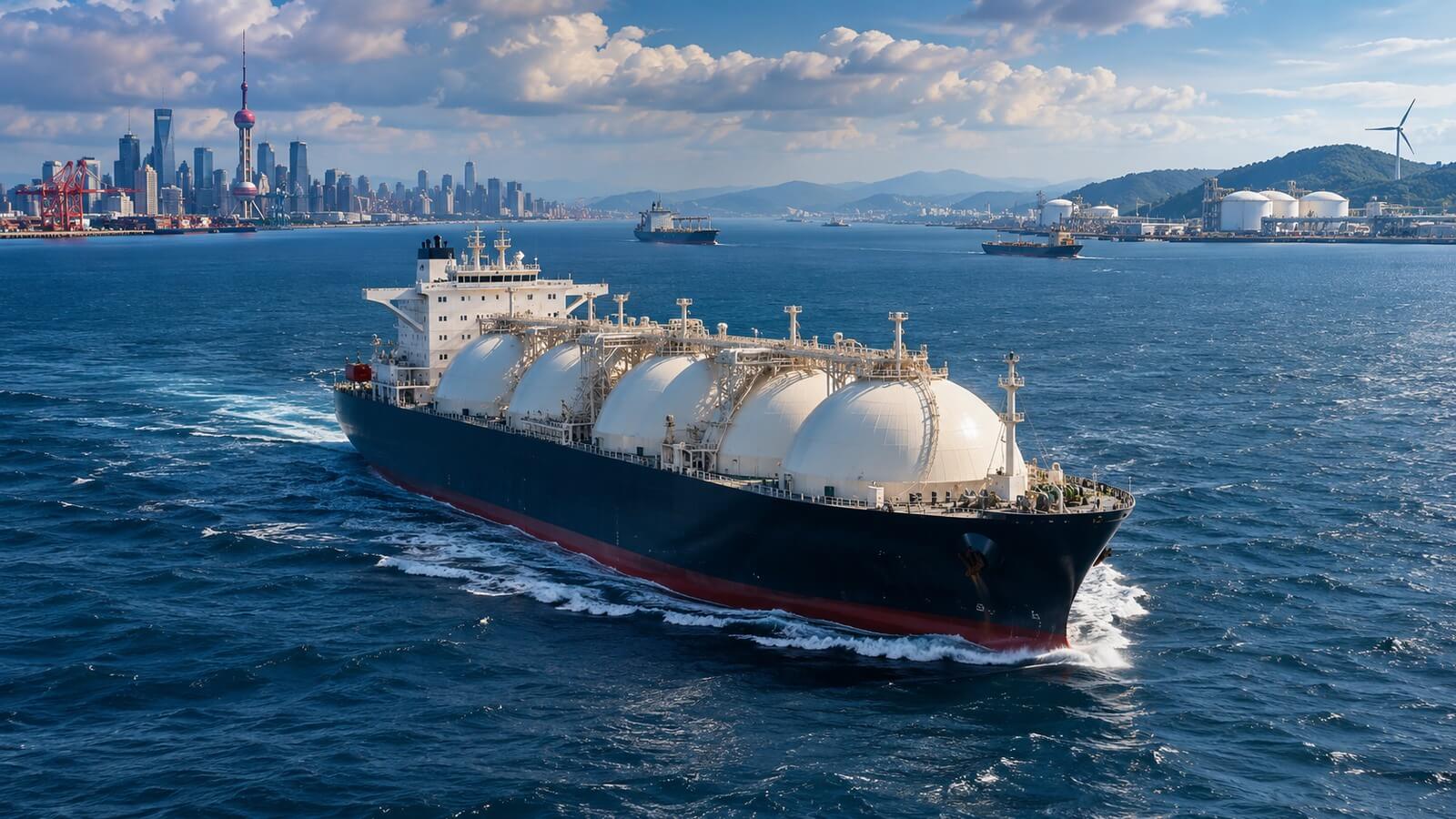
Major LNG shipping companies include Mitsui O.S.K. Lines (MOL), NYK Line, Nakilat, Maran Gas Maritime, Seapeak, and other specialized operators. These businesses own, manage, or commercially operate vessels transporting liquefied natural gas between export terminals and importing markets.
However, the largest LNG shipping company is not necessarily the most profitable or attractive investment. Fleet ownership, charter contracts, vessel efficiency, financing costs, and customer relationships all influence financial performance.
For investors, understanding how these companies compete is more useful than ranking them solely by vessel count.
Who Are the Biggest LNG Shipping Companies?
The global LNG shipping industry includes diversified maritime groups, specialized carrier owners, and privately controlled shipping businesses.
Some operators manage fleets exceeding 100 LNG carriers through direct ownership, joint ventures, and management agreements. Others focus on smaller fleets supported by long-term charter contracts.
The following companies are important industry participants.
| Company | Business Model | Competitive Position |
|---|---|---|
| Mitsui O.S.K. Lines (MOL) | Diversified shipping and energy transportation | Large LNG fleet, international partnerships, and long-term contracts |
| NYK Line | Diversified maritime transportation | Global LNG operations, joint ventures, and established customer relationships |
| Nakilat | LNG shipping and maritime services | Large carrier capacity and close relationships with Qatar's LNG industry |
| Maran Gas Maritime | Specialized LNG carrier ownership and management | Dedicated LNG transportation operations and modern vessels |
| Seapeak | Gas carrier ownership and long-term chartering | Contracted shipping operations and energy-sector customers |
| Flex LNG | Specialized LNG carrier ownership | Modern fleet and long-term charter coverage |
| GasLog | Specialized LNG transportation | Established LNG shipping operations and charter relationships |
This comparison describes business models rather than providing a definitive fleet ranking. Reported vessel counts vary depending on whether jointly owned, managed, or commercially operated ships are included.
Some companies are publicly traded, while others are privately held or controlled by larger corporate groups. Investors should verify current ownership and listing status before considering an investment.
Mitsui O.S.K. Lines: Scale and Diversification
Mitsui O.S.K. Lines, commonly known as MOL, is one of Japan's largest maritime transportation companies and a major participant in LNG shipping.
Unlike businesses focused exclusively on LNG carriers, MOL operates across multiple shipping and energy transportation segments.
Its LNG activities include vessel ownership, commercial operations, and partnerships with energy companies and other maritime groups.
A company presentation published by NYK Line in 2025 identified MOL with 107 LNG vessels in its fleet comparison, including vessels associated with ownership and management arrangements.
This scale provides several potential competitive advantages:
- Established relationships with international energy companies.
- Experience managing large, technically complex fleets.
- Access to financing and shipbuilding partnerships.
- Operational resources shared across maritime businesses.
- Participation in long-term LNG transportation projects.
For investors, diversification can reduce dependence on a single shipping market. However, MOL's financial results also reflect businesses beyond LNG transportation.
Consequently, investing in MOL is not equivalent to investing directly in LNG carrier charter rates.
NYK Line: LNG Shipping Within a Global Maritime Business
NYK Line is another major Japanese shipping company with extensive LNG transportation activities.
Its LNG operations combine ownership interests, joint ventures, and long-term commercial relationships.
NYK's 2025 fleet comparison identified 89 LNG vessels associated with the company under its reporting methodology.
Like MOL, NYK benefits from operating within a larger maritime organization.
Its competitive strengths include:
- Long-standing relationships with utilities and energy producers.
- Experience in technically demanding maritime operations.
- Access to major international shipping projects.
- Participation in vessel development and fleet modernization.
For investors, LNG shipping represents only one component of NYK's broader business.
Performance in other shipping segments influences consolidated earnings, making the company less directly exposed to LNG carrier market conditions than a specialized shipowner.
Nakilat: LNG Transportation Linked to Qatar's Energy Industry
Nakilat, formally Qatar Gas Transport Company Limited, is one of the world's most prominent LNG shipping businesses.
Its operations are closely connected to Qatar's position as a major LNG exporting country.
The fleet includes conventional LNG carriers and larger Q-Flex and Q-Max vessels designed to transport substantial quantities of liquefied natural gas.
In November 2026, Nakilat announced the naming of seven new LNG carriers and two LPG/ammonia carriers as part of its fleet expansion program.
Five of those LNG vessels belong to a 25-carrier construction program associated with long-term charter agreements with QatarEnergy affiliates.
This illustrates an important competitive advantage: fleet expansion supported by identified customers and long-term transportation requirements.
Why Nakilat's Business Model Is Different
Nakilat's competitive position reflects several factors:
- Strong commercial relationships within Qatar's LNG industry.
- Experience operating large-capacity LNG vessels.
- Long-term transportation contracts.
- Joint ventures with international shipping companies.
- Additional maritime services, including ship repair and support operations.
Long-term contracts can provide more predictable revenue than heavy reliance on short-term charter markets.
However, Nakilat remains exposed to capital expenditure, customer concentration, financing costs, and changes in transportation demand.
Its close relationship with Qatar's LNG export industry creates commercial opportunities but also links its performance to major Qatari energy projects.
Maran Gas Maritime: Specialized LNG Carrier Operations
Maran Gas Maritime is a specialized LNG shipping company associated with the Angelicoussis shipping group.
Its business focuses on operating and managing LNG carriers rather than offering a broad range of unrelated maritime services.
Specialization can provide advantages in crew training, technical management, maintenance, and customer relationships.
LNG transportation requires experienced personnel and sophisticated equipment, making operational expertise an important competitive factor.
A specialized operator may also concentrate investment on vessels and technologies directly supporting LNG transportation.
However, specialization creates concentration risk. A business focused primarily on LNG carriers has less diversification when shipping market conditions weaken.
Maran Gas is not a conventional publicly traded LNG shipping stock, so US retail investors cannot simply purchase shares through a major American exchange.
Seapeak: Contracted Gas Transportation
Seapeak is a major gas shipping business with LNG transportation operations and experience in long-term vessel chartering.
Its commercial model emphasizes providing transportation capacity to energy companies through contractual agreements.
Long-term charters can support predictable revenue and help finance vessels requiring substantial upfront investment.
Seapeak's competitive position depends on fleet quality, operational reliability, customer relationships, and efficient management of large shipping assets.
The company also illustrates why investors must distinguish important industry operators from publicly accessible equity investments.
A major shipping business can influence LNG transportation markets without offering shares on public exchanges.
Flex LNG: A More Focused Publicly Traded LNG Shipping Business
Flex LNG is a specialized LNG carrier owner listed on the New York Stock Exchange under the ticker FLNG.
According to its August 2026 fleet disclosure, the company owned and operated 13 LNG carriers.
Its fleet consists of modern vessels designed for efficient LNG transportation, with commercial employment focused on long-term charter agreements.
This makes Flex LNG different from diversified maritime companies such as MOL and NYK.
Investors can evaluate Flex LNG through its LNG charter revenue, fleet utilization, financing obligations, cash flow, and shareholder distributions.
What Makes Flex LNG Competitive?
- Modern vessels: Newer propulsion technologies can improve fuel efficiency and commercial attractiveness.
- Contract coverage: Long-term charters can support revenue visibility.
- Focused operations: LNG transportation represents the company's central business activity.
- Fleet management: Technical availability and operational efficiency influence financial results.
However, a focused business also has concentrated exposure to LNG shipping conditions.
Charter expiration dates matter because vessels eventually need to secure new employment at prevailing market rates.
Higher rates could create opportunities when contracts expire, while weaker markets could reduce future earnings.
Investors should therefore review the latest charter schedule, debt obligations, cash flow, and capital allocation decisions rather than relying solely on dividend yield.
GasLog and the Role of Private LNG Shipping Companies
GasLog is another established name in LNG transportation, with experience operating specialized carriers for international energy customers.
Its business illustrates the importance of private ownership and institutional investment within LNG shipping.
Private shipping companies compete with publicly traded operators for charter contracts, vessel acquisitions, and shipyard construction capacity.
They may also benefit from long-term capital and established relationships with major LNG buyers and sellers.
For retail investors, this means publicly traded LNG shipping companies represent only part of the industry.
Some influential operators are not directly accessible through ordinary stock purchases.
How Do LNG Shipping Companies Compete?
Although fleet size attracts attention, LNG shipping companies compete through several interconnected factors.
1. Fleet Quality and Fuel Efficiency
Modern LNG carriers generally offer better fuel efficiency than many older vessels.
Fuel consumption matters because transportation expenses influence the economics of LNG trade.
More efficient vessels may attract customers seeking lower voyage costs and improved emissions performance.
However, modern carriers are expensive. A newer fleet is not automatically more profitable if acquisition costs and financing obligations are excessive.
2. Long-Term Charter Relationships
Shipping companies compete for agreements with LNG producers, utilities, energy traders, and other major customers.
Reliable operations and established commercial relationships can improve their ability to secure long-term contracts.
These agreements can be particularly valuable during weaker shipping markets.
However, contracts negotiated when charter rates are low may limit participation in a subsequent market recovery.
3. Access to Capital
Building or purchasing LNG carriers requires substantial financial resources.
Companies with strong balance sheets and access to competitive financing may have an advantage when expanding their fleets.
Financing costs also affect profitability because interest expenses and debt repayments reduce cash available to shareholders.
4. Operational Reliability
LNG carriers transport valuable cargoes under demanding technical and safety requirements.
Unexpected vessel downtime can interrupt revenue generation and create additional expenses.
Experienced crews, effective maintenance programs, and reliable technical management can strengthen a shipping company's relationships with charter customers.
5. Fleet Size and Commercial Flexibility
Larger fleets can provide operational flexibility and support relationships with multiple customers.
However, scale alone does not guarantee profitability.
A smaller operator with modern vessels, favorable contracts, and manageable debt may outperform a larger competitor operating older ships or facing substantial refinancing requirements.
To understand how fleet rankings differ between vessel ownership, joint ventures, and commercial operation, read Who Owns the Largest LNG Carrier Fleets?.
Why Do Charter Contracts Matter More Than Fleet Size?
Two shipping companies can operate similar LNG carriers but generate substantially different financial results because of their charter agreements.
Consider this simplified hypothetical comparison.
| Characteristic | Company A | Company B |
|---|---|---|
| Fleet | 10 LNG carriers | 10 LNG carriers |
| Commercial strategy | Long-term charters | Short-term and spot exposure |
| Daily charter rate | $80,000 | $50,000 |
| Revenue days per vessel | 350 | 350 |
| Illustrative annual gross charter revenue | $280 million | $175 million |
Both companies operate 10 vessels, yet Company A generates $105 million more in illustrative annual gross charter revenue.
The example assumes equal revenue-generating days and constant charter rates. It excludes operating expenses, financing, maintenance, administrative costs, and other obligations.
It is not a forecast of actual LNG shipping earnings.
The comparison demonstrates why contracted rates, remaining charter duration, and future vessel employment matter more than fleet count alone.
Vessel ownership costs also influence investment returns. For a more detailed examination of shipbuilding expenses, operating costs, and financing, see How Much Does an LNG Carrier Cost to Build and Operate?.
Which LNG Shipping Companies Can US Investors Buy?
Investors seeking LNG shipping exposure can consider several types of publicly traded companies.
However, not every major operator is listed in the United States, and listed businesses differ in their exposure to LNG transportation.
| Company | Public Market Exposure | Important Consideration |
|---|---|---|
| Flex LNG (FLNG) | NYSE-listed LNG carrier owner | Focused exposure to LNG shipping and charter contracts |
| Mitsui O.S.K. Lines | Japanese-listed diversified shipping group | LNG shipping is one component of a broader business |
| NYK Line | Japanese-listed diversified shipping group | Financial performance includes other maritime segments |
| Nakilat | Qatar-listed shipping company | Strong exposure to Qatar's LNG transportation industry |
International share purchases may involve different trading arrangements, currency exposure, taxation, and market-access requirements.
Investors should also avoid relying on outdated LNG shipping stock lists.
For example, Cool Company completed a merger with an Eastern Pacific Shipping affiliate in January 2026 and ceased trading as an independently listed company.
Other businesses historically associated with public LNG shipping investments have also undergone ownership changes or restructuring.
Current exchange listings and corporate structures should always be verified before making investment decisions.
How Should Investors Compare LNG Shipping Companies?
Comparing LNG shipping stocks requires evaluating operating performance alongside financial strength.
The following indicators help identify important differences between companies.
| Indicator | Why It Matters |
|---|---|
| Contract coverage | Shows how much future vessel employment is already secured |
| Average charter rate | Helps explain revenue generation per vessel |
| Fleet age | Influences maintenance requirements and competitiveness |
| Fleet utilization | Measures how effectively vessels generate revenue |
| Debt and liquidity | Indicates financial resilience during weaker markets |
| Capital expenditures | Reveals future investment and financing requirements |
| Customer concentration | Highlights dependence on individual charter customers |
| Free cash flow | Helps assess cash available after business investment needs |
No single indicator provides a complete assessment.
A company may report strong revenue but face substantial debt repayments. Another may have a conservative balance sheet but limited growth opportunities.
Dividend yields also require careful interpretation. A high yield may reflect substantial cash distributions, but it can also indicate concerns about future earnings or dividend sustainability.
Investors should examine the cash flow supporting shareholder distributions rather than assuming a high yield represents an attractive investment.
Can Smaller LNG Shipping Companies Compete With Industry Leaders?
Smaller LNG shipping companies can compete successfully when they possess advantages valued by charter customers.
These may include modern vessels, reliable operations, favorable contracts, and specialized technical expertise.
A smaller operator may also benefit from concentrating on a limited number of high-quality assets rather than pursuing aggressive fleet expansion.
However, smaller companies can face additional challenges:
- Greater dependence on individual vessels.
- Higher customer concentration.
- Less financial flexibility during market downturns.
- Potentially higher borrowing costs.
- Greater earnings sensitivity when major charter contracts expire.
For investors, the objective is not necessarily to identify the largest fleet, but to determine which business models can generate sustainable returns under different market conditions.
What Could Change the Competitive Landscape?
The LNG shipping industry continues to evolve as new carriers enter service, export projects expand, and environmental requirements influence investment decisions.
Several developments could change the competitive positions of shipping companies.
New LNG Export Capacity
Additional liquefaction projects could create transportation opportunities for companies able to secure vessels and long-term charter agreements.
However, project delays may leave newly delivered carriers without their expected employment.
Fleet Oversupply
Large numbers of new vessels entering service can increase competition and reduce charter rates, particularly for ships without long-term contracts.
Companies with strong contract coverage may be better protected initially, although they remain exposed when existing agreements expire.
Environmental Requirements
Shipping regulations and customer expectations may increase the importance of fuel efficiency, emissions performance, and fleet modernization.
Companies operating older vessels may face additional costs or reduced competitiveness.
Changing Trade Routes
Changes in LNG production and consumption can alter shipping distances and vessel requirements.
Longer voyages increase the vessel time needed to transport a given cargo volume, while shorter routes can reduce transportation requirements.
These developments may create opportunities for some operators while increasing risks for others.
For a broader assessment of industry growth, fleet oversupply, environmental regulation, and long-term investment risks, explore Does LNG Shipping Have a Future? Growth and Industry Risks.
What Makes an LNG Shipping Company a Strong Competitor?
The strongest LNG shipping companies are not necessarily those operating the greatest number of vessels.
Competitive strength depends on fleet quality, commercial relationships, financial discipline, and operational reliability.
Large operators such as MOL, NYK, and Nakilat benefit from scale, established industry relationships, and extensive maritime experience.
Specialized companies such as Flex LNG offer more concentrated exposure to carrier operations and charter economics.
Private operators also remain important competitors, even when their shares are unavailable to retail investors.
For a broader understanding of the market, LNG Shipping Industry: Companies, Ships and Market Economics explains how vessel supply, global trade, transportation demand, and charter economics interact.
Ultimately, investors should look beyond fleet rankings. Contract quality, financing obligations, vessel efficiency, operating reliability, and future market conditions determine whether a shipping company can convert its assets into sustainable cash flow.
Disclaimer: This article is for informational and educational purposes only and does not constitute financial or investment advice. LNG shipping stocks involve market, operational, financial, and regulatory risks. Investors should conduct independent research before making investment decisions.