
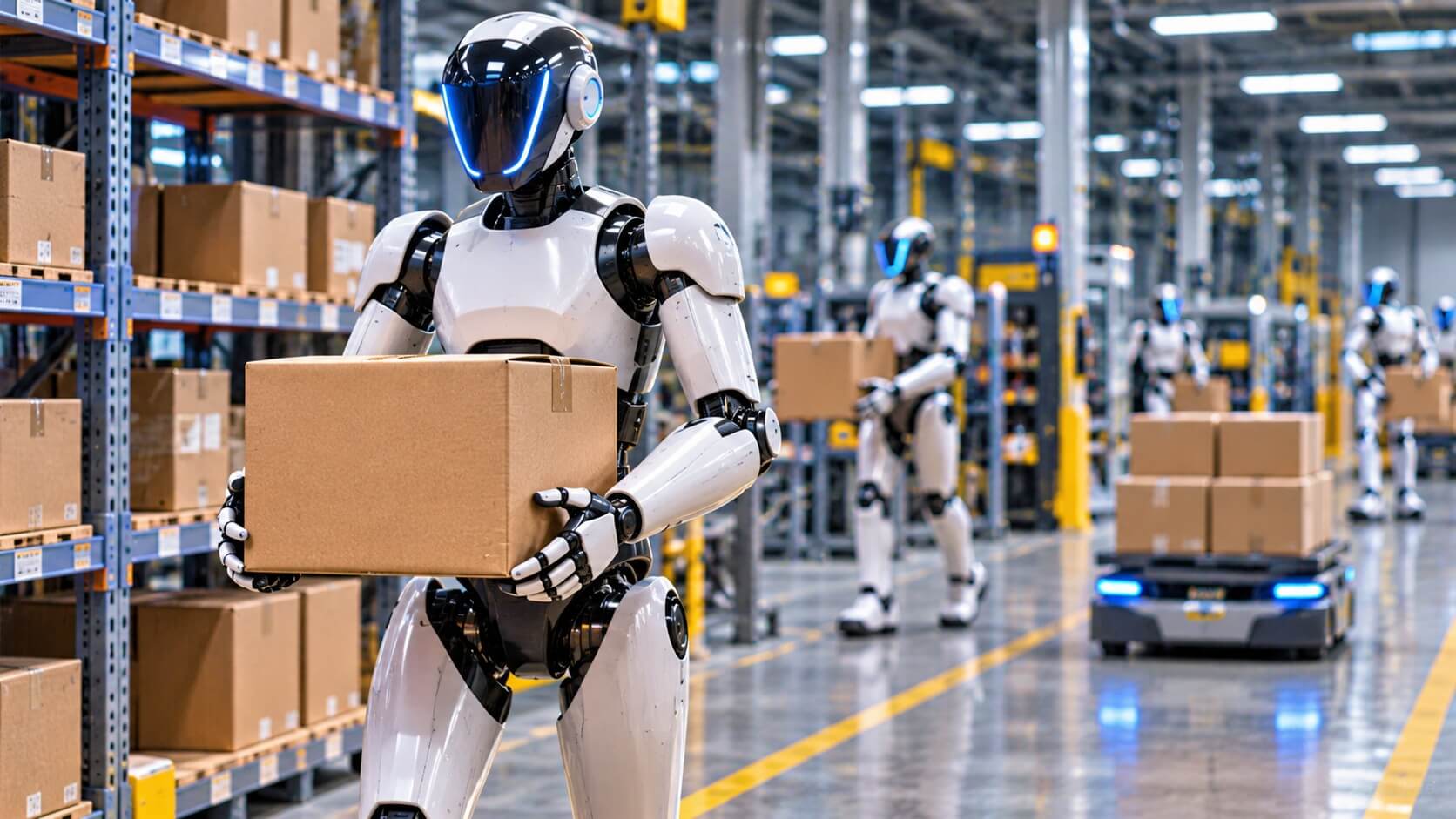
Humanoid robots can be stopped by losing power, experiencing mechanical failures, encountering software errors, or activating emergency safety systems. Despite their increasingly sophisticated movements and artificial intelligence, they remain physical machines with significant technical limitations.
Modern humanoid robots can walk, manipulate objects, and perform selected tasks, but they are not invulnerable, independently intelligent beings capable of operating without constraints.
Companies such as Tesla, Boston Dynamics, Figure AI, Agility Robotics, and Unitree are developing increasingly capable humanoid systems. However, impressive demonstrations do not eliminate the risks associated with mechanical movement, unreliable software, unexpected environmental conditions, or physical interaction with people.
The central challenge is not simply making robots capable of performing tasks.
It is making them safe, predictable, reliable, and economically useful under real-world conditions.
For businesses, these limitations affect operating costs, workplace safety, and productivity. For investors, they help determine whether humanoid robotics can develop into a sustainable commercial industry.
What Can Stop a Humanoid Robot?
Humanoid robots depend on electricity, mechanical components, sensors, computing hardware, and control software.
Failures affecting any of these systems can interrupt their operation.
Unlike fictional robots portrayed as nearly unstoppable machines, real humanoid robots have numerous physical and operational vulnerabilities.
Loss of Electrical Power
Most modern humanoid robots rely on batteries or external electrical power.
When the available energy becomes insufficient, the robot cannot continue operating normally.
However, a robot losing power does not necessarily mean it will immediately become safe.
Depending on its design, power loss could cause joints to lose active control, objects to fall, or the robot itself to collapse.
Safety systems may therefore include controlled shutdown procedures, mechanical brakes, and other protective measures.
Mechanical Failures
Humanoid robots contain numerous moving components.
Motors, actuators, joints, gears, and structural elements must work together to produce coordinated movement.
Mechanical wear, damaged components, or unexpected loads can interfere with operation.
For example, a failure in a leg actuator could affect the robot's ability to maintain balance.
A malfunctioning hand mechanism could cause the robot to drop an object.
These problems become particularly important when robots operate near people or expensive equipment.
Software Errors
Software controls how robots interpret information and coordinate movement.
A programming error or unexpected software behavior could interrupt a task or produce an incorrect action.
Advanced AI systems introduce additional complexity because their behavior may depend on learned patterns rather than entirely predefined instructions.
A robot may perform successfully in familiar conditions but respond poorly to situations it has not encountered during training.
Sensor Problems
Humanoid robots use cameras and other sensors to understand their surroundings.
Poor lighting, reflective surfaces, obstructed cameras, or sensor failures can affect perception.
If a robot incorrectly estimates the location of an object or person, it may choose an inappropriate movement.
Reliable robotic operation therefore requires more than advanced AI.
It also depends on accurate sensor information and robust systems for handling uncertainty.
Do Humanoid Robots Have an Emergency Stop Button?
Many industrial robotic systems incorporate emergency stop functions or other protective controls.
These mechanisms are designed to stop hazardous movement when a dangerous situation occurs.
However, not every humanoid robot has the same emergency stop design, and a stop function does not automatically eliminate every physical risk.
The appropriate safety system depends on the robot's hardware, operating environment, and intended application.
How Emergency Stops Work
An emergency stop is intended to interrupt hazardous operation when activated.
Depending on the system, this may involve stopping motors, disabling motion commands, or initiating a defined safety response.
The goal is to reduce danger to people and equipment.
However, stopping a humanoid robot can be more complicated than stopping a stationary industrial arm.
A two-legged machine must maintain balance.
Abruptly removing power from its actuators could cause it to fall.
For that reason, engineers may need to design safety functions that account for the robot's posture, movement, and surrounding environment.
Can a Robot Be Stopped Remotely?
Some robotic systems support remote monitoring, operational controls, or shutdown commands.
These functions can help operators respond to abnormal conditions.
However, remote controls depend on the robot's architecture and communication systems.
Network interruptions, software failures, or hardware problems may affect their availability.
Safety-critical functions should therefore not rely exclusively on an ordinary remote software command.
Commercial robots require protective measures appropriate to the risks they create.
Why Physical Safety Systems Matter
A robot may continue moving even when its AI software makes an incorrect decision.
Hardware-level protections, motion limits, collision detection, and controlled stopping procedures can help reduce risk.
These protections are particularly important when robots operate near people.
The goal is not simply to make robots intelligent enough to avoid every mistake.
It is to ensure that failures do not automatically lead to dangerous consequences.
Can Humanoid Robots Hurt Humans?
Yes. Humanoid robots can potentially injure people, even without any intention to cause harm.
They are physical machines with moving joints, motors, and mechanical components capable of exerting force.
Potential hazards include collisions, falls, crushing injuries, dropped objects, and unexpected movements.
The severity of an incident depends on the robot's size, weight, speed, force, and operating environment.
Accidental Collisions
A humanoid robot moving through a workplace may encounter people or unexpected obstacles.
If its perception system fails to detect someone correctly, a collision could occur.
Even relatively slow movement may create risks when a heavy machine is involved.
Loss of Balance
Walking on two legs requires continuous coordination.
A robot may lose balance because of uneven surfaces, unexpected contact, mechanical failures, or incorrect control decisions.
A falling humanoid can create hazards for nearby people and equipment.
Incorrect Object Handling
A robot manipulating tools or materials may apply excessive force or lose its grip.
An object could fall or be moved into an unsafe position.
This is especially relevant in industrial environments where robots may handle heavy or rigid materials.
Unexpected Software Behavior
Robotic AI systems can make incorrect decisions.
A robot might misidentify an object, misunderstand a command, or select an inappropriate action.
These failures do not require malicious intent.
They can arise from limitations in perception, training data, software, or environmental understanding.
For this reason, safe operation depends on engineering controls, testing, supervision, and appropriate operating procedures.
Has a Robot Ever Attacked a Human?
There have been documented incidents involving industrial robots injuring or killing workers.
However, these incidents should not automatically be described as robots deliberately attacking humans.
Traditional industrial robots have caused accidents involving unexpected movement, unsafe access to operating areas, and failures in workplace safety procedures.
Such events demonstrate that powerful robotic machinery can be dangerous when appropriate safeguards are absent or ineffective.
They do not establish that robots possess humanlike intentions.
What About Viral Videos of Robots Attacking People?
Videos showing robots behaving aggressively can attract considerable attention.
However, online footage may involve controlled demonstrations, scripted performances, remote operation, editing, or simulated scenarios.
A robot appearing to behave aggressively does not necessarily indicate autonomous intent.
When evaluating such claims, it is important to determine whether the robot was operating independently and whether the footage has been independently verified.
Can AI Make a Robot Dangerous?
AI can introduce new safety challenges.
A robotic system may interpret a situation incorrectly or produce an inappropriate action.
When those decisions control physical machinery, the consequences can be more serious than errors in ordinary software.
However, the risk comes from system behavior and physical capabilities, not from assuming the robot has human emotions or malicious intentions.
The relevant engineering challenge is preventing unsafe actions and ensuring that failures can be managed.
Why Are Humanoid Robots So Difficult to Control?
Humanoid robots must coordinate many moving components simultaneously.
A simple movement may involve adjustments across the legs, torso, arms, and hands.
Walking requires constant balance corrections.
Manipulating objects requires precise coordination between perception and physical movement.
Combining these activities makes control difficult.
Balancing on Two Legs
A bipedal robot has a relatively complex stability problem.
Its center of mass changes as it walks, bends, turns, or lifts objects.
The control system must continuously adjust movements to prevent falling.
Uneven surfaces, unexpected contact, and heavy loads make this more difficult.
Handling Unfamiliar Objects
Humans can quickly adapt when handling objects with different shapes, textures, and weights.
Robots must estimate how to grasp an object and how much force to apply.
An unfamiliar object may create problems even when the robot has successfully handled similar items.
Responding to Unexpected Situations
Real environments are constantly changing.
People move unpredictably, objects are misplaced, and equipment may behave differently from expectations.
A robot trained for a particular situation may struggle when conditions change.
This is one reason why controlled demonstrations cannot fully establish real-world reliability.
Why Do Humanoid Robots Sometimes Fall?
Humanoid robots can fall because of balance errors, mechanical problems, unexpected obstacles, or limitations in their control systems.
Maintaining stability requires constant adjustments.
If the robot cannot respond quickly or accurately enough, it may lose balance.
Potential causes include:
- Uneven or slippery surfaces.
- Unexpected physical contact.
- Incorrect estimates of body position.
- Mechanical or actuator failures.
- Sudden changes in the weight being carried.
- Sensor or software errors.
Falling is more than an inconvenience.
It can damage expensive hardware, interrupt operations, and create safety risks.
A commercially useful humanoid must therefore demonstrate not only walking ability but also reliable movement under realistic conditions.
The ability to recover from disturbances is particularly important.
However, even advanced balance systems cannot guarantee that a robot will never fall.
Can Humanoid Robots Operate Without Human Supervision?
Some humanoid robots can perform selected activities autonomously.
However, the degree of independence varies significantly by platform and task.
A robot may operate autonomously in a controlled environment while requiring assistance when unexpected situations occur.
Other systems may rely on remote operation, predefined routines, or human intervention.
These approaches are useful during development but should not be confused with unrestricted autonomy.
Why Human Assistance Still Matters
A robot may encounter objects or conditions outside its training experience.
Human operators can help resolve unexpected problems, provide instructions, or recover interrupted tasks.
This support can make early deployments practical.
However, it also affects operating costs.
A robot that requires frequent assistance may deliver less economic value than one that performs the same work independently.
What Does Reliable Autonomy Require?
Reliable autonomy involves several connected capabilities.
The robot must recognize its surroundings, plan actions, execute movements, detect mistakes, and respond appropriately when conditions change.
It must also operate within defined safety limits.
These requirements are especially demanding in environments shared with people.
What Are the Biggest Reliability Problems With Humanoid Robots?
Reliability is one of the most important barriers to commercial adoption.
A robot that performs a task successfully during a demonstration may still struggle to repeat it thousands of times.
Industrial customers need machines that operate consistently over extended periods.
Mechanical Wear
Humanoid robots contain numerous joints and moving components.
Repeated movement creates mechanical stress.
Actuators, transmissions, bearings, and other parts may require maintenance or replacement.
The frequency and cost of repairs affect the robot's economic value.
Battery Limitations
Mobile robots depend on stored energy.
Walking, lifting, balancing, and computing consume electricity.
Battery capacity influences how long a robot can operate before recharging.
Charging interruptions reduce productive time unless operations are designed around them.
Software and AI Limitations
A robot may perform well on familiar tasks but struggle with unusual situations.
Software updates can improve performance, but they may also require additional testing.
AI systems must be evaluated for consistency, not simply occasional success.
Maintenance and Downtime
Unexpected failures can interrupt production or logistics operations.
A business must consider how quickly a robot can be repaired and whether replacement parts are available.
A robot with impressive capabilities but frequent downtime may be less useful than simpler automation.
Are Humanoid Robots Safe Enough for Factories?
Humanoid robots may be suitable for selected industrial environments when appropriate safety measures are implemented.
However, safety cannot be assumed solely because a robot has been demonstrated in a factory.
Industrial deployment requires a risk assessment based on the robot, its tasks, and the surrounding workplace.
Potential safeguards include protective operating zones, speed and force limits, collision detection, emergency stop functions, monitoring, and operator training.
The appropriate measures depend on the application.
Working Near Human Employees
A humanoid robot operating near people must account for unpredictable human movement.
Workers may enter its path, reach toward equipment, or interact with objects the robot is handling.
Safe operation requires systems designed to reduce the consequences of these interactions.
Handling Heavy Materials
A robot moving heavy objects can create additional hazards.
A dropped component or uncontrolled movement may cause injury or equipment damage.
Businesses must consider load limits, gripping reliability, and safe movement procedures.
Compliance and Responsibility
Manufacturers and operators may need to comply with applicable machinery safety requirements and workplace regulations.
Relevant standards and requirements depend on the jurisdiction, robot design, and intended use.
Safety certification for one application does not necessarily establish suitability for every environment.
Commercial adoption will depend partly on whether developers can demonstrate consistent compliance with appropriate safety requirements.
Are Humanoid Robots Safe for Homes?
Household environments introduce additional challenges compared with structured industrial facilities.
Homes contain children, pets, furniture, stairs, fragile objects, and constantly changing arrangements.
A robot operating in these conditions must respond safely to situations that may be difficult to predict.
Children and Pets
Children and animals may move unexpectedly or approach a robot while it is operating.
A household humanoid must detect nearby movement and avoid unsafe contact.
Fragile Objects
Homes contain glassware, electronics, furniture, and other objects that can be damaged by incorrect handling.
Robots must control gripping force and movement precisely.
Stairs and Uneven Surfaces
Domestic environments may contain steps, rugs, thresholds, and uneven flooring.
These features create mobility and balance challenges.
Privacy and Cybersecurity
Humanoid robots may use cameras, microphones, wireless connectivity, and cloud-based software.
Depending on their design, these systems could collect sensitive information about household activities.
Manufacturers must consider data protection, access controls, software security, and the consequences of unauthorized access.
A robot connected to external networks may also face cybersecurity threats.
These risks become particularly important when software controls physical movement.
Could Someone Hack a Humanoid Robot?
Like other connected computing systems, humanoid robots can potentially be exposed to cybersecurity vulnerabilities.
The level of risk depends on their software architecture, connectivity, access controls, and security practices.
Potential threats include unauthorized access, manipulation of software, theft of collected data, and interference with operations.
A security problem involving a physical robot may create consequences beyond ordinary information loss.
For example, interference with operational controls could disrupt work or create unsafe conditions.
Manufacturers therefore need robust authentication, secure software updates, vulnerability management, and appropriate separation between safety-critical controls and other computing functions.
Businesses deploying robots must also consider network security and incident response procedures.
Cybersecurity should be treated as part of operational safety rather than an unrelated technical issue.
What Happens When a Humanoid Robot Breaks Down?
A breakdown can interrupt the robot's task and require human intervention.
The consequences depend on the type of failure and the environment.
A minor software problem may require a reset or update.
A mechanical failure may require replacement components or specialized repairs.
More serious problems could create safety hazards or damage surrounding equipment.
Why Repairs Matter Economically
Humanoid robots are complex systems.
Repairing an actuator, sensor, or mechanical joint may require technical expertise.
Replacement components may be expensive or available only through the manufacturer.
For industrial customers, downtime also has a cost.
A robot that is unavailable cannot complete productive work.
Businesses must therefore consider maintenance expenses, spare parts, service availability, and expected operating life.
These factors help determine whether humanoid robots can compete economically with human labor and traditional automation.
What Are the Financial Risks for Humanoid Robotics Companies?
Safety and reliability problems can create significant financial risks for developers and investors.
A company may demonstrate impressive technology while struggling to build a profitable business.
Several factors can affect commercial performance.
High Development Costs
Humanoid robotics requires substantial investment in engineering, software, testing, and manufacturing.
Companies may spend heavily before generating meaningful revenue.
Product Liability
Robots that cause injuries or property damage may expose manufacturers and operators to legal claims, depending on the circumstances and applicable law.
Safety failures can also damage customer confidence.
Warranty and Maintenance Expenses
Unexpected hardware failures can increase warranty costs.
Frequent repairs may reduce margins or make customers reluctant to expand deployments.
Delayed Commercial Adoption
Businesses may postpone purchases if robots remain unreliable or expensive.
This could delay revenue growth and increase the need for additional financing.
Competitive Pressure
Humanoid robots compete not only with other humanoids but also with traditional industrial automation.
A specialized robot may perform certain tasks more cheaply and reliably.
For investors, technological progress must eventually translate into sustainable commercial performance.
How Can Investors Evaluate Humanoid Robot Safety and Reliability?
Investors should look beyond promotional videos and focus on measurable operational evidence.
| Indicator | Why it matters |
|---|---|
| Productive operating hours | Shows how long robots perform useful work |
| Failure frequency | Helps assess operational reliability |
| Human intervention rate | Indicates the degree of practical autonomy |
| Maintenance costs | Affects total ownership costs |
| Safety incidents | Reveals potential operational and liability risks |
| Task completion consistency | Shows whether performance can be repeated |
| Customer renewals and repeat orders | Suggests whether deployments deliver value |
| Commercial operating margins | Helps establish economic sustainability |
Not every company publishes these measurements.
Limited disclosure makes direct comparisons difficult.
Investors should distinguish between verified operational results, company projections, and demonstrations conducted under controlled conditions.
A robot capable of performing an impressive task once is not necessarily ready for sustained commercial use.
For a comparison of leading humanoid platforms and their different development approaches, see The Leading Humanoid Robots Today: A Practical Comparison.
Will Humanoid Robots Become Safer and More Reliable?
Improvements in hardware, software, artificial intelligence, and manufacturing could make humanoid robots safer and more dependable.
Better sensors may improve environmental awareness.
More sophisticated control systems could help robots maintain balance and respond to unexpected disturbances.
Advances in robotic manipulation may reduce handling errors.
Improved mechanical components could extend operating life and reduce maintenance requirements.
However, technological progress does not eliminate every risk.
More capable robots may also perform more complex activities, creating new safety challenges.
The industry will need to combine improved capabilities with robust engineering, testing, regulation, and operational safeguards.
Why Reliability Could Determine Adoption Speed
Businesses generally invest in automation to improve productivity, reduce costs, or address operational challenges.
If humanoid robots require frequent intervention, their economic benefits may be limited.
As reliability improves, more applications could become commercially viable.
This could encourage broader deployment in manufacturing, logistics, and eventually other environments.
But the transition will depend on demonstrated performance rather than technological optimism alone.
For a closer look at adoption timelines and future applications, see When Will Humanoid Robots Be Widely Available? What to Expect.
Are Humanoid Robots More Dangerous Than Traditional Robots?
Not necessarily.
The risks depend on the robot's design, capabilities, operating environment, and safety systems.
Traditional industrial robots can exert substantial force and may operate at high speeds.
They are often installed in controlled areas with established protective measures.
Humanoid robots introduce different challenges because they are mobile and may operate in environments shared with people.
Their ability to walk, manipulate objects, and change tasks creates flexibility but also additional complexity.
A humanoid robot may encounter situations that a fixed industrial robot would never face.
However, modern sensors, control systems, and protective mechanisms can help manage these risks.
The important question is not whether a robot looks human.
It is whether its design and operation adequately address the hazards associated with its intended tasks.
What Is the Biggest Limitation of Humanoid Robots Today?
The biggest limitation is the gap between demonstrating individual capabilities and performing useful work reliably across changing real-world conditions.
Modern humanoid robots can achieve impressive movements.
Some can walk, balance, manipulate objects, and execute increasingly sophisticated tasks.
But commercial usefulness requires much more.
A robot must perform consistently, recover from errors, operate safely, and deliver sufficient productivity to justify its cost.
These requirements become particularly difficult when robots encounter unfamiliar environments and unpredictable human behavior.
For investors, the distinction is fundamental.
A company can develop advanced robotic technology without establishing a profitable commercial business.
The eventual winners will need to combine technical capabilities with reliable operations, scalable manufacturing, customer demand, and sustainable economics.
For a broader understanding of the industry and its investment opportunities, see Humanoid Robots: How the Industry Works and What Investors Should Know.
Humanoid robots are becoming more capable, but their long-term success will depend less on how impressive they appear and more on whether people and businesses can trust them to perform useful work safely and consistently.
Disclaimer: This article is for informational and educational purposes only and does not constitute financial, investment, engineering, or safety advice. Robotics technology involves operational, financial, and physical risks. Safety procedures should follow manufacturer instructions and applicable professional standards. Investors should conduct independent research before making investment decisions.