
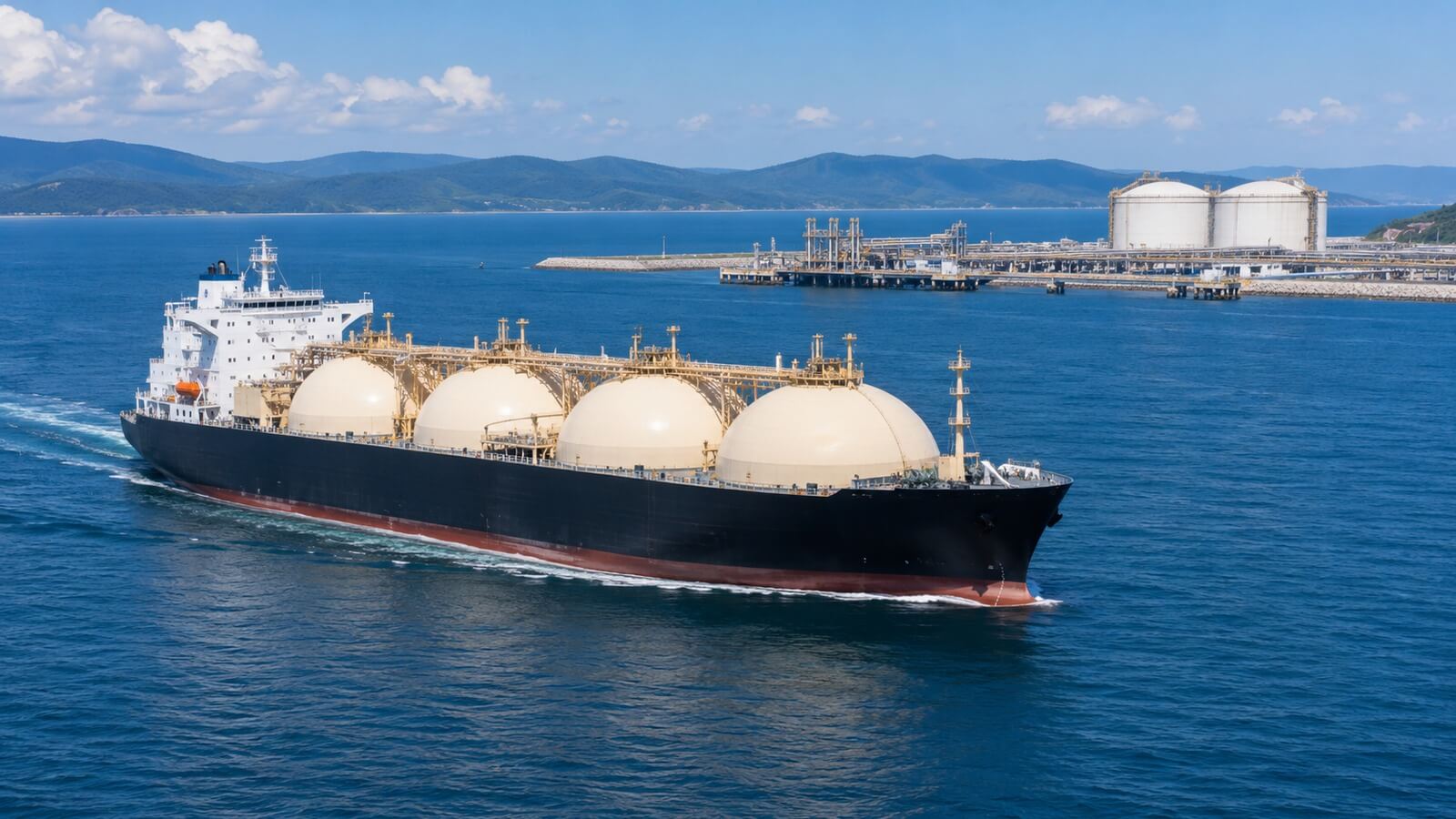
Russia, Iran, and Qatar hold the largest reported proved natural gas reserves in the world, while Turkmenistan, the United States, Saudi Arabia, and the United Arab Emirates also possess substantial resources.
However, the countries with the largest reserves are not necessarily those with the most untapped natural gas. There is no single internationally standardized ranking of undeveloped gas resources because reserve classifications and reporting methods differ.
Russia has approximately 46.8 trillion cubic meters of reported proved reserves at the end of 2025, followed by Iran with roughly 34 trillion cubic meters and Qatar with about 23.8 trillion cubic meters.
For investors, the key distinction is between natural gas that exists underground and resources that can realistically become commercial production. Infrastructure, financing, technology, and political conditions often determine whether large reserves can reach international markets.
Which Countries Have the Largest Natural Gas Reserves?
Global proved natural gas reserves are concentrated in a relatively small group of countries.
According to international reserve estimates for year-end 2025, Russia, Iran, and Qatar together hold approximately half of the world's reported proved natural gas reserves.
| Country | Proved natural gas reserves | Main consideration |
|---|---|---|
| Russia | 46.8 trillion m³ | Vast resources and export infrastructure constraints |
| Iran | 34.0 trillion m³ | Large reserves but investment and sanctions challenges |
| Qatar | 23.8 trillion m³ | Major LNG exporter with large-scale expansion projects |
| United States | 16.0 trillion m³ | Extensive production and established gas markets |
| Turkmenistan | 13.9 trillion m³ | Large resources and limited export diversification |
| Saudi Arabia | 9.5 trillion m³ | Growing domestic gas development |
| United Arab Emirates | 8.2 trillion m³ | Expansion of domestic production and processing |
Figures are rounded estimates from international reserve compilations and may differ by methodology. They represent total proved reserves, not exclusively undeveloped or untapped gas.
These figures show where substantial natural gas resources are located, but they do not establish how much remains undeveloped.
Some reserves already support major production operations. Others require new wells, pipelines, processing facilities, or export infrastructure before becoming commercially accessible.
What Does Untapped Natural Gas Actually Mean?
Untapped natural gas generally refers to gas resources that have not entered commercial production. However, the term can describe several distinct categories.
Undeveloped proved reserves are commercially recoverable quantities that require additional wells or infrastructure before production can begin.
Discovered resources are identified gas accumulations that may not yet qualify as proved reserves because of technical or economic uncertainty.
Technically recoverable resources are quantities that could potentially be extracted using available technology, regardless of whether development would be profitable.
Undiscovered resources are estimated gas deposits that have not been confirmed through drilling.
These categories are not interchangeable.
For example, a large offshore discovery may contain substantial technically recoverable gas but remain undeveloped because the cost of constructing pipelines and LNG facilities exceeds expected commercial returns.
Investors should therefore distinguish between geological potential, proved reserves, and production that can realistically reach customers.
Russia: The World's Largest Natural Gas Reserve Holder
Russia possesses the largest reported proved natural gas reserves, with major resources in western Siberia, the Yamal Peninsula, and other northern and eastern regions.
Some fields have supported production for decades, while others remain undeveloped or require additional transportation infrastructure.
Russia has historically relied heavily on pipeline exports, although LNG projects provide another route to international markets.
Developing additional LNG capacity faces several challenges:
- High construction costs in remote and Arctic environments.
- Requirements for specialized liquefaction equipment and technology.
- Shipping and transportation limitations.
- International sanctions and restrictions on equipment access.
- Constraints on financing and project development.
These factors can delay the commercial development of resources even when large gas deposits are available.
Russia illustrates why reserve size alone is not a reliable measure of future export growth. Infrastructure access, geopolitical conditions, and project execution determine how quickly additional supplies can reach customers.
Iran: Enormous Reserves With Development Constraints
Iran holds the world's second-largest reported proved natural gas reserves.
A substantial portion of its resource base is associated with South Pars, part of the same geological structure as Qatar's North Field.
Natural gas is central to Iran's domestic energy system, supporting electricity generation, industrial operations, and household consumption.
Despite its large reserves, Iran faces significant obstacles to expanding international exports.
Sanctions, financing restrictions, technology limitations, and substantial domestic demand constrain development opportunities.
Maintaining and expanding production also requires investment in drilling, processing facilities, compressors, and transportation networks. Some mature production areas need additional equipment to address declining reservoir pressure.
For investors, Iran demonstrates that geological abundance does not guarantee commercially accessible international supply.
Qatar: Large Reserves With Established LNG Infrastructure
Qatar demonstrates how large natural gas reserves can support a major international LNG industry when production and export infrastructure are developed together.
Its North Field, which shares a geological structure with Iran's South Pars field, supports extensive offshore production and LNG operations.
Qatar has invested in gas processing facilities, liquefaction plants, storage systems, specialized shipping, and export terminals.
Its North Field expansion program is designed to increase LNG production capacity through additional offshore development and liquefaction infrastructure.
Unlike countries where substantial resources remain commercially stranded, Qatar already has an integrated system connecting underground reserves with international customers.
However, new capacity still involves construction costs, financing requirements, and exposure to future LNG demand.
For investors, Qatar illustrates the importance of combining resource availability with reliable infrastructure and long-term commercial agreements.
Turkmenistan: Major Resources With Limited Export Routes
Turkmenistan possesses substantial natural gas reserves, including the major Galkynysh gas field.
Its main commercial challenge is transportation access.
Unlike coastal LNG exporters, Turkmenistan is landlocked and depends heavily on pipelines to reach international customers.
China is a major destination for Turkmen natural gas, but expanding sales to additional markets requires new pipeline infrastructure, financing, and commercial agreements.
Proposed export routes toward South Asia have faced security, financing, and development challenges.
Turkmenistan shows how limited transportation options can restrict the commercial value of otherwise substantial natural gas resources.
For investors, market access can be as important as the quantity of gas underground.
The United States: Large Resources and Extensive Production
The United States differs from several major reserve holders because it already operates a large and diversified natural gas production industry.
Important producing regions include the Appalachian Basin, Permian Basin, and Haynesville Shale.
Established pipeline networks, processing facilities, financial markets, and LNG export terminals help connect domestic production with customers.
However, not all technically recoverable U.S. gas qualifies as proved reserves. Commercial recoverability depends on drilling technology, production costs, infrastructure, and market prices.
The United States also illustrates the difference between reserve leadership and production leadership.
Although Russia reports larger proved reserves, the United States produces more natural gas annually.
For a closer examination of American production, see Who Produces the Most Natural Gas in the United States?.
Which Other Countries Have Significant Undeveloped Gas Potential?
Several countries outside the largest reserve holders possess substantial undeveloped resources that could support future natural gas production and LNG exports.
Mozambique
Mozambique has major offshore natural gas discoveries in the Rovuma Basin.
These resources have attracted international energy companies interested in developing LNG export facilities.
However, security conditions, financing requirements, and complex construction projects have delayed parts of the development process.
Mozambique demonstrates how major discoveries can remain undeveloped for years despite significant commercial interest.
Nigeria
Nigeria has large natural gas reserves and an established LNG export industry.
Further growth depends on investment in gathering systems, pipelines, processing facilities, and reliable gas deliveries.
Operational disruptions, infrastructure limitations, security challenges, and gas flaring have complicated development.
Venezuela
Venezuela possesses significant natural gas resources, including offshore deposits.
However, sanctions, financing constraints, economic conditions, and limited infrastructure have restricted commercial development.
Argentina
Argentina's Vaca Muerta formation contains substantial unconventional natural gas resources.
Shale gas production has expanded, but greater export potential depends on transportation infrastructure and access to international markets.
LNG development could create additional opportunities if projects secure financing and achieve competitive production and transportation costs.
These examples show that undeveloped natural gas potential extends beyond countries with the largest reported proved reserves.
Why Do Some Countries Leave Natural Gas Undeveloped?
Natural gas deposits can remain undeveloped for decades because commercial production requires more than geological resources.
High Development Costs
Remote offshore fields, deep reservoirs, and difficult operating environments may require expensive drilling equipment, processing facilities, and supporting infrastructure.
Even a large discovery may be uneconomic if development costs exceed expected returns.
Lack of Transportation Infrastructure
Natural gas must reach customers through pipelines or LNG facilities.
Without reliable transportation, producers may be unable to sell gas at prices sufficient to justify development.
Limited Access to Financing
Large natural gas projects can require billions of dollars in investment.
Lenders and investors typically examine expected returns, project risks, political conditions, and long-term sales agreements before committing capital.
Regulatory and Political Uncertainty
Sanctions, political instability, taxation changes, environmental requirements, and permitting delays can increase costs or prevent projects from proceeding.
Insufficient Market Demand
Developers need customers willing to purchase gas at commercially viable prices.
If expected demand is weak or competing suppliers offer lower costs, resources may remain undeveloped.
These constraints explain why large gas discoveries do not always become major production centers.
How Do Untapped Gas Reserves Become LNG Exports?
Turning undeveloped natural gas resources into LNG exports requires a connected system of production and transportation infrastructure.
Gas must first be extracted, processed to remove impurities, and transported through pipelines to a liquefaction facility.
At the terminal, natural gas is cooled to approximately -260°F (-162°C), reducing its volume by roughly 600 times.
The LNG is then stored in insulated tanks and loaded onto specialized carriers for international shipment.
The complete supply chain is explained in LNG Production and Infrastructure: From Natural Gas to Global Supply.
For countries with undeveloped reserves, each stage requires capital, technical expertise, and commercial planning.
A gas field near existing pipelines and export facilities may be easier to develop than an equally large discovery in a remote region.
This helps explain why countries with smaller reserves can become successful LNG exporters while some larger reserve holders face persistent development challenges.
Can New Technology Make More Natural Gas Recoverable?
Technology can increase the amount of natural gas that can be extracted economically.
Horizontal drilling and hydraulic fracturing have enabled extensive development of unconventional gas formations in the United States.
Improved seismic imaging, drilling techniques, subsea production systems, and processing equipment can also support development in challenging geological environments.
However, technical recoverability does not guarantee commercial profitability.
Natural gas prices, development expenses, infrastructure availability, regulations, and financing remain essential considerations.
Investors should distinguish between estimated geological resources and quantities supported by commercially recoverable reserve assessments.
How Could Untapped Natural Gas Affect Future Global Supply?
Large undeveloped natural gas resources represent potential additions to future global supply.
When commercially viable projects advance, they can create opportunities for gas producers, pipeline operators, LNG developers, engineering companies, and equipment suppliers.
However, bringing new resources to market can take many years because of exploration, permitting, financing, construction, and commissioning requirements.
The timing of development matters as much as the quantity of available gas.
If new production and LNG export capacity grow faster than demand, additional supply can put downward pressure on prices and project returns.
Conversely, development delays may contribute to tighter markets when demand increases.
Investors should therefore assess when new resources are expected to enter commercial production rather than relying only on announced discoveries or reserve estimates.
Does Having Large Gas Reserves Mean a Country Will Never Run Out?
No. Natural gas is a finite resource, and reported proved reserves are not a fixed measure of all gas remaining underground.
Reserve estimates can increase through new discoveries, improved recovery technology, or higher prices that make additional resources commercially viable.
They can also decline because of production, lower prices, or revised geological assessments.
A country with substantial reserves may support production for decades, but its supply is not unlimited.
For a detailed explanation of reserve depletion and reserve-to-production ratios, see How Long Will Global Natural Gas Reserves Last?.
For investors, the practical question is whether future gas production can remain commercially competitive as existing fields mature.
What Should Investors Watch in Countries With Untapped Gas Resources?
Investors evaluating undeveloped natural gas resources should focus on the conditions required to turn geological potential into commercial production.
Important indicators include:
- Project approvals: Whether developers have secured necessary permits and regulatory authorization.
- Financing: Whether sufficient capital is available for production and export infrastructure.
- Commercial agreements: Whether customers have committed to purchasing gas or LNG under viable contract terms.
- Infrastructure access: Whether production can reach processing facilities, pipelines, and export terminals.
- Development costs: Whether the project can compete with alternative natural gas supplies.
- Political stability: Whether sanctions, conflict, or policy changes could disrupt development.
- Execution risk: Whether developers have the technical and financial capacity to complete the project.
Investors should also distinguish between announced discoveries, approved projects, facilities under construction, and assets already generating revenue.
A large resource estimate is only one part of the investment case. The ability to generate sustainable cash flow depends on successful development and reliable access to customers.
Which Countries Have the Greatest Future Natural Gas Potential?
Russia, Iran, and Qatar dominate reported proved natural gas reserves, while Turkmenistan and several other countries possess substantial resources that could support future development.
However, there is no reliable global ranking that identifies the country with the largest untapped commercially recoverable gas supply.
Qatar demonstrates the advantages of combining large reserves with established LNG infrastructure.
Turkmenistan highlights the importance of transportation access, while Iran and Russia illustrate how political and investment constraints can limit development.
Mozambique and Argentina show how newer resource opportunities depend on major infrastructure investments and successful project execution.
For investors, the central distinction is clear: natural gas reserves represent potential supply, but infrastructure, development costs, financing, and market access determine how much becomes commercially valuable production.
Disclaimer: This article is for informational and educational purposes only and does not constitute financial or investment advice. Natural gas investments involve commodity-price volatility, geopolitical uncertainty, regulatory risks, and potential financial losses.