
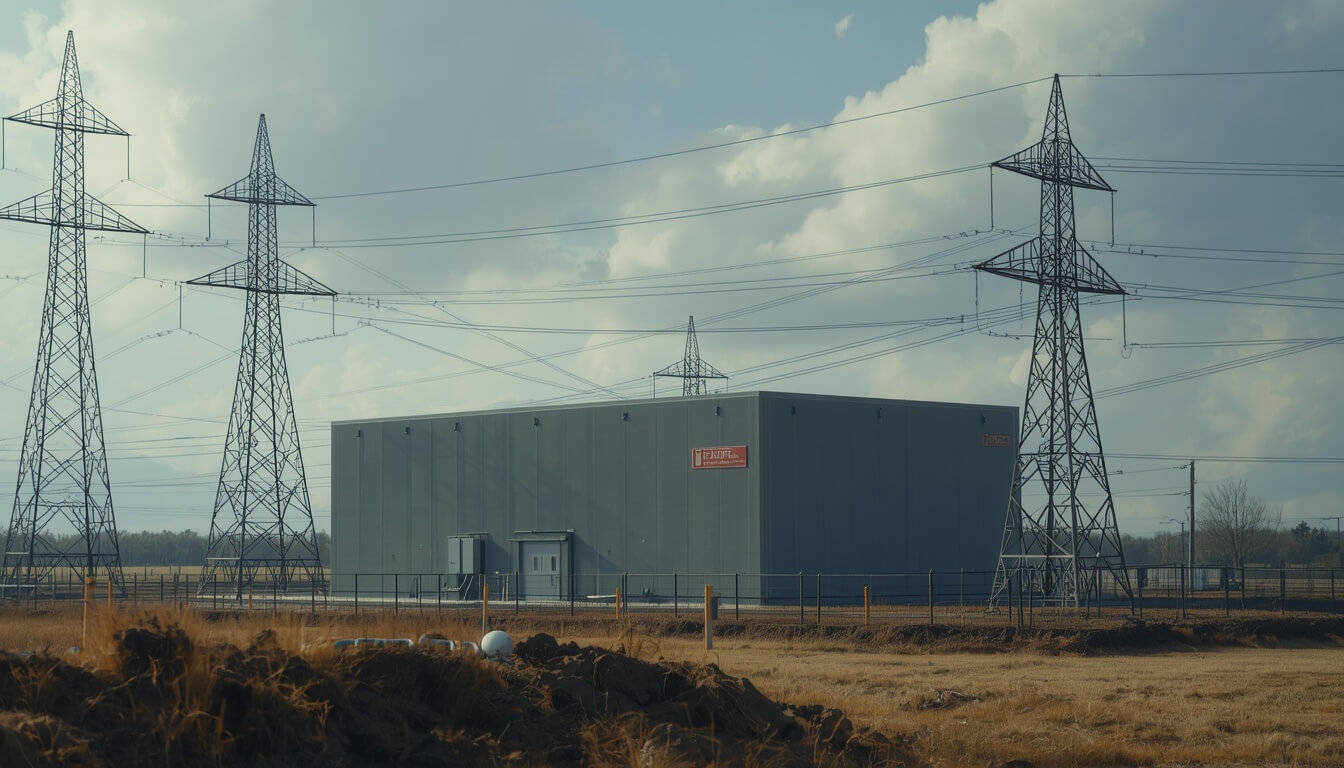
AI data centers are primarily financed by technology companies, data center operators and investors. They pay for construction, computing equipment and the electricity they consume. However, some costs of expanding the power grid to serve these facilities may ultimately be passed on to households and other electricity customers.
Large AI facilities can require new substations, transmission lines and electricity generation capacity. Who pays for those upgrades depends on utility regulations, customer contracts and how infrastructure costs are allocated.
Can AI data centers raise household electricity bills? Yes, but not automatically. If their electricity payments cover the additional costs they create, they may help spread existing grid expenses across more customers. If expensive upgrades are not fully paid for by the companies requiring them, other customers could face higher bills.
Who actually pays to build an AI data center?
Companies developing AI data centers generally finance the facilities themselves.
Major investors include Amazon, Microsoft, Alphabet and Meta, alongside specialized data center operators, developers and institutional investors.
Their spending covers land, construction, AI processors, servers, networking equipment, cooling systems and electrical infrastructure inside the facility.
These investments generate business for companies supplying the equipment and services needed to expand AI computing capacity.
Who Builds AI Data Centers and Who Profits From Them explains how this spending moves through the supply chain.
The more complicated question concerns infrastructure outside the data center, particularly upgrades to the public electricity grid.
Do data centers pay for the electricity they use?
Yes. Data centers purchase electricity from utilities or other suppliers, often through large commercial agreements.
Because they consume substantial amounts of power, individual facilities can become major customers for local electricity providers.
However, paying for electricity consumption is not the same as paying for every infrastructure upgrade required to deliver it.
For example, a developer may be required to finance a dedicated substation connecting its facility to the grid.
But if the utility also needs additional transmission lines or generation capacity, those costs may be allocated under broader regulatory rules.
Some upgrades primarily benefit the new data center, while others also serve existing households and businesses. Determining how those costs should be shared is central to the debate over electricity bills.
Why do AI data centers require major power infrastructure investments?
Electricity grids are designed around forecasts of future demand. Large concentrations of AI data centers can increase that demand faster than utilities originally anticipated.
Supporting new facilities may require:
- Additional electricity generation capacity.
- New substations and transformers.
- High-voltage transmission lines.
- Upgrades to existing electricity networks.
- Additional distribution and reliability equipment.
These investments can cost hundreds of millions or billions of dollars, depending on their scale and location.
According to Lawrence Berkeley National Laboratory's United States Data Center Energy Usage Report: 2025 Update, published in June 2026, U.S. data centers could account for approximately 11.8% of national electricity consumption by 2030 in its reference scenario, with alternative scenarios ranging from 9.5% to 15.3%. These estimates cover all data centers, not only AI facilities.
These are projections rather than guaranteed outcomes. Actual electricity demand will depend on AI adoption, computing efficiency and how many planned facilities are completed.
For more detail on consumption, see How Much Energy and Water AI Data Centers Use.
Can AI data centers make residential electricity bills go up?
Yes, particularly when utilities invest in expensive infrastructure for data centers and recover part of those costs from other customers.
Consider a hypothetical utility that builds a new transmission line expecting several large data centers to begin operating.
If those facilities open as planned and pay enough to cover the additional costs, the investment may be financially justified.
But if projects are delayed, cancelled or use less electricity than expected, the utility could be left with infrastructure that generates insufficient revenue.
This creates stranded-cost risk: the possibility that an investment will not be fully used or financially recovered as expected.
Regulators must then determine whether developers, utility shareholders or other electricity customers bear those costs.
Data centers are not the only factor affecting household bills. Fuel prices, weather, power generation costs, grid maintenance and interest rates also influence electricity prices.
That makes it important to distinguish increases directly associated with data center development from broader changes in electricity costs.
Can data centers also help spread electricity grid costs?
Yes. Large electricity customers do not necessarily increase prices for everyone.
Utilities have substantial fixed costs, including maintaining transmission networks, substations and other infrastructure.
When a new data center purchases large amounts of electricity and pays enough to cover the additional costs it creates, its payments can also contribute toward those shared expenses.
Research published by Lawrence Berkeley National Laboratory in 2026 highlighted that growing commercial and industrial electricity demand does not automatically translate into higher electricity prices.
The difference comes down to two possible outcomes:
- Potential benefit: The data center generates sufficient utility revenue to cover its additional costs and contribute toward shared infrastructure.
- Potential risk: The utility builds expensive infrastructure whose costs are not fully recovered from the new customer.
A region with spare electricity generation and grid capacity may accommodate additional demand relatively cheaply. A region already facing power shortages may require costly upgrades.
Therefore, higher electricity consumption alone does not establish whether household bills will rise or fall.
How are utilities protecting other electricity customers?
Utilities and regulators are developing special pricing arrangements for customers requiring unusually large amounts of electricity.
These arrangements are often called large-load tariffs. A tariff defines how customers are charged for electricity and related services.
The goal is to reduce the risk of utilities building expensive infrastructure for projects that are later cancelled or use less power than expected.
Depending on the jurisdiction, protections may include:
- Long-term contracts: Customers commit to purchasing electricity over several years.
- Minimum payments: Customers must pay agreed charges even if their electricity consumption is lower than expected.
- Upfront contributions: Developers pay for certain infrastructure before construction begins.
- Financial guarantees: Utilities receive protection against cancellations or unpaid obligations.
- Exit charges: Customers may face additional costs if they abandon projects after infrastructure investments have been committed.
These arrangements help ensure that companies creating substantial new electricity demand carry an appropriate share of the financial risks.
Oregon shows how electricity rules are changing
Oregon provides an example of how electricity regulation is adapting to growing demand from data centers.
In May 2026, the Oregon Public Utility Commission approved a new regulatory framework for large electricity customers served by Portland General Electric (PGE). The decision established Schedule 96, a dedicated rate classification for large data centers, and introduced measures intended to allocate infrastructure costs more fairly between rapidly growing customers and existing electricity users.
The approved framework includes minimum payment requirements, exit charges and a mechanism for allocating more infrastructure costs to customer groups driving substantial growth in electricity demand. These measures are designed to protect households and small businesses from financial risks associated with new data center projects.
These protections matter because utilities may begin investing in substations and grid connections years before a data center becomes operational.
If a developer reduces or cancels its project, contractual commitments and minimum-payment requirements can help limit the financial exposure of other customers.
Similar approaches are being considered or implemented in other U.S. electricity markets, although specific requirements differ by jurisdiction.
Why are transmission costs becoming controversial?
Some data center projects require electricity infrastructure extending far beyond their immediate location.
High-voltage transmission lines transport electricity across regions and often serve multiple customer groups.
In the PJM electricity market, which covers parts of the Mid-Atlantic and Midwest, consumer advocates have raised concerns about whether existing cost-allocation rules adequately protect customers from expenses associated with rapidly growing data center demand.
The challenge is that a new transmission line may serve data centers while also improving reliability or providing electricity to other businesses and households.
For example, if a transmission project benefits both a large AI facility and an expanding residential area, assigning its entire cost to either group may be inappropriate.
Regulators must determine which expenses are directly attributable to large customers and which provide broader benefits to the electricity system.
Why can't data centers simply pay for every grid upgrade?
Requiring data centers to pay for all infrastructure associated with their development may sound straightforward, but shared electricity networks make cost allocation more complicated.
Imagine a utility constructing a transmission line for a growing region.
Part of the additional demand comes from data centers, while the rest comes from factories, electric vehicles, population growth and other customers.
The line may also improve reliability for households already connected to the grid.
Charging data centers for the entire project could unfairly assign them costs that benefit other users. Charging them too little could shift expenses onto households and businesses.
Utility commissions evaluate these circumstances and establish rules for dividing costs.
The objective is to recover necessary infrastructure expenses while avoiding unfair financial burdens on either new or existing customers.
What happens if AI electricity demand grows more slowly than expected?
Electric utilities often plan major infrastructure projects years before they become operational.
If technology companies forecast substantial electricity requirements, utilities may begin investing based on those expectations.
However, future AI demand remains uncertain.
More efficient processors, improvements in AI models, slower commercial adoption or cancelled data center projects could reduce the amount of electricity ultimately needed.
If expected demand fails to materialize, infrastructure investments may become difficult to recover financially.
For example, a utility could expand its network for several planned facilities, only to find that some developers postpone construction or reduce their electricity requirements.
Long-term contracts, minimum payments and financial guarantees help manage this risk by assigning more responsibility to the customers requesting the capacity.
For investors, rising electricity demand can support utility growth, but infrastructure expansion based on overly optimistic forecasts can create financial pressure.
Could AI data centers eventually lower electricity costs?
Yes, under favorable conditions, although lower household bills are not guaranteed.
A large data center purchasing electricity for many years can provide stable revenue to a utility.
If that revenue exceeds the additional cost of serving the facility and contributes toward existing infrastructure, it may reduce pressure on rates paid by other customers.
New demand can also support investments in electricity generation and transmission capacity that benefit the wider region.
However, the outcome depends heavily on local conditions.
Where spare grid capacity already exists, utilities may serve new customers without extensive upgrades. Where electricity supplies are constrained, additional demand may require expensive generation and transmission projects.
The important distinction is not simply whether data centers consume more electricity, but whether the revenue they provide is sufficient to cover the costs they create.
Why does this matter for investors?
Electricity pricing and infrastructure cost allocation can influence the profitability of technology companies, data center operators and utilities.
- Data center developers: Requirements to finance grid upgrades can increase project costs, influence construction schedules and affect location decisions.
- Electric utilities: Growing electricity demand can support investment and additional revenue, but returns depend on regulatory approvals, cost recovery and financial discipline.
- Technology companies: Electricity availability and pricing affect AI operating costs, expansion plans and long-term competitiveness.
- Electrical equipment suppliers: Grid expansion can create demand for transformers, substations and other infrastructure, although orders depend on actual project execution.
Investors should pay particular attention to utility rate decisions, large-load contracts, infrastructure spending plans and the financial commitments made by major data center customers.
A utility announcing billions of dollars in planned investment is not automatically a better investment. The important questions are whether regulators permit adequate cost recovery, whether customers honor their commitments and whether the projects generate attractive financial returns.
The real question is who carries the financial risk
AI data centers generally pay for their facilities, computing equipment and electricity consumption. The more difficult issue is how the cost of expanding the surrounding electricity system should be shared.
Well-designed electricity tariffs can require large customers to cover the costs and risks they create while supporting infrastructure that also benefits the wider economy.
Poorly structured arrangements can leave households, businesses or utilities exposed to expensive projects that generate less revenue than expected.
For consumers, these decisions can influence electricity bills. For utilities, they affect investment returns and financial stability. For AI companies, they help determine where new computing capacity can be developed economically.
The central issue is not simply how much electricity AI data centers consume, but who ultimately pays for the infrastructure required to power them.
This article is for informational purposes only and does not constitute investment advice. Investing involves risk, including the possible loss of principal.