
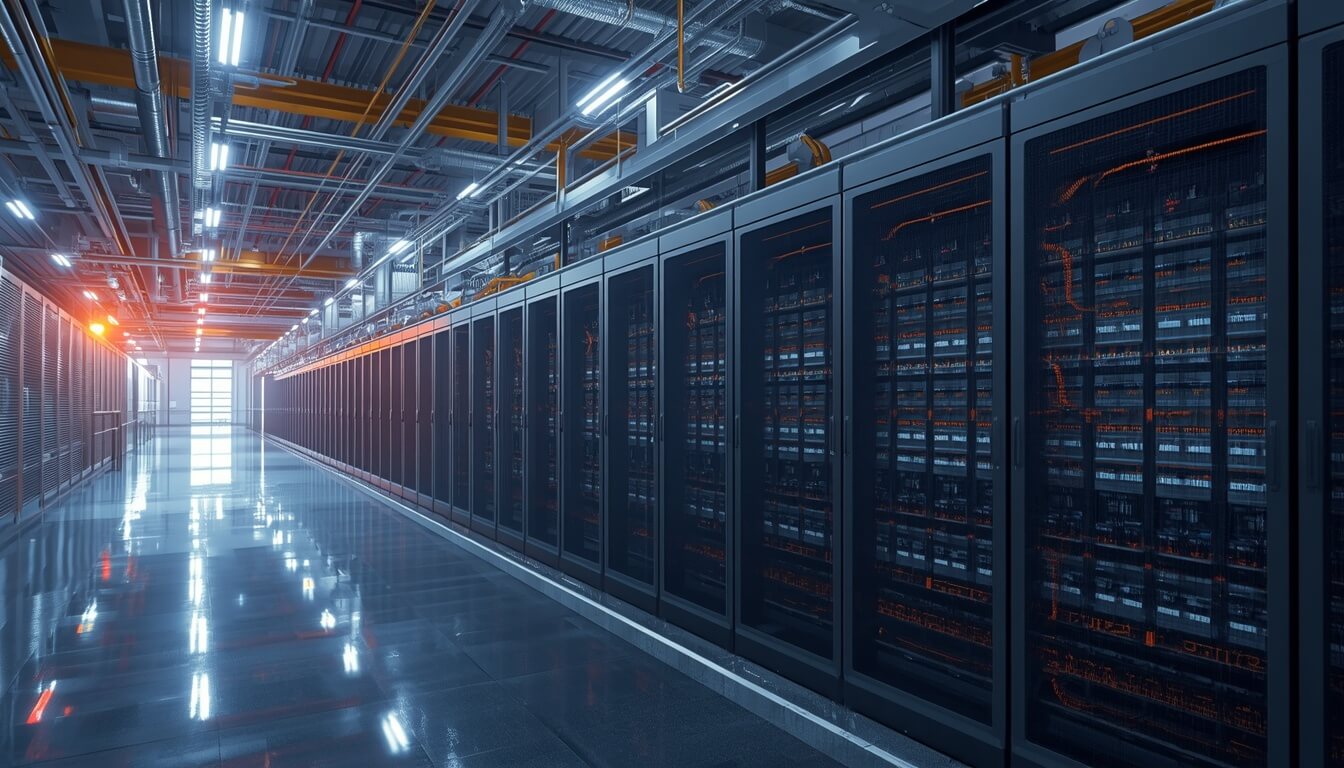
AI data centers consume large amounts of electricity to power specialized processors, servers, networking equipment and cooling systems. Some also use substantial quantities of water to remove the heat generated by computing equipment.
According to Lawrence Berkeley National Laboratory, U.S. data centers consumed approximately 176 terawatt-hours (TWh) of electricity in 2023, representing 4.4% of total U.S. electricity consumption. Its projections indicate that annual demand could reach 325–580 TWh by 2028, equivalent to approximately 6.7–12% of U.S. electricity use.
These figures include all data centers, not just AI facilities. Water consumption is harder to measure because it varies significantly with cooling technology, location and electricity sources.
For investors, AI growth depends not only on computing power but also on access to affordable electricity, effective cooling and sufficient water resources. These requirements create opportunities for infrastructure suppliers while introducing costs and potential limits on expansion.
Why do AI data centers use so much electricity?
AI models rely on specialized processors, including graphics processing units (GPUs), that perform large numbers of calculations simultaneously.
Large AI facilities may operate thousands of these processors, creating substantial electricity demand.
However, processors are only part of the total consumption. Electricity also powers:
- Servers and data storage systems.
- High-speed networking equipment.
- Cooling systems, pumps and fans.
- Electrical distribution and power conversion equipment.
- Building operations and reliability systems.
Powerful processors also generate considerable heat. Without adequate cooling, equipment can overheat, lose performance or fail.
As a result, expanding AI computing capacity often requires additional investment in both electricity supply and cooling infrastructure.
How much electricity do U.S. data centers consume?
Electricity demand from U.S. data centers has increased substantially with the expansion of cloud computing and artificial intelligence.
Lawrence Berkeley National Laboratory estimated that data centers consumed approximately 176 TWh in 2023, more than twice their estimated consumption in 2017.
Its projections illustrate the potential scale of future demand:
| Year | Annual electricity use | Share of U.S. electricity |
|---|---|---|
| 2023 | 176 TWh | 4.4% |
| 2028 (projected) | 325–580 TWh | 6.7–12% |
One terawatt-hour equals one billion kilowatt-hours, the unit commonly used on household electricity bills.
These projections cover data centers broadly. AI is a major driver of expected growth, but cloud services and other computing activities also contribute.
Actual demand will depend on AI adoption, new construction and improvements in computing efficiency.
For investors, the challenge is that electricity infrastructure often takes much longer to expand than computing capacity.
How much electricity does one AI data center use?
Electricity requirements vary considerably depending on facility size, equipment and how intensively the computers operate.
Large AI data center campuses can require hundreds of megawatts (MW) of power. Some proposed developments target capacities approaching or exceeding 1 gigawatt (GW).
One gigawatt equals 1,000 megawatts.
To illustrate the scale, a facility drawing 1 GW continuously for an entire year would consume approximately 8.76 TWh of electricity.
That is a hypothetical calculation, not the actual annual consumption of every large AI campus. Announced power capacity does not necessarily equal continuous electricity usage.
Nevertheless, these requirements explain why access to grid connections has become a major consideration in data center development.
A company may have financing, land and computing equipment ready but still face delays if sufficient electricity capacity is unavailable.
Why can AI require more energy than ordinary computing?
Advanced AI models can require intensive calculations across large groups of specialized processors.
Two activities account for much of this demand:
- Training: Developing or improving AI models by processing large datasets. Advanced training projects can involve thousands of processors operating for extended periods.
- Inference: Running trained models to answer questions, generate images or perform tasks requested by users.
Training can create concentrated electricity demand, while inference generates ongoing demand as people and businesses use AI services.
However, not every AI task consumes more energy than every conventional computing task. Energy requirements depend on the model, hardware and complexity of the operation.
The broader concern is that rapidly increasing AI usage can raise total computing demand even when individual tasks become more efficient.
Can more efficient AI technology reduce electricity demand?
More efficient processors and software can reduce the electricity required for an individual AI task.
However, improved efficiency does not automatically reduce total consumption.
When AI becomes cheaper to operate, businesses may introduce more applications and consumers may use them more frequently.
Consider a hypothetical AI system that becomes twice as energy-efficient but processes five times as many requests. Its total energy consumption would still increase substantially.
This means investors should monitor both energy efficiency and the growth in AI usage rather than assuming technological improvements will automatically reduce electricity demand.
Why do AI data centers need water?
AI processors generate heat that must be removed to keep equipment operating safely.
Data centers use several cooling technologies:
- Air cooling: Fans and air-handling equipment move heat away from servers.
- Evaporative cooling: Water absorbs heat and some evaporates, helping cool the facility.
- Liquid cooling: Coolant circulates near processors to remove heat efficiently.
Liquid cooling does not automatically mean high water consumption. Some systems use closed loops that repeatedly circulate coolant, although the collected heat must still be released elsewhere.
Water requirements depend on the cooling system, local climate and operating conditions.
For example, a facility in a cool region may require a different cooling approach from one operating in a hot, dry climate.
What happens to the water used by data centers?
Water use depends on the cooling technology.
Some systems circulate water repeatedly, while evaporative cooling releases part of the water as vapor. Additional water may be discharged to prevent mineral buildup.
Two measurements are important:
- Water withdrawal: The total amount of water taken from rivers, reservoirs, groundwater or other supplies.
- Water consumption: Water that is not returned to the same local water system for immediate reuse, often because it evaporates.
These measurements are not interchangeable.
A facility may withdraw substantial quantities of water but return much of it. Another facility could withdraw less water while consuming a greater proportion.
Understanding this distinction helps communities and investors evaluate water-related claims more accurately.
How much water does AI actually use?
There is no universal figure for how much water one AI query or one AI data center consumes.
Water requirements depend on the AI model, computing hardware, cooling technology, local climate and electricity supply.
The total water footprint can include two components:
- Direct water use: Water consumed at the data center, primarily through cooling.
- Indirect water use: Water consumed elsewhere, particularly by power plants generating electricity for the facility.
For example, two data centers running similar AI workloads could have different water footprints if one uses evaporative cooling and electricity from water-intensive power generation, while the other uses closed-loop cooling and a different electricity mix.
This is why claims that every AI question consumes an exact quantity of water should be treated cautiously. Such estimates depend on specific assumptions and cannot be applied universally.
Why is water consumption becoming a local issue?
Water availability differs considerably between regions.
A data center operating in an area with abundant water supplies creates different concerns from one located in a drought-prone region where households, agriculture and businesses already compete for limited resources.
Developers can reduce freshwater requirements by using recycled water, closed-loop systems and more efficient cooling technologies.
However, large projects may still face opposition if residents believe they could place additional pressure on local water supplies.
For investors, these concerns can influence site selection, operating costs, permitting and construction schedules.
They are explored further in Why Some Communities Oppose AI Data Centers.
Why electricity availability may be the bigger constraint
Water can create significant local challenges, but electricity availability may be a broader obstacle to rapid AI data center expansion.
The problem is not simply whether enough electricity can be generated nationally. Power must be available at the specific location and time a facility needs it.
A region may have substantial generation capacity but insufficient transmission infrastructure to connect another large data center.
Building new transmission lines, substations and power plants can take years. Large transformers and other specialized equipment may also face lengthy delivery schedules.
This creates a mismatch between the speed at which technology companies want to expand computing capacity and the time needed to upgrade electricity networks.
For investors, projects with secured power access may have an advantage over developments facing uncertain grid connections.
Who pays for additional electricity infrastructure?
Utilities may need to invest in generation, substations, transmission lines and other equipment to serve growing data center demand.
Data center operators pay for their electricity and may be required to finance infrastructure directly associated with their projects.
However, broader grid upgrades can benefit multiple customers, making the allocation of costs more complicated.
Regulators determine how much of those expenses should be assigned to large data center customers and how much can be recovered through electricity rates paid by other users.
The financial implications are examined in Who Pays for AI Data Centers and How They Affect Utility Bills.
These decisions matter because higher connection costs and electricity prices can influence where new AI facilities are built and whether projects are financially attractive.
Can renewable energy meet AI data center demand?
Renewable electricity can help supply growing data center demand, but it does not eliminate the need for reliable power infrastructure.
Technology companies have signed major agreements supporting wind and solar development.
However, data centers often operate continuously, while solar and wind generation vary with sunlight and weather.
Reliable operations therefore require sufficient generation, transmission, storage or other resources capable of meeting electricity demand when renewable output is limited.
This helps explain why major technology companies are also exploring nuclear energy, geothermal power and other electricity sources.
For investors, AI infrastructure expansion could create opportunities across multiple energy technologies rather than benefiting one source of electricity generation exclusively.
Could electricity demand become a limit on AI growth?
Yes. Access to affordable, reliable electricity could determine how quickly new AI computing capacity becomes operational.
When sufficient power is unavailable, developers may need to:
- Move projects to regions with greater electricity availability.
- Negotiate long-term power supply agreements.
- Invest in dedicated electricity generation or supporting infrastructure.
- Improve computing and cooling efficiency.
- Delay construction until grid connections become available.
These constraints can increase development costs and affect competition between locations.
They may also encourage alternative approaches to designing and locating computing infrastructure.
Those possibilities are explored in What Could Replace Traditional AI Data Centers.
Why energy and water matter for investors
Growing AI infrastructure demand creates potential opportunities for companies supplying electricity, cooling systems and related equipment.
Several industries are exposed to this expansion:
- Utilities and power producers: Supply electricity and invest in supporting infrastructure.
- Electrical equipment manufacturers: Produce transformers, switchgear and power distribution systems.
- Cooling specialists: Supply equipment that removes heat from AI servers.
- Energy storage companies: Provide technologies supporting electricity reliability and flexibility.
- Water management businesses: Supply treatment, recycling and cooling-related systems.
Companies such as Eaton, Schneider Electric and Vertiv participate in electrical and cooling infrastructure markets, while utilities and electricity producers may benefit from additional power demand.
However, higher demand does not guarantee attractive financial returns.
Investors should consider several practical questions:
- Are growing infrastructure orders translating into higher profits and cash flow?
- Can utilities recover their investments through approved electricity rates and customer contracts?
- Could electricity shortages or water restrictions delay major projects?
- Are companies investing based on realistic expectations for future AI demand?
A major financial risk is that companies could commit billions of dollars to infrastructure based on demand forecasts that later prove too optimistic.
Businesses with reliable electricity access, competitive technologies and disciplined investment plans may be better positioned than those facing rising costs or uncertain project schedules.
AI's physical footprint is becoming harder to ignore
Artificial intelligence depends on more than advanced software and powerful processors.
Every large AI computing facility needs reliable electricity, cooling systems and infrastructure capable of supporting continuous operations. Some facilities also require significant local water resources.
As AI adoption expands, these physical requirements are becoming increasingly important to the economics of the industry.
For investors, the next stage of AI growth may depend not only on which companies develop the best models or fastest processors, but also on which businesses can supply the electricity, cooling and infrastructure needed to operate AI systems efficiently and profitably.
This article is for informational purposes only and does not constitute investment advice. Investing involves risk, including the possible loss of principal.