
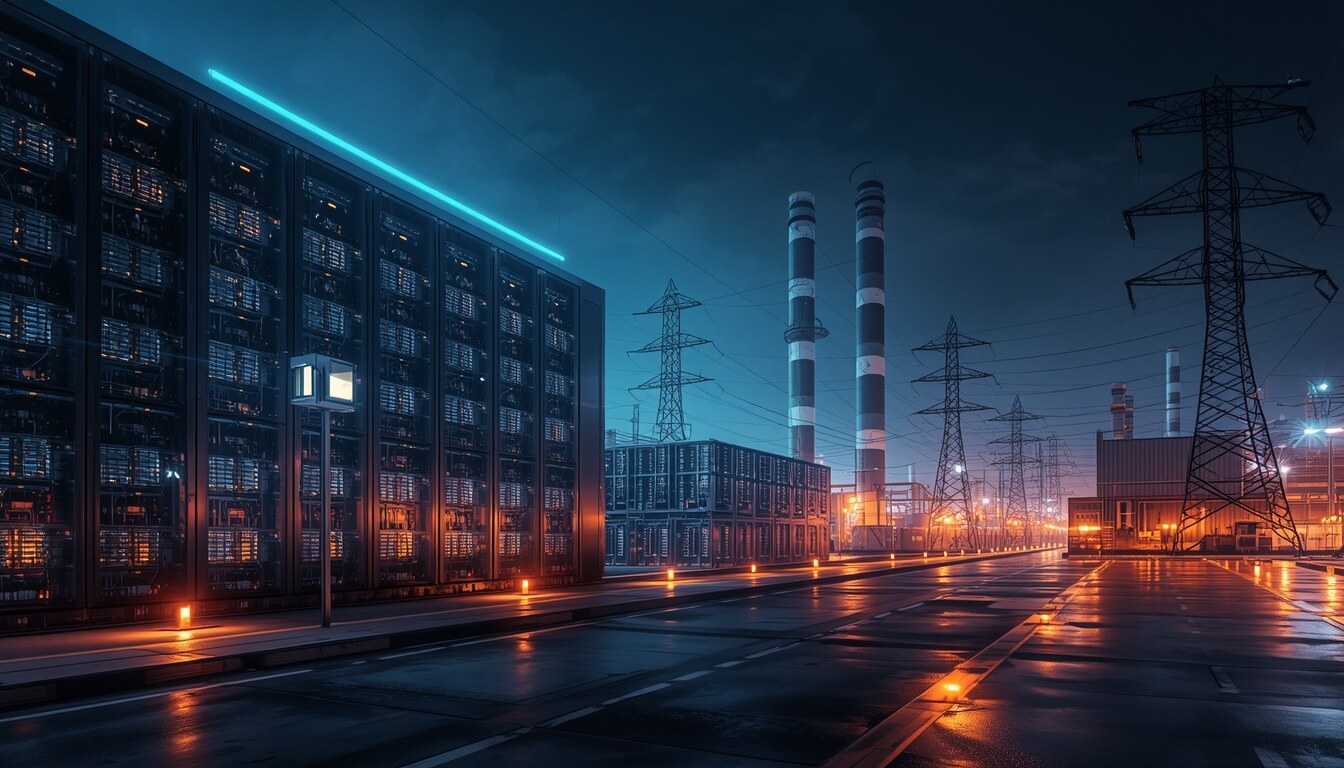
The global electricity system is entering a period in which demand could increasingly be shaped by a combination of digital infrastructure, industrial expansion and electrification. These forces are different in nature, but they share one important characteristic: they require electricity at a scale that can significantly influence local and national power systems.
Data centers are expanding to support cloud computing and artificial intelligence. Manufacturers are building new facilities for semiconductors, batteries and advanced technologies. At the same time, transportation, heating and other activities are gradually shifting from direct fossil-fuel consumption toward electricity.
The result is a more electricity-intensive economy, in which economic growth in several strategic sectors can translate directly into additional demand for power.
The implications extend beyond electricity producers. Grid operators, technology companies, manufacturers, governments and infrastructure investors all have an interest in whether sufficient generation and network capacity can be developed quickly enough.
Data Centers and the Expansion of Computing
Data centers have become one of the most visible sources of new electricity demand.
The growth of cloud computing already created substantial demand for servers and associated infrastructure. Artificial intelligence is adding another layer to this trend because training and operating advanced AI systems can require large amounts of computing capacity.
A modern data center does not consume electricity only through its servers. Electricity is also required for cooling, networking equipment, power management and other supporting systems.
The concentration of computing infrastructure can make the effect particularly significant at the local level. A large facility can represent a substantial new electricity load for a particular region, requiring utilities to assess whether existing generation, transmission lines and substations can accommodate it.
The expansion of AI therefore has an energy dimension that extends beyond the technology itself.
As computing becomes increasingly integrated into financial services, manufacturing, healthcare, communications and consumer applications, electricity demand associated with digital infrastructure could continue to grow.
This is one reason the broader increase in electricity demand needs to be considered alongside the evolution of the digital economy. The underlying drivers of that increase are discussed in The Global Energy Demand Surge and the Challenge of Supplying It.
Advanced Industry Could Add Large New Loads
Industrial activity represents another important source of potential electricity demand.
Manufacturing facilities can consume large amounts of energy, particularly in sectors such as chemicals, metals, semiconductors, batteries and advanced materials. The development of new supply chains for electric vehicles, renewable energy equipment and digital technologies could therefore increase electricity consumption.
Two examples stand out:
- Semiconductor manufacturing — modern chip fabrication requires highly controlled environments, sophisticated equipment and continuous operation. As countries seek to expand domestic semiconductor production, new fabrication plants can create significant additional electricity requirements.
- Battery manufacturing — the expansion of electric vehicles and stationary energy storage is encouraging investment in battery factories across multiple regions. These facilities require electricity throughout the manufacturing process, while their location can influence regional grid planning.
Industrial policy can therefore become closely connected with energy policy.
A government seeking to attract advanced manufacturing may need to provide not only land, transportation infrastructure and skilled workers, but also reliable access to large quantities of electricity.
Electrification Changes the Source of Energy Demand
Electrification is different from the expansion of a single industry because it can affect multiple sectors simultaneously.
Electric vehicles are the clearest example. Instead of obtaining most of their energy directly from gasoline or diesel, electric vehicles draw power from the electricity system.
As adoption increases, charging becomes a new source of electricity consumption. The impact will depend on:
- How many vehicles are electrified
- How frequently they are charged
- When charging takes place
Timing matters because electricity demand is not constant throughout the day.
If large numbers of vehicles charge during periods of already elevated demand, they can increase pressure on local networks. If charging can be shifted toward periods of lower demand, the same vehicles may be integrated more efficiently into the electricity system.
This makes smart charging, flexible demand and energy storage increasingly relevant to electricity planning.
Buildings Could Become More Electricity-Intensive
Electrification is also affecting buildings.
Heat pumps can replace or reduce the use of natural gas, heating oil and other fuels for space heating and hot water. Air conditioning and other electric appliances can add further demand.
The effect will vary significantly by geography and climate:
| Region | Primary demand driver | Peak period |
|---|---|---|
| Colder regions | Heating | Winter |
| Warmer regions | Cooling | Summer |
This creates an important distinction between annual electricity consumption and peak electricity demand.
A system may have enough generating capacity to meet average consumption while still experiencing periods in which demand approaches the limits of available generation or grid infrastructure.
As electrification progresses, managing these peaks can become just as important as producing additional energy over the course of the year.
Industrial Electrification Could Be More Transformative
Some of the most important changes may occur inside industrial processes.
Historically, many industrial activities have relied directly on coal, oil or natural gas because these fuels can provide high-temperature heat or other forms of concentrated energy.
Electrification offers alternatives for some applications. Electric furnaces, heat pumps and other technologies can replace combustion-based processes in certain circumstances.
Not every industrial process can be electrified easily, and economics vary by technology and location. Nevertheless, where electrification is technically and commercially viable, it can shift energy consumption from fuel markets toward electricity markets.
This creates a structural connection between industrial development and power generation.
A new industrial facility may therefore require a completely different electricity supply profile from a traditional commercial or residential customer.
The Combination Matters More Than Any Single Sector
The significance of these trends comes from their interaction.
- Data centers increase electricity consumption because computing infrastructure is expanding.
- Industry increases electricity consumption through new factories, manufacturing capacity and potentially more electrified production processes.
- Electrification adds demand across transportation, buildings and industrial applications.
These trends can reinforce one another.
Artificial intelligence can increase demand for data centers, while AI and automation can also become tools for industrial production. Battery manufacturing supports electric transportation and energy storage. Renewable energy equipment requires manufacturing capacity. Electric vehicles and industrial facilities increase the need for grid investment.
The electricity system consequently becomes connected to a much broader set of economic activities.
Location Could Become a Competitive Factor
The availability of electricity could increasingly influence where companies build new facilities.
A technology company considering a new data center may evaluate access to reliable power alongside land, connectivity and operating costs.
A semiconductor manufacturer may require a stable electricity supply with sufficient capacity for continuous industrial operations.
A battery factory may need access to large quantities of power as well as transportation infrastructure and raw materials.
This could create competition between regions seeking to attract energy-intensive industries.
Areas with abundant generation and strong transmission networks may have an infrastructure advantage. Conversely, regions with constrained grids may face delays even when there is strong demand for new investment.
Electricity availability could therefore become an increasingly important component of industrial strategy.
Demand Growth Is Not Necessarily Uniform
The global increase in electricity demand will not occur evenly.
Some countries are experiencing rapid industrialization and urbanization. Others have mature electricity systems where growth may be slower but electrification and data centers create new sources of demand.
Even within individual countries, regional differences can be substantial.
A national electricity market may appear to have sufficient capacity while particular cities or industrial corridors face local constraints. Transmission congestion and limited distribution capacity can prevent new consumers from accessing available generation.
This is why aggregate electricity consumption figures do not tell the entire story.
Understanding where demand is emerging can be as important as understanding how much total demand is increasing.
Flexibility Could Become Increasingly Valuable
Growing electricity consumption does not necessarily mean that every new unit of demand must be met by building an equivalent amount of continuously operating generation.
Energy storage, demand response, smart charging and flexible industrial consumption can help electricity systems manage variations in demand and supply.
Large electricity consumers may increasingly adjust operations according to electricity prices or system conditions. Electric vehicle charging can potentially be shifted away from peak periods. Batteries can store electricity when supply is abundant and release it when demand increases.
These technologies do not eliminate the need for generation and grid investment, but they can change how efficiently existing infrastructure is used.
A Structural Change in Electricity Consumption
The common factor connecting data centers, industry and electrification is that electricity is becoming more deeply embedded in economic activity.
The growth of computing creates new digital electricity loads. Industrial expansion creates large and often continuous demand from factories. Electrification transfers energy consumption from direct fossil-fuel use toward the power system.
Together, these trends could make electricity demand increasingly important to economic planning.
The challenge is not simply to generate more electricity. The system must also deliver it reliably, at the right location and at the right time.
That requirement leads to the next stage of the story: the infrastructure needed to connect new generation with rapidly growing consumers.
Transmission networks, distribution systems, substations, storage facilities, generation assets and other forms of energy infrastructure will all play a role in determining how effectively electricity systems can adapt.
The physical transformation required to support this new demand is examined in The New Infrastructure Needed for a More Electricity-Intensive Economy.