
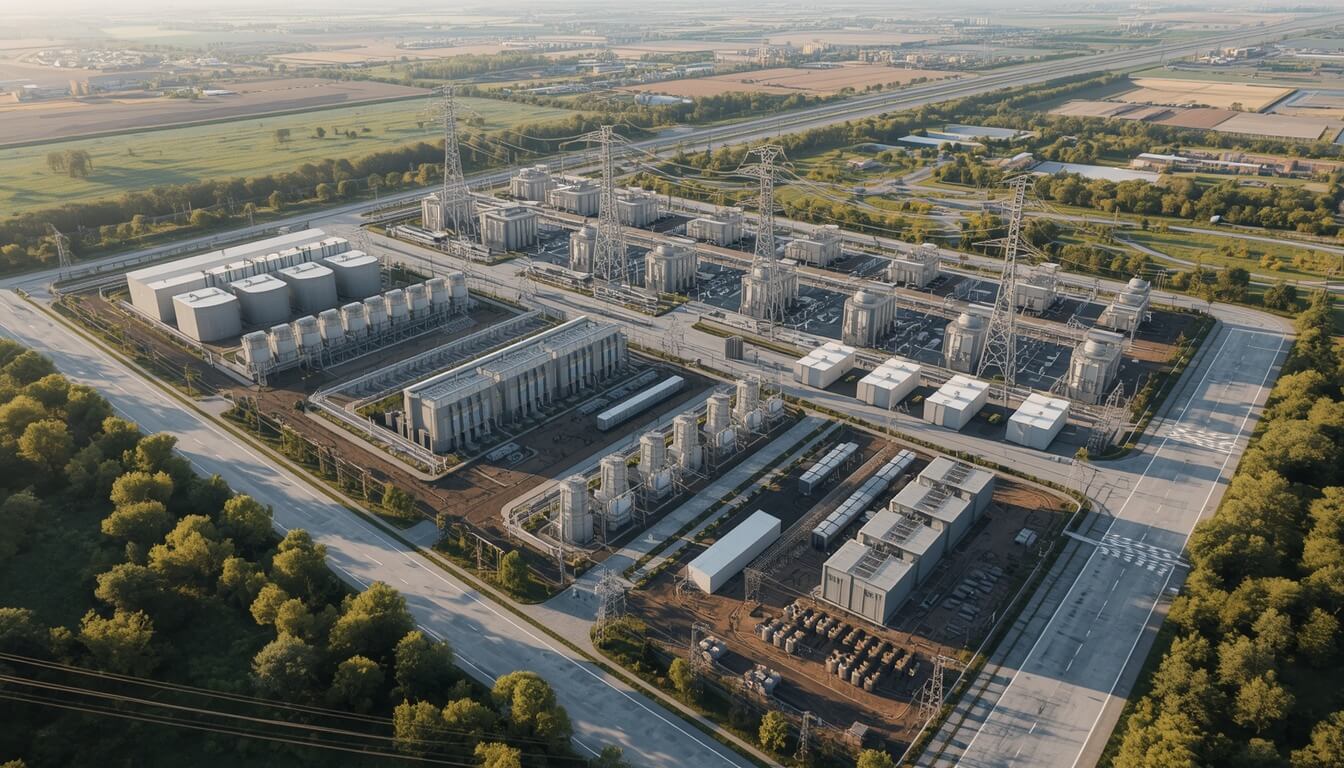
A more electricity-intensive global economy will require more than additional power generation. As data centers expand, industrial facilities become more electrified and transportation shifts toward electric technologies, the infrastructure connecting electricity producers with consumers will become increasingly important.
The transformation involves several layers of the energy system: generation, transmission, distribution, storage, substations, grid management and the physical connections required by large new electricity consumers.
This infrastructure is becoming an increasingly important part of the global investment landscape because electricity demand is changing not only in volume, but also in location, timing and reliability requirements.
The challenge is therefore to build an electricity system capable of supporting an economy that depends more heavily on continuous and increasingly flexible access to power.
More Generation Capacity
The most obvious requirement is additional electricity generation.
If global electricity consumption continues to increase, power systems will need sufficient capacity to meet both average consumption and periods of peak demand.
Renewable energy is expected to account for a significant part of new generating capacity in many markets. Solar and wind projects can be deployed at large scale, while improvements in technology and manufacturing have reduced costs in many regions.
However, renewable generation is variable. Solar production changes throughout the day, while wind output depends on weather conditions.
This makes the composition of the future electricity system important. Depending on local circumstances, grids may combine:
- Renewable generation
- Nuclear power
- Natural gas
- Hydropower
- Geothermal resources
- Batteries and other flexibility technologies
The objective is not simply to maximize installed capacity, but to create a system capable of matching supply with demand under different conditions.
Transmission Networks Become More Important
Additional generation is useful only if electricity can reach consumers.
This makes transmission infrastructure one of the central requirements of a growing electricity system.
New renewable projects are often located where natural resources are strongest rather than close to major population centers. Large solar installations may be built in areas with high levels of sunlight, while wind projects can be concentrated in regions with favorable wind conditions.
Major electricity consumers, however, may be located elsewhere.
This creates a need for high-voltage transmission networks capable of moving electricity across long distances.
Existing grids were often designed around the energy geography of previous decades. The expansion of renewable generation, industrial facilities and large computing infrastructure can create flows that differ significantly from historical patterns.
Building new transmission lines can therefore become an essential part of expanding electricity supply.
Distribution Networks Face a Different Challenge
Transmission systems move electricity over long distances, while distribution networks deliver it to individual consumers.
Electrification can create significant pressure at this local level.
Electric vehicle charging stations, electric heating systems, commercial buildings and industrial facilities can all increase demand at specific substations and distribution lines.
A national grid may have sufficient electricity generation while a particular neighborhood, industrial zone or city lacks the local infrastructure required to connect additional demand.
Distribution upgrades can include:
| Component | Function |
|---|---|
| Substations | Step voltage down for local distribution |
| Transformers | Adjust voltage for specific loads |
| Cables | Carry electricity to end users |
| Protection systems | Maintain safety and stability |
| Digital monitoring | Enable real-time visibility and control |
These investments are less visible than large power plants or transmission corridors, but they can be critical to the practical expansion of electricity consumption.
Substations Become Critical Connection Points
Substations provide an essential link between different levels of the electricity network.
As electricity demand increases, existing substations may need additional transformers and other equipment. New industrial facilities and data centers may require dedicated connections or substantial upgrades to existing infrastructure.
This can create long development timelines.
A company may be ready to build a new facility, but the project cannot begin operating until sufficient electricity capacity is available. In regions where grid connections are already constrained, infrastructure development can become a limiting factor for new economic activity.
The availability of grid capacity can therefore influence corporate investment decisions.
Energy Storage Can Add Flexibility
A more variable generation mix increases the importance of electricity storage.
Batteries can store electricity during periods of high generation and release it when demand increases or renewable production falls.
Storage can serve several functions:
- Manage short-term fluctuations
- Reduce pressure during peak periods
- Improve the utilization of renewable generation
Different storage technologies may serve different time horizons. Batteries are particularly suited to many short-duration applications, while other technologies may be developed for longer-duration storage.
Storage is not a substitute for transmission or generation capacity, but it can make the overall electricity system more flexible.
Grid Digitalization
The physical electricity network is increasingly being combined with digital technologies.
Smart meters, sensors, automated controls and software systems can provide grid operators with more detailed information about electricity flows and demand patterns.
This becomes increasingly useful when electricity consumption is less predictable or more distributed.
Electric vehicles, batteries, rooftop solar systems and flexible industrial loads can all change how electricity moves through the network.
Digital management can help operators coordinate these resources and respond more rapidly to changes in supply and demand.
The modernization of the electricity system is therefore partly an infrastructure project and partly a digital transformation.
Large Consumers May Build Their Own Energy Infrastructure
The growth of electricity-intensive industries could also change the relationship between consumers and utilities.
Large data centers and industrial facilities may seek dedicated power arrangements or direct connections to generation assets. In some cases, companies may combine grid electricity with on-site generation and storage.
This can provide additional resilience and help manage electricity costs, although the economic and regulatory conditions differ across markets.
The growing importance of large consumers also means that electricity planning increasingly needs to account for individual projects capable of adding substantial demand in a relatively short period.
The sectors behind this demand are examined in Why Data Centers, Industry and Electrification Could Drive Power Demand.
Permitting Could Become a Major Constraint
Infrastructure cannot be built simply because it is economically desirable.
Power plants, transmission lines, substations and other major projects often require extensive permitting, environmental assessments and coordination between multiple authorities.
Transmission projects can be particularly complex because they may cross several municipalities or regions.
This creates a potential mismatch between the speed at which electricity demand can grow and the time required to build infrastructure.
A data center or industrial facility can be planned within a relatively short commercial timeframe, while a major transmission project may require years of planning and construction.
The ability to coordinate these timelines could become increasingly important.
Investment Will Need to Cover Multiple Layers
The coming expansion of electricity demand therefore creates a broad infrastructure requirement.
Investment will be needed in generation, transmission, distribution, storage and digital grid technologies.
It will also be needed in supporting infrastructure, including transformers, power electronics, cables, substations, control systems and equipment used to connect new electricity consumers.
This creates a large and diversified infrastructure ecosystem rather than a single investment theme.
Utilities remain central to the process, but manufacturers of grid equipment, engineering companies, construction firms, energy developers and technology providers can also participate in the expansion.
One example of financing directed toward this industrial supply chain is the EIB and BNP Paribas €700 million grid guarantee initiative, designed to support European manufacturers of electricity-network equipment.
The Geography of Electricity Could Change
The future electricity system may look geographically different from the one that exists today.
Large renewable projects may be located far from population centers. Data centers may cluster in areas with favorable electricity availability and network connectivity. Industrial facilities may increasingly consider access to reliable power when selecting locations.
Electricity infrastructure could therefore influence the geography of future economic activity.
Regions with strong grids, available generation and efficient permitting processes may be able to accommodate new electricity-intensive projects more quickly.
Conversely, areas with limited transmission capacity or long connection queues may face constraints even when companies are willing to invest.
The Grid Becomes an Economic Infrastructure Layer
Electricity infrastructure is often viewed primarily as a utility issue. But as more economic activity depends on electricity, the grid increasingly becomes a fundamental layer of the wider economy.
Factories depend on it. Data centers depend on it. Electric vehicles depend on it. Buildings increasingly depend on it. Digital services ultimately depend on physical infrastructure that requires reliable electricity.
This makes grid capacity increasingly relevant to economic growth.
The challenge is not simply to produce enough electricity. Power must be generated, transported, distributed and managed in a coordinated system capable of responding to changing patterns of consumption.
Building Ahead of Demand
One of the central challenges will be timing.
Infrastructure projects take time, while demand can sometimes emerge quickly.
A large technology company can announce a new data center, or a manufacturer can announce a new factory, creating a substantial electricity requirement within a relatively short period.
Grid infrastructure cannot always expand at the same speed.
This creates an incentive for utilities, governments and infrastructure developers to plan ahead rather than simply respond to demand after it appears.
Long-term forecasting, coordinated planning and investment in network capacity can reduce the risk that electricity infrastructure becomes a bottleneck for new economic activity.
A More Complex Electricity System
The future electricity system is likely to be more interconnected and more complex than the traditional model of centralized generation supplying relatively predictable consumers.
- Renewable generation introduces greater variability.
- Electric vehicles create flexible but potentially large new loads.
- Batteries can operate as both consumers and sources of electricity.
- Data centers can create large continuous demand.
- Industrial electrification can reshape regional consumption patterns.
Managing these elements will require both physical infrastructure and increasingly sophisticated digital systems.
The transformation will therefore extend well beyond the construction of additional power plants.
The Infrastructure Behind the Energy Transition
The growth of electricity demand is ultimately an infrastructure challenge.
The first question is how much additional electricity the global economy may require. The second is which sectors will consume it. The third is whether the physical electricity system can expand quickly enough to accommodate that demand.
Data centers, industrial facilities and electrification are creating new electricity loads, as discussed in The Global Energy Demand Surge and the Challenge of Supplying It.
Meeting those loads will require a combination of new generation, stronger transmission networks, expanded distribution systems, additional storage and more intelligent grid management.
The resulting transformation could make electricity infrastructure one of the defining physical foundations of the increasingly digital and electrified economy.
Rather than representing a single technological shift, it is a broad restructuring of how energy is generated, transported and consumed. The pace at which this infrastructure develops will influence how quickly new electricity-intensive industries can expand and how effectively power systems can adapt to changing patterns of economic activity.