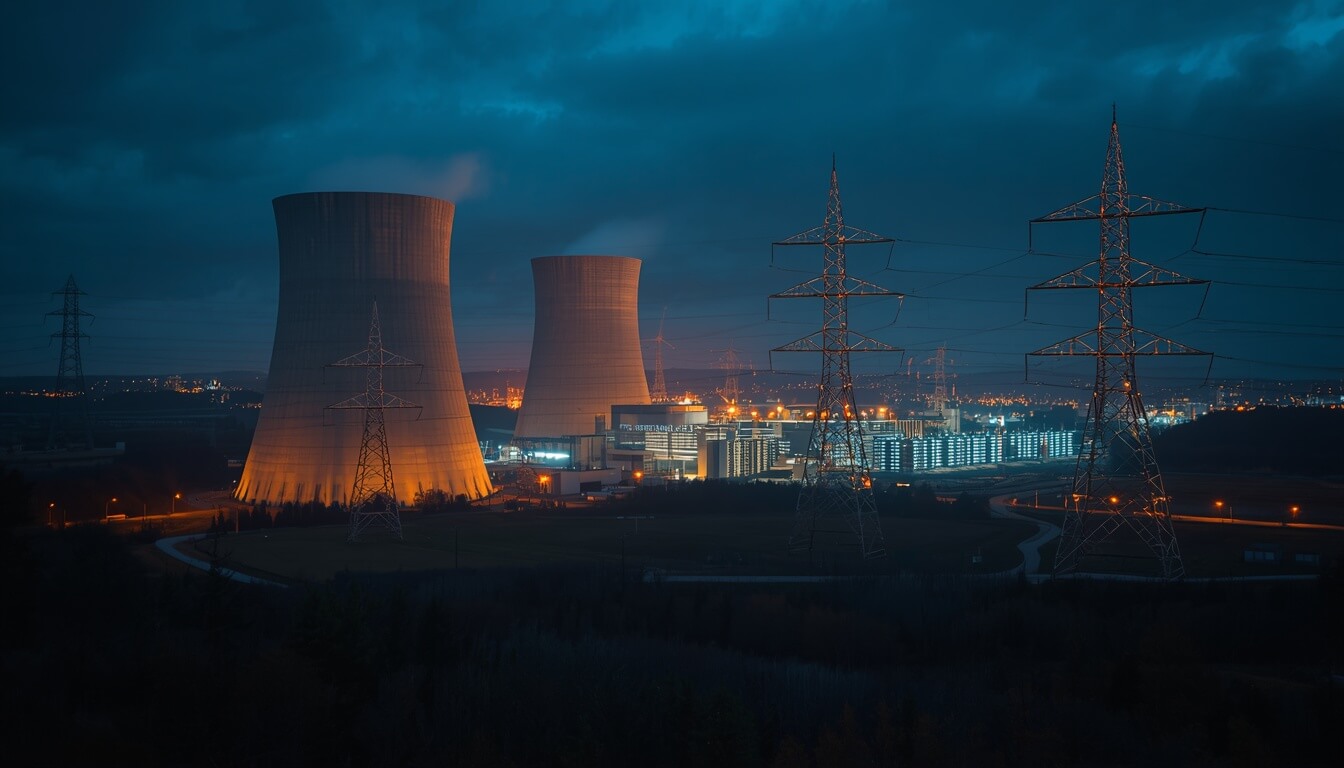
Google and Constellation Energy announced long-term power agreements on October 6, 2026, covering a combined 3,590 megawatts (MW) in the PJM electricity market. The agreements include 890 MW of new nuclear generating capacity and 2,700 MW from Constellation's existing power generation fleet.
The nuclear expansion will support more than $4.3 billion in planned investment by Constellation. The deal highlights how growing electricity demand from AI and data centers is creating new opportunities for U.S. power producers.
What Did Google and Constellation Energy Agree To?
The agreement has two major parts, but only one will add new electricity generation capacity.
First, Google signed a 20-year power purchase agreement supporting 890 MW of additional nuclear capacity from existing Constellation plants in Illinois, Pennsylvania and New Jersey.
Constellation plans to increase output at 11 existing nuclear units across six sites by upgrading equipment such as turbines, steam generators and digital control systems. These improvements, known as nuclear uprates, are designed to produce more electricity without constructing an entirely new nuclear plant.
The first additional capacity is expected to become available in 2028, with the full 890 MW scheduled to be added to the PJM grid before the end of 2032.
Second, Google and Constellation entered into a 15-year energy supply agreement covering another 2,700 MW from Constellation's existing generation fleet in the PJM market.
This distinction matters: the 890 MW represents planned new generating capacity, while the 2,700 MW agreement supports existing generation. The combined 3,590 MW should not be interpreted as entirely new electricity supply.
Why Does Google Need So Much Power?
The agreement is closely connected to Google's expanding AI and data-center operations.
Training and running artificial intelligence models requires substantial computing capacity. Data centers house the servers, networking equipment and specialized chips that perform this work, and those systems need reliable electricity around the clock.
As Google and other major technology companies expand their AI infrastructure, securing enough power is becoming an important part of their growth strategies.
Electricity availability can influence where companies build data centers, how quickly new facilities begin operating and how much additional computing capacity they can deploy.
This means the AI investment story is no longer limited to chips and software. It increasingly includes electricity generation, transmission networks and the infrastructure needed to deliver power to data centers.
That broader competition is explored in How Cloud Companies Are Competing for the AI Infrastructure Market, which examines how access to computing infrastructure is shaping the cloud industry's AI strategy.
Why Is Nuclear Power Becoming Important for AI?
AI data centers need large amounts of electricity that can be supplied consistently.
Nuclear power is attractive because reactors can generate substantial amounts of electricity continuously, regardless of weather conditions. Nuclear generation also produces electricity without direct carbon emissions during operation.
Instead of waiting for entirely new nuclear plants to be built, Google and Constellation are pursuing a different approach: increasing the output of reactors that are already operating.
The planned upgrades are expected to add 890 MW of capacity, roughly equivalent to the output of one large conventional nuclear reactor.
According to Google, its agreements supporting reactor upgrades and nuclear plant restarts have now enabled plans for more than 1.5 gigawatts (GW) of additional U.S. nuclear capacity.
However, the new capacity supported by these agreements will become available over time, rather than immediately.
The strategy illustrates an important shift: expanding AI computing capacity increasingly requires investment in the physical electricity system that supports it.
Why the $4.3 Billion Investment Matters
Constellation expects to invest more than $4.3 billion in equipment and technology upgrades across six nuclear sites in Illinois, Pennsylvania and New Jersey.
According to the companies, the projects are expected to sustain approximately 4,400 existing jobs and create around 7,200 construction jobs during the development period.
Beyond the construction activity, the agreement demonstrates how long-term electricity contracts can help finance additional power generation.
Upgrading nuclear plants requires substantial upfront spending. A 20-year commitment from a major customer such as Google provides greater visibility into future demand, helping Constellation justify the investment.
The arrangement also fits PJM's proposed "Bring Your Own Power" approach, which encourages large electricity consumers to support additional generation as their demand grows.
In practical terms, Google is helping finance an expansion of electricity supply rather than relying exclusively on power already available on the grid.
That does not eliminate construction costs, regulatory requirements or execution risks, but it provides a potential financing model for future energy infrastructure projects.
AI Is Becoming an Energy Story
For years, much of the AI investment discussion focused on semiconductor companies, software developers and cloud providers.
Rapid data-center expansion is bringing electricity infrastructure into that discussion.
AI computing depends on several interconnected systems:
- Semiconductors provide the processing power needed to run AI models.
- Data centers house servers and computing equipment.
- Networks connect computing systems and users.
- Electricity generation and grids provide and deliver the power needed to operate everything.
If electricity supply or grid connections cannot expand quickly enough, new data-center projects may face delays even when the computing equipment is available.
This creates potential opportunities for electricity generators, grid equipment suppliers and other infrastructure companies. However, higher electricity demand does not automatically translate into higher profits for every business in the sector.
The connection also helps explain Why AI Could Reshape the Balance of Power in Cloud Computing. Cloud companies are increasingly competing not only over AI models and computing capacity, but also over access to the infrastructure needed to support their expansion.
What Does the Deal Mean for Constellation Energy?
For Constellation, the agreements provide long-term commercial commitments from one of the world's largest technology companies while supporting investment in its existing power generation fleet.
Constellation is the largest nuclear energy company in the United States, giving it an established position as technology companies seek reliable, large-scale electricity supplies.
The market reacted strongly to the announcement, with Constellation shares rising more than 13% during trading following the news.
The reaction highlights investor interest in whether AI-driven electricity demand could create additional growth opportunities for nuclear operators.
However, investors should distinguish between rising demand and guaranteed financial returns.
The planned upgrades require substantial capital and will take several years to complete. Their financial contribution will depend on construction costs, regulatory approvals, operating performance and the commercial terms of the agreements.
The companies have not publicly disclosed all the pricing details needed to calculate the projects' expected profitability.
Investors should therefore watch whether Constellation can deliver the additional capacity on schedule and translate its long-term contracts into sustainable earnings and cash flow.
What Does the Deal Mean for Alphabet?
For Alphabet, Google's parent company, the agreements are primarily about securing electricity supply to support future computing infrastructure.
Building more data centers is useful only if sufficient electricity and grid capacity are available to operate them.
Long-term energy agreements can help Google plan its expansion years in advance and reduce some of the uncertainty surrounding future power availability.
The collaboration also extends beyond electricity purchases.
Under an expanded five-year technology agreement, Constellation plans to use Google Cloud and Gemini Enterprise to improve activities such as power generation planning, equipment monitoring and operational efficiency.
These applications could help Constellation manage its facilities more effectively, although the financial benefits remain uncertain.
For Alphabet investors, the larger question is whether securing reliable electricity will help Google expand AI services and data-center capacity without facing significant infrastructure delays or excessive operating costs.
What Should Investors Watch Next?
The first important milestone is the delivery of Constellation's planned nuclear upgrades.
The initial additional capacity is expected in 2028, with the full 890 MW targeted before the end of 2032. Investors should monitor whether those projects remain on schedule and within their expected investment budgets.
Another development to watch is whether similar agreements become more common across the technology industry.
Google is not alone in pursuing nuclear energy. Other major technology companies have also entered long-term agreements to secure electricity for expanding data-center operations.
Google and Constellation have additionally established a framework to explore future opportunities involving new clean generation, energy storage and demand response, which involves adjusting electricity consumption during periods of high grid demand.
These are potential future projects, not additional generating capacity that has already been approved or built.
For investors, the key questions are whether electricity demand continues to grow as expected, whether new supply can be delivered on time and which companies can turn that demand into profitable long-term contracts.
The main takeaway: Google's agreement with Constellation shows how AI growth is beginning to support major investments in U.S. electricity infrastructure. The deal could benefit nuclear generation and related industries, but its long-term financial impact will depend on project execution, contract economics and actual electricity demand.
This article is for informational purposes only and does not constitute investment advice. Always do your own research before making investment decisions.