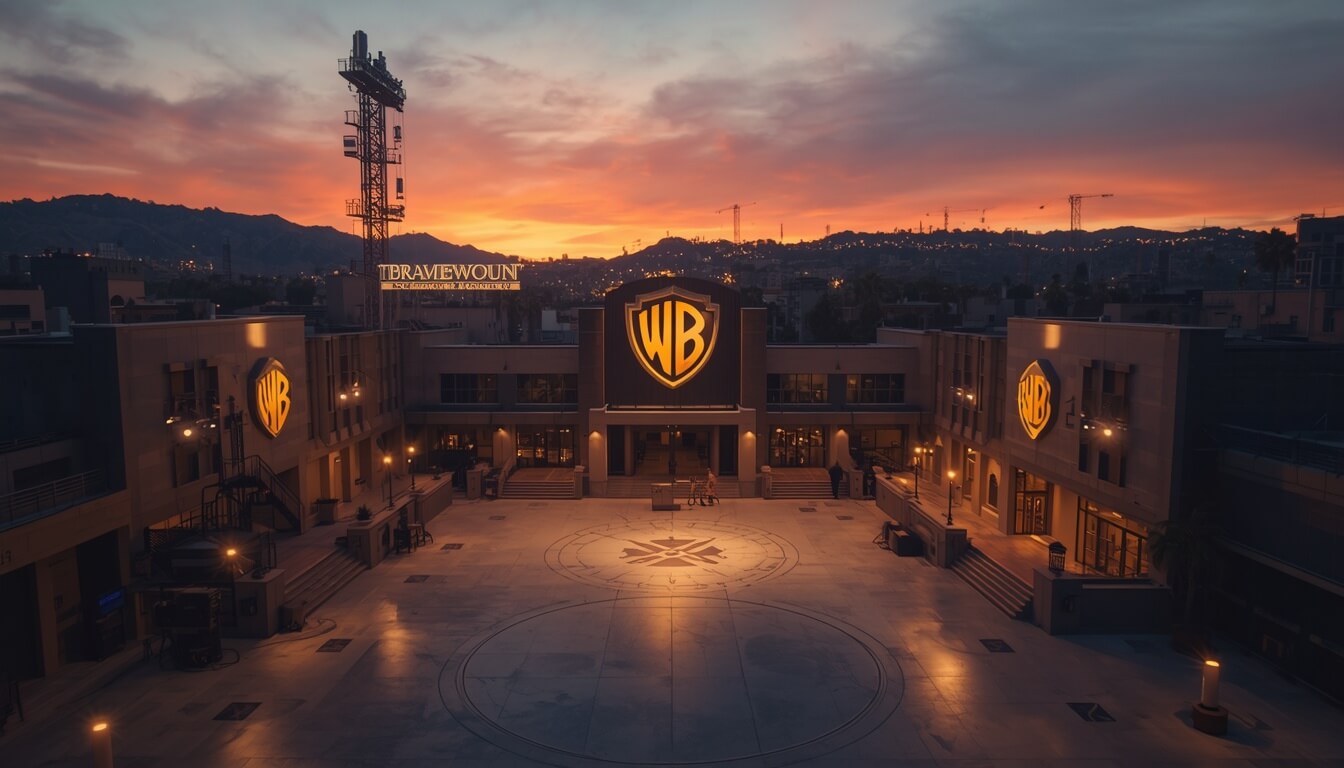
Paramount Skydance's planned acquisition of Warner Bros. Discovery has cleared its final major legal obstacle after a U.S. federal judge approved a settlement resolving an antitrust lawsuit brought by California and 11 other states.
The decision opens the way for Paramount to complete one of the largest transactions ever attempted in the global media and entertainment industry. The deal, generally valued at approximately $110 billion to $111 billion, would combine Paramount's film, television and streaming operations with Warner Bros. Discovery's extensive portfolio of studios, networks, streaming services and intellectual property.
Paramount and Warner Bros. Discovery said on September 30 that they expect the transaction to close on October 6, 2026, subject to customary closing conditions.
The transaction marks a major moment for an industry undergoing structural changes as traditional television declines, streaming competition intensifies and entertainment companies seek greater scale.
A Major Legal Obstacle Is Removed
The acquisition had already received regulatory clearance from several jurisdictions, including the United Kingdom. In August, Britain's government and competition authorities cleared the transaction after Paramount agreed to commitments concerning the treatment of certain news and television operations.
The most significant remaining obstacle was in the United States.
In July, California Attorney General Rob Bonta and 11 other state attorneys general filed a lawsuit seeking to block the transaction on antitrust grounds. The states argued that combining Paramount and Warner Bros. Discovery could reduce competition across several parts of the media industry.
The companies subsequently reached a settlement with the states in September. On September 30, U.S. District Judge Araceli Martínez-Olguín approved that settlement, effectively allowing the acquisition to proceed. The Los Angeles Times reported that the judge did not add additional conditions to the agreement negotiated between Paramount and the states.
The ruling removes the major legal uncertainty that had prevented Paramount from completing the transaction.
What Paramount Is Buying
The strategic significance of the transaction comes from the extraordinary collection of assets that would be brought under one corporate structure.
Paramount already owns Paramount Pictures, CBS, CBS News, CBS Sports, Nickelodeon, MTV, BET, Comedy Central, Showtime, Paramount+ and Pluto TV, among other businesses.
Warner Bros. Discovery adds Warner Bros. Pictures, Warner Bros. Television, HBO, HBO Max, CNN, TNT, TBS, HGTV, Food Network, Discovery Channel, Cartoon Network, Adult Swim and a large portfolio of other television, film and digital brands.
The combined company would therefore operate across virtually every major segment of the entertainment industry. Its assets would include major Hollywood film studios, television production, traditional cable networks, streaming platforms, news organizations, sports rights and extensive intellectual property.
| Paramount Assets | Warner Bros. Discovery Assets |
|---|---|
| Paramount Pictures, CBS, CBS News, CBS Sports | Warner Bros. Pictures, Warner Bros. Television, HBO, HBO Max |
| Nickelodeon, MTV, BET, Comedy Central, Showtime | CNN, TNT, TBS, HGTV, Food Network, Discovery Channel |
| Paramount+, Pluto TV | Cartoon Network, Adult Swim, TLC |
Some of the most recognizable franchises associated with Warner Bros. include Batman and Harry Potter, while Paramount brings properties such as Star Trek, Mission: Impossible and Top Gun.
Streaming Is Central to the Deal
One of the most important elements of the transaction is the combination of Paramount+ and HBO Max.
Both companies have spent years investing heavily in streaming as traditional television audiences have shifted toward on-demand services. The streaming market has become increasingly competitive. Netflix, Disney+, Amazon Prime Video, Apple TV+ and other platforms have forced traditional media companies to invest in original programming while simultaneously managing the decline of linear television.
Paramount+ and HBO Max have different strengths:
- Paramount+ brings franchises and programming from CBS, Paramount Pictures and its broader television portfolio.
- HBO Max contributes HBO, Warner Bros. film and television content, Discovery programming and a large collection of cable brands.
Combining the two streaming businesses could create a broader content offering under a single corporate structure. The transaction therefore reflects a wider trend in the media industry: scale has become increasingly important as companies attempt to spread the cost of content production and technology infrastructure across larger audiences.
The Cable Television Business Remains Important
Although streaming receives much of the attention, traditional television remains a major part of the transaction.
Warner Bros. Discovery owns a large portfolio of cable networks, including CNN, TNT, TBS, HGTV, Food Network, Discovery Channel and TLC. Paramount operates its own collection of cable and broadcast assets, including CBS, MTV, Nickelodeon, Comedy Central and BET.
The combined company will therefore have significant exposure to a business that is under pressure from cord-cutting but continues to generate substantial revenue.
The challenge will be managing the transition. Cable networks historically benefited from large subscription bundles distributed through pay-TV operators. As consumers increasingly cancel traditional television packages, networks face declining audiences and pressure on distribution economics.
The antitrust settlement specifically addresses some of these issues. Under the agreement, Paramount must separately negotiate certain basic cable channel agreements and will face restrictions concerning its use of market power in those negotiations.
What the Antitrust Settlement Requires
The settlement approved by the judge lasts five years and establishes several conditions for the combined company.
| Condition | Detail |
|---|---|
| Theatrical releases | At least 30 films in theaters each year. |
| Domestic film production | An additional $1.5 billion commitment. |
| Worker fund | Approximately $47.5 million for workers affected by the merger. |
| Studio facilities | Maintain and operate historic Paramount and Warner Bros. locations in Hollywood and Burbank for at least five years. |
| Editorial independence | A five-member panel to monitor CBS News and CNN. |
These measures represent the conditions under which the states agreed to resolve their lawsuit rather than continue seeking to block the transaction.
A Deal Built Around Significant Financing
The acquisition is also notable because of the amount of financing required to complete it.
The Los Angeles Times reported that Paramount has been arranging approximately $44 billion of bonds and $7.5 billion of loans to finance the purchase. The combined company is expected to carry more than $87 billion of investment-grade and high-yield debt after the transaction.
The financing structure illustrates another important feature of contemporary media consolidation. Content companies are attempting to achieve greater scale at the same time that their traditional businesses face structural pressure. The acquisition therefore creates both a larger operating platform and a substantial financial obligation.
Paramount has indicated that it intends to reduce costs significantly following the combination. According to the Los Angeles Times, the company has promised investors approximately $6 billion in spending reductions over three years. How those savings are achieved will be an important part of the integration process.
The Future of Hollywood at Greater Scale
The combination also represents a major restructuring of the Hollywood studio system.
Paramount and Warner Bros. are two of the industry's most recognizable film studios. Bringing them together reduces the number of major independent studio groups operating at the highest level of the market.
The transaction could therefore affect how films are financed, produced, distributed and marketed. Theatrical distribution is one area specifically addressed by the settlement. Paramount has committed to maintaining a substantial number of theatrical releases each year, while the agreement includes additional protections concerning domestic film production.
At the same time, the combined company will have a much larger library of films and television programming. That library is increasingly valuable in a streaming environment, where platforms need a constant supply of recognizable and exclusive content.
The economics of streaming also favor companies capable of distributing content across multiple markets. A large international subscriber base can potentially spread production and technology costs over a broader revenue base, although the actual economics depend on subscriber growth, pricing, content spending and customer retention.
Management Structure Is Also Changing
The transaction is bringing changes to the leadership structure of the combined business.
On September 30, Paramount announced that Ynon Kreiz, the chief executive of Mattel, would become co-CEO of the combined company alongside Paramount Skydance CEO David Ellison. Kreiz is expected to help oversee the day-to-day operations of the enlarged media business.
The appointment comes as the companies prepare for the difficult phase that follows regulatory approval: integration.
Combining two large media organizations involves much more than putting assets under the same corporate structure.
- Technology platforms must be integrated.
- Content operations and advertising systems must be unified.
- Distribution agreements and international businesses must be consolidated.
- Corporate functions must be streamlined.
At the same time, management will have to determine which brands and operations should receive additional investment and which areas can be consolidated.
A New Structure for the Media Industry
The Paramount-Warner Bros. transaction is part of a broader restructuring of the global media industry.
Traditional television businesses face declining audiences and changing advertising economics, while streaming requires enormous investment in content and technology. This creates a difficult financial equation. Media companies need enough scale to finance expensive programming and compete internationally, but larger organizations can also become more complex and carry greater financial obligations.
The Paramount-Warner combination attempts to address that challenge by bringing together a broad collection of film, television, streaming, news and entertainment assets.
The result will be one of the largest media organizations in the world. The transaction also demonstrates how the competitive landscape is shifting from individual television networks toward integrated entertainment platforms. Content libraries, streaming services, theatrical distribution, sports rights, advertising technology and global distribution increasingly operate as interconnected parts of the same business.
Closing Expected October 6
With the federal court's approval now in place, the transaction has moved into its final stage.
Paramount Skydance and Warner Bros. Discovery announced on September 30 that they expect the merger to close on October 6, 2026, assuming the remaining customary closing conditions are satisfied. Under the agreement, Warner Bros. Discovery shareholders are scheduled to receive cash consideration of $31 per share, with an additional amount based on the timing of the closing after September 30.
If completed as planned, the transaction will fundamentally change the structure of the U.S. media industry. Paramount will gain Warner Bros.' film and television studios, HBO Max, CNN and a vast portfolio of cable networks and intellectual property, while Warner Bros. Discovery will become part of a much larger combined entertainment group.
Update: Paramount has since completed the transaction. Read more about Paramount's $110 billion Warner Bros. Discovery merger and what the combined entertainment company means for investors.
The legal battle may now be approaching its conclusion, but the economic and operational questions are only beginning.
The combined company will have to integrate two major media organizations, manage a large debt burden, achieve promised cost reductions and navigate the continuing shift from traditional television toward streaming. At the same time, it will operate one of the industry's largest collections of entertainment content and distribution platforms.
The Paramount-Warner Bros. deal therefore represents more than a $110 billion acquisition. It is a major example of how the economics of film, television and streaming are driving consolidation across the global media industry.
With the expected October 6 closing approaching, the focus will now shift from whether the transaction can be completed to how the newly combined company will operate in an industry where scale, content ownership and digital distribution are becoming increasingly interconnected.