
Nuclear power is attracting renewed attention as electricity demand rises across data centers, industrial facilities and other energy-intensive sectors. At the same time, many countries are looking for reliable electricity sources that can operate continuously while reducing dependence on fossil fuels.
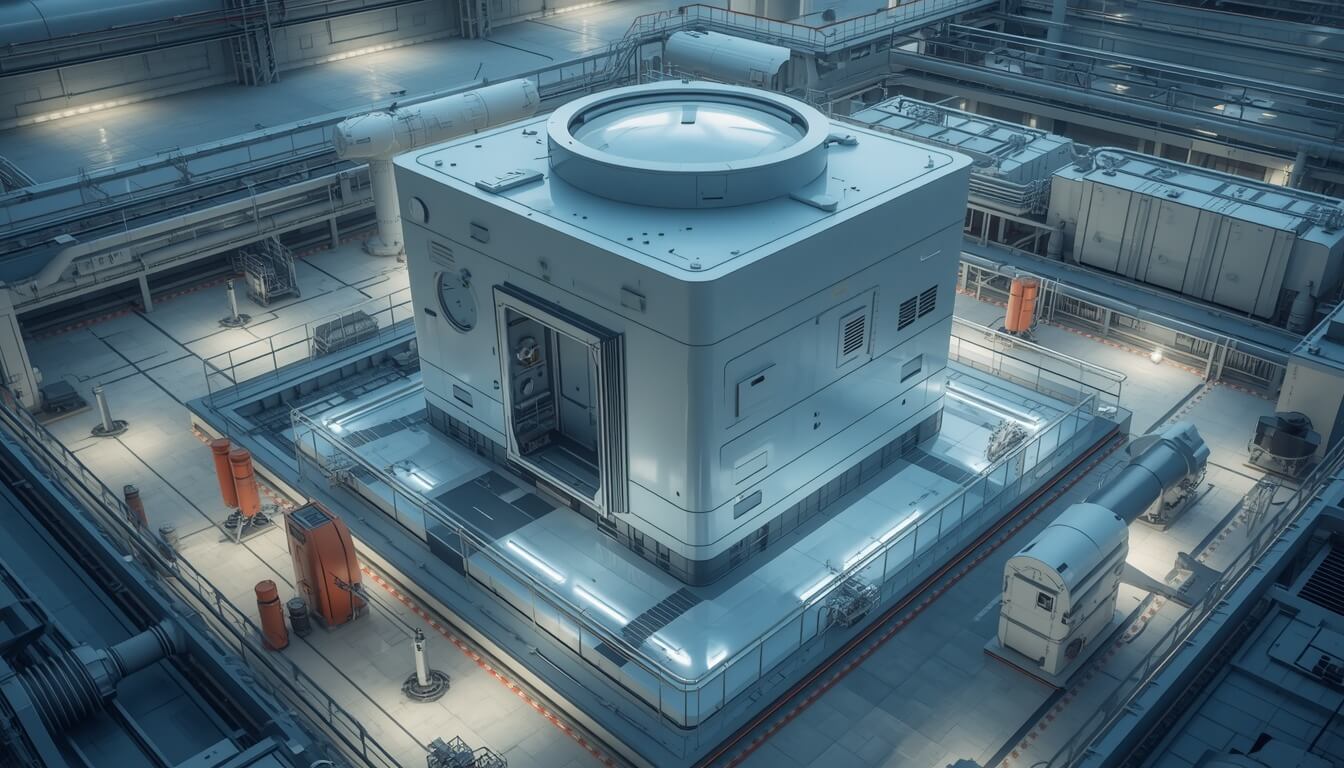
This has created interest in a new generation of nuclear technologies known as small modular reactors, or SMRs. Unlike traditional nuclear power plants, which can involve very large reactors and complex construction projects, SMRs are designed around smaller generating units and, in many cases, standardized manufacturing.
The concept is not entirely new. Smaller reactors have existed for decades in specialized applications, including naval propulsion. What is changing is the effort to adapt similar principles to commercial electricity generation.
If successful, SMRs could change how nuclear capacity is developed, financed and integrated into electricity systems. But significant technical, regulatory and economic questions remain.
The central question for SMRs is whether standardized manufacturing and repeated deployment can compensate for the loss of traditional economies of scale.
What Are Small Modular Reactors?
Small modular reactors are nuclear reactors designed to produce less electricity per unit than the largest conventional reactors. The exact definition varies between organizations and jurisdictions, but the term generally refers to reactors with a power output substantially below that of today's largest commercial plants.
The "small" element refers primarily to generating capacity. The "modular" concept relates to the possibility of manufacturing components in controlled industrial environments and assembling them at the deployment site.
This approach is intended to address some of the difficulties associated with building very large nuclear plants.
Traditional nuclear projects can require enormous upfront investment and long construction periods. Cost overruns and delays have affected several large projects, creating financial risks for developers and investors.
SMR developers are attempting to create a different model:
- Smaller individual projects
- Standardized designs
- Potentially repeatable manufacturing
Why Companies Are Developing Smaller Reactors
The economic argument for SMRs is based partly on scale.
A conventional nuclear plant may require billions of dollars of investment before producing electricity. Such projects can therefore be difficult to finance, particularly when construction periods extend over many years.
An SMR could potentially require a smaller initial investment because each reactor produces less electricity.
The modular approach could also allow multiple units to be deployed over time. Instead of constructing an entire large nuclear facility at once, an operator could theoretically add generating capacity as electricity demand increases.
However, smaller reactors are not automatically cheaper per unit of electricity. Large reactors benefit from economies of scale, meaning that reducing reactor size can also reduce some economic advantages.
The central question is therefore whether standardized manufacturing and repeated deployment can compensate for the loss of traditional economies of scale.
Standardization Is Central to the Concept
One of the most important differences between the SMR approach and many conventional nuclear projects is the emphasis on standardization.
Large nuclear plants are often complex infrastructure projects with significant site-specific engineering. SMR developers envision a greater proportion of reactor components being produced in factories.
If the industry reaches sufficient production volumes, manufacturing could potentially become more efficient over time.
This is similar to the logic used in other industrial technologies. Producing multiple standardized units can allow suppliers to improve manufacturing processes, reduce engineering duplication and build specialized supply chains.
The challenge is that nuclear technology operates under strict safety and regulatory requirements. A manufacturing model cannot simply be copied from conventional industrial equipment.
Each reactor design must satisfy detailed regulatory requirements before commercial deployment.
Different Reactor Technologies Are Competing
SMRs are not a single technology.
Several reactor concepts are being developed, including:
| Reactor type | Key characteristic |
|---|---|
| Light-water reactors | Build on conventional nuclear technology |
| High-temperature gas reactors | Higher operating temperatures, potential industrial heat applications |
| Molten-salt reactors | Different coolant and fuel configurations |
| Fast reactors | Different fuel utilization and operating principles |
Some designs build on technologies already used in conventional nuclear power, while others introduce different coolants, fuels or operating principles.
Advanced designs can potentially offer different combinations of safety characteristics, operating temperatures, fuel utilization and industrial applications.
This technological diversity means that the SMR market is still developing. It is not yet clear which reactor architecture will achieve the largest commercial deployment.
Some developers are focusing primarily on electricity generation, while others are considering industrial heat, hydrogen production or other applications.
AI Is Adding a New Potential Market
The rapid growth of artificial intelligence is creating another reason to examine nuclear power.
Large AI data centers require substantial and continuous electricity supplies. As facilities become larger, developers increasingly need access to reliable generation and sufficient grid capacity.
This does not mean that AI data centers will automatically use SMRs. Most proposed projects still face substantial development and regulatory challenges.
However, the characteristics of nuclear generation make it relevant to the broader problem.
A reactor capable of producing electricity continuously could potentially provide firm power for energy-intensive industrial facilities. In locations where grid capacity is limited, dedicated generation could also become part of the infrastructure strategy.
This is one reason energy technology is becoming increasingly connected to the expansion of computing infrastructure, as discussed in Why New Energy Technologies Are Becoming Critical to the AI Economy.
Safety Remains a Central Consideration
Nuclear safety is one of the most important factors determining whether new reactor designs can achieve widespread adoption.
Many advanced reactors are designed with passive safety systems. These systems are intended to rely more heavily on physical processes such as gravity, natural circulation or changes in material properties rather than requiring active intervention.
Some designs also use different fuels or coolants that can operate under different physical conditions from conventional reactors.
These characteristics may provide potential safety advantages, but they do not eliminate the need for rigorous regulation, monitoring and emergency planning.
The safety case for every reactor design must be evaluated independently by the relevant regulatory authorities.
Fuel Supply Is Another Strategic Issue
The development of advanced reactors also raises questions about nuclear fuel.
Many conventional reactors use low-enriched uranium fuel. Some advanced reactor designs require different fuel characteristics, including higher-assay low-enriched uranium, commonly known as HALEU.
The availability of suitable fuel can therefore become a constraint on deployment.
A commercial nuclear industry requires more than reactor manufacturers. It needs:
- Mining
- Conversion
- Enrichment
- Fuel fabrication
- Transportation
- Waste management
- Other supporting infrastructure
Building these supply chains can take significant time.
As a result, the development of SMRs is partly an industrial and supply-chain challenge rather than simply a reactor engineering challenge.
The Economics Remain Unproven at Large Scale
Perhaps the most important unanswered question is cost.
SMRs are often promoted as a way to make nuclear construction more predictable and scalable. But many designs are still moving through regulatory approval, demonstration and early commercial stages.
The economics of mass production therefore remain largely dependent on future deployment volumes.
If manufacturers can produce large numbers of standardized reactors, costs could potentially decline through learning effects and supply-chain development.
If deployment remains limited, however, the expected manufacturing advantages may be harder to achieve.
This creates a difficult early-stage problem: companies need customers to achieve manufacturing scale, while customers may want evidence of cost and performance before committing to new reactor technologies.
SMRs Could Become Part of a Broader Energy Mix
Even if SMRs achieve commercial success, they are unlikely to replace other forms of electricity generation.
Future power systems are likely to combine multiple technologies according to geography, demand patterns and economic conditions.
- Solar and wind can provide large quantities of electricity.
- Batteries and other storage systems can provide flexibility.
- Conventional nuclear plants can continue producing baseload electricity.
- Advanced reactors could potentially provide additional firm generation.
Transmission infrastructure will also remain important because electricity generation and consumption are often located far apart.
The emerging energy system is therefore becoming more diversified rather than centered on a single technology.
From Nuclear Innovation to a Broader Energy Competition
SMRs are part of a much larger effort to develop new ways of producing and delivering electricity.
The competition includes:
- Advanced nuclear reactors
- Renewable generation
- Energy storage
- Geothermal technologies
- Hydrogen systems
- New approaches to electricity grids
Each technology addresses a different part of the energy challenge, and their commercial development will depend on costs, regulation, resource availability and deployment speed.
The broader landscape is examined in The Technologies Competing to Power the Future Economy.
For nuclear power, the SMR concept represents an attempt to change not only reactor design but also the industrial model behind nuclear construction. Instead of relying primarily on a small number of enormous projects, the industry is exploring whether smaller standardized reactors can be manufactured and deployed repeatedly.
Whether that model can deliver competitive electricity remains uncertain.
The next phase of nuclear development will therefore be determined not only by engineering breakthroughs, but also by manufacturing capacity, regulatory approval, fuel availability, financing and the ability to build projects at predictable cost.
If those conditions can be achieved, small modular reactors could become an important component of future electricity infrastructure. If they cannot, nuclear development may continue to rely mainly on conventional large-scale reactors and other energy technologies.
The outcome will help determine how the next generation of electricity systems supports an increasingly digital and energy-intensive global economy.