
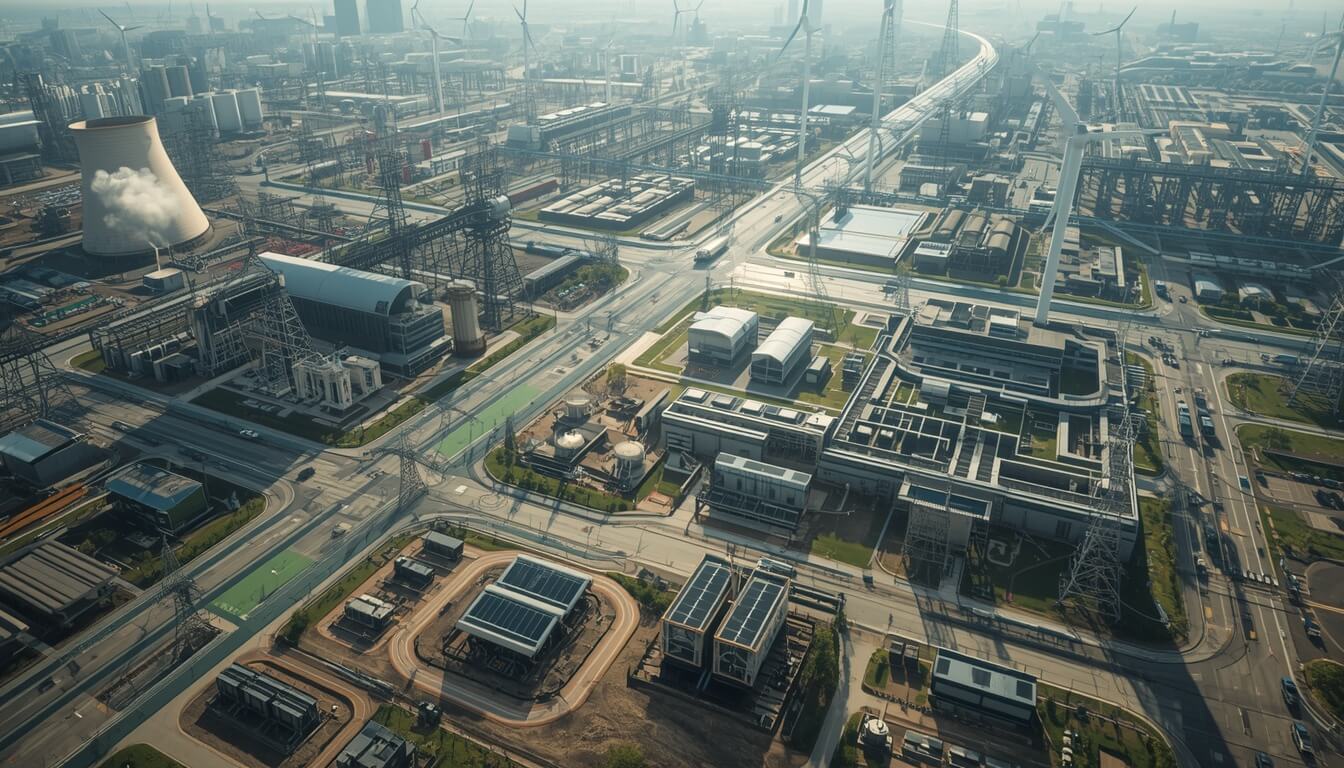
The global economy is entering a period in which access to electricity could become as important as access to computing power, industrial capacity and digital infrastructure.
Artificial intelligence, electric vehicles, advanced manufacturing, cloud computing and data centers are all increasing the importance of reliable electricity. At the same time, many existing power systems are facing aging infrastructure, grid constraints and the need to reduce emissions.
These pressures are creating a broad competition between energy technologies. Solar and wind power are expanding rapidly, nuclear developers are pursuing new reactor designs, batteries are becoming an increasingly important source of flexibility, and geothermal and other emerging technologies are targeting specific parts of the energy market.
There may not be a single winner. The future energy system is more likely to combine technologies with different characteristics, depending on geography, economics and the requirements of individual industries.
The next energy race is not simply about which technology works best. It is about which technologies can be deployed at scale — with the factories, supply chains, financing, and infrastructure required to support them.
Electricity Demand Is Changing
For decades, electricity demand in many developed economies grew relatively slowly. That environment is changing as new industries become increasingly dependent on electricity.
Artificial intelligence is an important example. Large computing facilities can require substantial amounts of electricity and operate continuously. The expansion of AI infrastructure is therefore creating a new source of concentrated electricity demand.
The relationship between computing and energy is explored in Why New Energy Technologies Are Becoming Critical to the AI Economy.
Electrification is also expanding beyond computing. Electric vehicles are increasing electricity consumption in transportation, while heat pumps and electric industrial processes can shift energy demand from fossil fuels toward electricity.
The result is a more complex energy system in which electricity must be generated, transmitted and delivered reliably to an increasing number of applications.
Solar and Wind Are Scaling Rapidly
Solar and wind power are among the most important technologies in the expansion of renewable electricity.
Solar photovoltaic systems can be deployed across a wide range of scales, from residential installations to very large utility-scale projects. Wind power can generate substantial amounts of electricity, particularly in regions with favorable wind resources.
Both technologies can be built incrementally, allowing capacity to expand as demand grows.
However, their output depends on weather conditions. Solar generation changes throughout the day and falls to zero at night, while wind generation varies with wind conditions.
This does not prevent renewable energy from becoming a major component of electricity systems, but it increases the importance of technologies capable of balancing supply and demand.
Batteries Provide Flexibility
Energy storage is becoming an essential part of the renewable energy discussion.
Batteries can store electricity when generation exceeds immediate demand and release it later. This makes them particularly useful for managing short-term fluctuations.
Lithium-ion technology currently dominates many battery applications because of its established manufacturing ecosystem and improving economics.
Other technologies are also being developed:
- Sodium-ion batteries
- Flow batteries
- Other long-duration storage systems
These are being investigated for applications where energy density is less important than cost, durability or storage duration.
The key distinction is that storage does not generate electricity. It shifts electricity through time.
That makes batteries complementary to generation technologies rather than a direct replacement for them.
Nuclear Power Offers Continuous Generation
Nuclear power occupies a different position in the energy technology competition.
Nuclear reactors can generate electricity continuously, providing firm generation that does not depend directly on daily weather conditions.
Existing nuclear plants therefore remain important components of several electricity systems.
At the same time, developers are working on new reactor concepts intended to address some of the challenges associated with conventional nuclear construction.
Small modular reactors are particularly notable because they attempt to combine smaller generating units with standardized manufacturing. Their potential role in future electricity infrastructure is examined in Small Modular Reactors: Could Nuclear Power Enter a New Era?.
The commercial outcome of these technologies remains uncertain. Regulatory approval, construction costs, fuel availability and manufacturing scale will all influence their future deployment.
Geothermal Energy Targets a Different Opportunity
Geothermal energy has another set of characteristics.
Traditional geothermal power is concentrated in regions with suitable underground heat resources. It can provide continuous generation and is therefore different from variable renewable sources such as solar and wind.
New geothermal technologies are attempting to expand the geographic potential of the sector.
Enhanced geothermal systems, for example, seek to access underground heat in locations where conventional geothermal resources may not be naturally suitable for commercial development.
The technology remains less mature than solar and wind, but advances in drilling and subsurface engineering could expand its potential market.
The broader significance is that improvements in technologies developed for other industries can sometimes unlock new energy resources.
Hydrogen Could Connect Electricity With Industry
Hydrogen is another technology competing for a role in the future energy system, although its function differs from electricity generation.
Hydrogen can potentially act as an energy carrier and industrial feedstock. It is particularly relevant to sectors where direct electrification can be difficult, including some chemical processes and heavy industry.
One approach is to produce hydrogen using electricity through electrolysis.
This creates another potential source of electricity demand. The economic case depends on the cost of electricity, electrolyzer technology, infrastructure and the requirements of the end market.
Hydrogen is therefore unlikely to replace electricity as the primary energy carrier for most applications. Instead, it may occupy specific industrial niches where storing or transporting energy in chemical form provides advantages.
The Grid Is Becoming a Technology Platform
Generation and storage technologies receive much of the attention, but electricity networks are equally important.
A power plant cannot deliver useful energy without transmission and distribution infrastructure.
As renewable generation expands and electricity demand becomes more concentrated in certain locations, grid capacity can become a limiting factor.
New transmission lines, substations and distribution infrastructure can take years to plan and construct.
Digital technologies may also play a larger role:
- Advanced monitoring
- Automated control systems
- Demand-response technologies
- AI-based forecasting
These can help operators manage increasingly complex electricity networks.
The future grid may therefore become more software-intensive as well as more physically interconnected.
Data Centers Could Change How Power Is Procured
Large data centers represent a particularly interesting development because their electricity demand can be substantial, continuous and geographically concentrated.
Technology companies and data-center operators may increasingly seek long-term relationships with electricity generators or develop dedicated energy infrastructure.
This could encourage new combinations of renewable generation, storage and firm power.
For example, a data center could potentially combine solar generation with batteries and a continuous power source. The exact configuration would depend on local grid conditions, electricity prices, land availability and regulatory requirements.
This type of infrastructure planning illustrates why energy and technology are becoming increasingly interconnected.
Manufacturing Capacity May Matter as Much as Technology
The future energy race is not simply about which technology works technically.
Manufacturing capacity will also matter.
Equipment such as the following requires large industrial supply chains:
| Equipment | Supply chain requirement |
|---|---|
| Solar panels | Polysilicon, cells, glass, inverters |
| Wind turbines | Blades, nacelles, generators, towers |
| Batteries | Lithium, nickel, cobalt, battery cells |
| Transformers | Electrical steel, copper, specialized manufacturing |
| Power electronics | Semiconductors, control systems |
| Nuclear components | Specialized manufacturing and regulatory compliance |
A technology can have attractive technical characteristics but still face deployment constraints if manufacturers cannot produce enough equipment.
Raw materials, specialized components, skilled labor and infrastructure can therefore influence how quickly an energy technology scales.
This means that the competition is partly a race to build industrial capacity.
Costs Will Depend on the Entire System
Comparing energy technologies using a single metric can be misleading.
The cost of generating one megawatt-hour is important, but it does not capture every system requirement.
- A variable generation source may require storage or additional transmission.
- A nuclear project may require substantial upfront capital but provide continuous output.
- Batteries may have relatively short discharge durations but respond rapidly to changes in demand.
The relevant question is therefore how technologies work together inside an electricity system.
Future power markets may reward combinations of technologies rather than individual technologies operating independently.
A More Diverse Energy System
The emerging energy landscape is increasingly characterized by technological diversity.
Solar and wind can provide large-scale renewable generation. Batteries can shift electricity through time. Nuclear power can provide firm generation. Geothermal technologies can offer continuous power in suitable locations. Hydrogen can support selected industrial applications. Grid technologies can connect and coordinate these resources.
None of these technologies needs to eliminate the others for the energy system to change substantially.
Instead, the most important development may be the growing ability to combine them.
For the digital economy, this diversification could become particularly important. AI and data centers require reliable electricity, while electrification is increasing demand across transportation and industry.
The future economy will therefore depend not only on how much electricity can be generated, but also on how efficiently and reliably different technologies can work together.
The Next Energy Race Is an Infrastructure Race
The competition between energy technologies is ultimately a competition to build infrastructure at scale.
Research breakthroughs matter, but commercial deployment requires factories, supply chains, financing, permitting, transmission networks and customers.
This is particularly relevant for emerging technologies such as advanced nuclear reactors and next-generation storage systems, where the transition from a promising prototype to a large commercial industry can take years.
The technologies that become important in the future economy will therefore be determined by more than laboratory performance. Their ability to achieve reliable operation, competitive costs and large-scale manufacturing will be equally important.
The energy transition is consequently becoming a multi-technology process rather than a simple replacement of one generation source with another.
As electricity demand rises from AI, transportation, manufacturing and digital infrastructure, the power system itself is becoming a critical component of economic competitiveness.
The future economy will be powered by a combination of technologies rather than a single solution. The central challenge will be integrating those technologies into an electricity system capable of delivering reliable, affordable and increasingly flexible power at the scale required by the next generation of industry.