
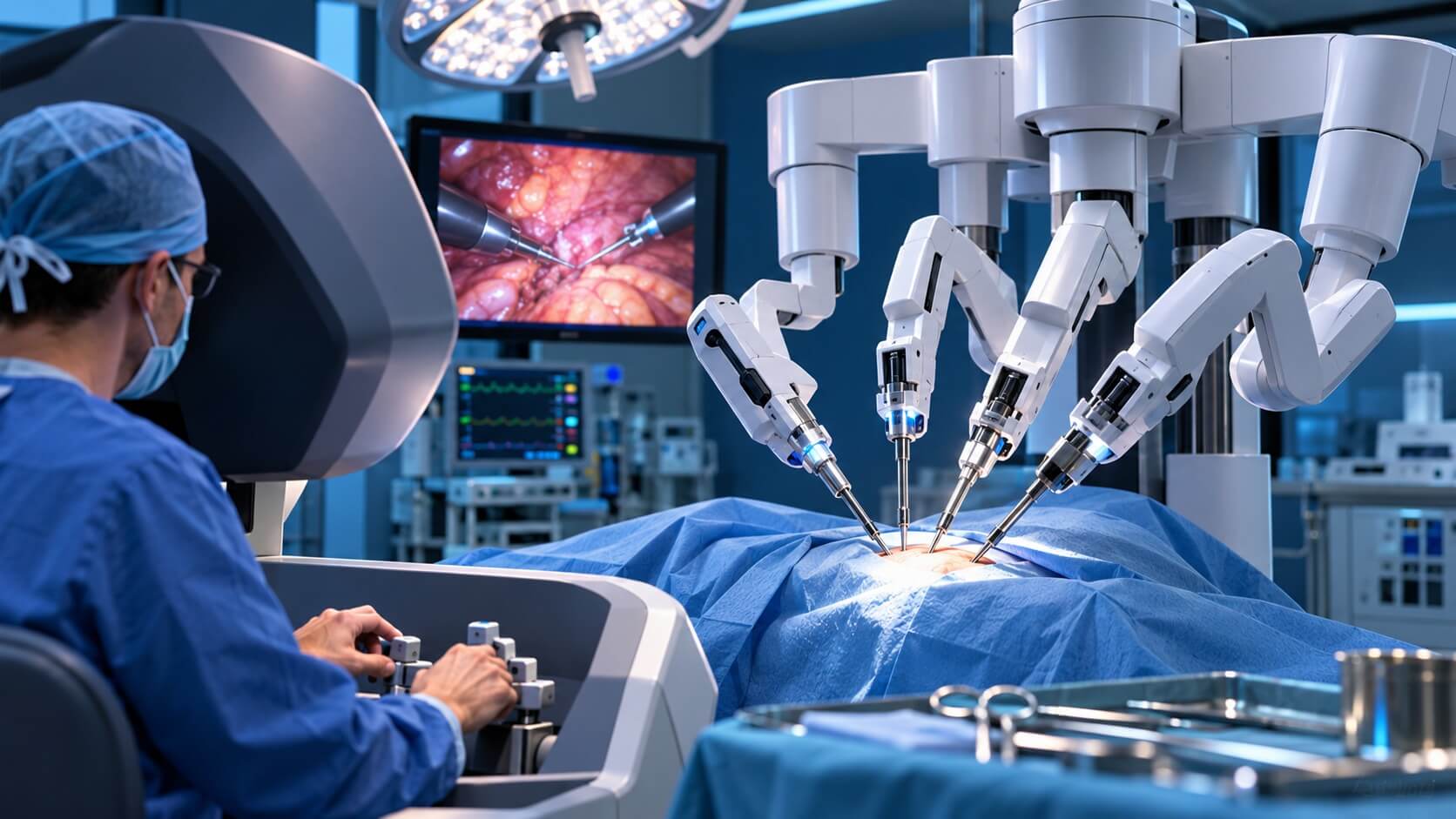
Surgical robotics is a growing segment of medical technology that uses robotic systems to help surgeons perform procedures with greater precision, control, and flexibility. The industry includes companies that manufacture surgical robots, develop specialized instruments, provide maintenance services, and supply hospitals with technology used in operating rooms.
For investors, surgical robotics represents an opportunity to participate in the broader transformation of healthcare. However, the industry's growth depends on more than technological innovation. Hospitals must justify expensive equipment purchases, surgeons need training, insurers must determine reimbursement, and manufacturers must demonstrate clinical and economic value.
Understanding how these factors interact is essential before evaluating surgical robotics companies as potential investments.
What Is Surgical Robotics?
Surgical robotics refers to robotic systems designed to assist medical professionals during surgical procedures.
Unlike industrial robots that may operate automatically in factories, most surgical robots are controlled directly by trained surgeons.
The robot does not independently decide where to operate or how to perform a procedure. Instead, it translates the surgeon's movements into controlled actions using specialized instruments.
A typical robot-assisted surgical system may include:
- A surgeon console or control interface.
- Robotic arms that manipulate surgical instruments.
- High-definition cameras or three-dimensional visualization.
- Specialized instruments designed for particular procedures.
- Software that supports positioning, movement, and surgical planning.
Some systems are designed for minimally invasive procedures performed through small incisions. Others assist with orthopedic surgery, where accurate positioning of implants can be particularly important.
The central purpose is to give surgeons additional capabilities rather than replace them.
How Does Robotic Surgery Work?
The exact process depends on the procedure and the type of robotic system.
In many minimally invasive operations, the surgeon sits at a console and controls instruments attached to robotic arms.
The system translates the surgeon's hand movements into precise instrument movements inside the patient's body.
Cameras provide a detailed view of the surgical area, while the instruments may offer a greater range of motion than conventional laparoscopic tools.
In orthopedic procedures, robotic systems may work differently.
For example, a robot-assisted knee replacement system can help surgeons plan the position of an implant and guide certain steps during surgery.
The surgeon remains responsible for the operation, including clinical decisions and responding to unexpected situations.
Are Surgical Robots Autonomous?
Most commercially established surgical robots are not autonomous.
They operate under direct human supervision and control.
Artificial intelligence, imaging software, and automation may increasingly assist with planning, navigation, and recognizing anatomical structures.
However, the ability to assist a surgeon is different from independently performing surgery.
Fully autonomous surgical procedures remain a research and development challenge rather than the standard model of commercial robotic surgery.
For investors, this distinction matters because advances in AI do not automatically translate into autonomous surgical products or immediate commercial revenue.
How Big Is the Surgical Robotics Market?
The surgical robotics market is part of the larger medical technology industry.
It includes several revenue categories:
- Surgical robotic systems and equipment.
- Instruments and accessories used during procedures.
- Maintenance and service contracts.
- Software and technology upgrades.
- Training and related support services.
Market research firms often publish different estimates of the industry's size because they define the market differently.
Some include only robotic surgical systems, while others also count instruments, services, navigation equipment, and related technologies.
Consequently, investors should examine what a market-size estimate actually measures rather than relying on a single headline figure.
What Is Driving Market Growth?
Several long-term developments support demand for surgical robotics.
Growing surgical demand
Aging populations and the need to treat chronic medical conditions can increase demand for certain surgical procedures.
Technological improvements
Better imaging, improved instruments, and more sophisticated software can expand the types of procedures supported by robotic systems.
Hospital competition
Hospitals may invest in advanced surgical technology to attract surgeons, support specialized programs, and differentiate their services.
Surgeon adoption
As more surgeons receive robotic training, the technology can become more integrated into hospital workflows.
Expansion into additional procedures
Manufacturers continue developing robotic systems for new surgical specialties and clinical applications.
These drivers do not guarantee uninterrupted growth. Equipment costs, reimbursement limitations, clinical evidence, and hospital budgets can slow adoption.
Which Companies Lead the Surgical Robotics Industry?
The surgical robotics industry includes established medical technology manufacturers and newer companies developing specialized platforms.
One of the most prominent companies is Intuitive Surgical, which developed the da Vinci robotic surgical system.
Intuitive Surgical has built a substantial presence in robot-assisted soft-tissue surgery, particularly in procedures involving urology, gynecology, and general surgery.
Other important participants include:
- Stryker: Develops the Mako robotic-arm assisted platform used in orthopedic surgery.
- Medtronic: Develops the Hugo robotic-assisted surgery system and other surgical technologies.
- Zimmer Biomet: Offers the ROSA robotic platform for orthopedic applications.
- Johnson & Johnson: Has invested in surgical robotics development, including its OTTAVA platform.
These companies do not necessarily compete in exactly the same markets.
A robotic system designed for knee replacement has different clinical applications, purchasing considerations, and competitive dynamics from one designed for abdominal surgery.
For a closer examination of the major manufacturers and their competitive positions, see The Leading Surgical Robotics Companies: Who Dominates the Market.
Why Is Intuitive Surgical So Important?
Intuitive Surgical is a central company in the surgical robotics industry because of its da Vinci platform and its established commercial ecosystem.
The company's business is not limited to selling robotic equipment.
It also generates revenue from instruments, accessories, and services associated with its installed systems.
This creates a business model with both equipment sales and recurring revenue.
A hospital purchasing a da Vinci system may subsequently need instruments and accessories for procedures, as well as ongoing service support.
As the number of procedures performed with installed systems increases, demand for certain consumable products can also increase.
This relationship between installed equipment and recurring procedure-related revenue is one of the industry's most important economic characteristics.
However, an established market position does not eliminate competitive risk.
New robotic platforms may offer alternative pricing, specialized capabilities, or different operating models.
To understand the company behind the industry's best-known platform, read Who Makes the Da Vinci Surgical Robot? Inside Intuitive Surgical.
How Do Surgical Robotics Companies Make Money?
Surgical robotics manufacturers can generate revenue through several complementary business activities.
1. Selling Robotic Systems
Hospitals and surgical centers purchase or lease robotic systems.
These transactions can generate substantial revenue, but equipment purchases are expensive and may occur irregularly.
A hospital may use a robotic platform for many years before replacing it.
Consequently, equipment revenue can fluctuate depending on hospital investment cycles.
2. Selling Instruments and Accessories
Many surgical systems require specialized instruments or accessories.
Some instruments have limited permitted uses and must be replaced after a specified number of procedures.
This creates recurring demand associated with surgical activity.
For investors, procedure growth can therefore be an important indicator of future instrument revenue.
3. Providing Maintenance and Services
Hospitals need technical support, equipment maintenance, and software-related services.
Manufacturers may offer service agreements that generate revenue over multiple years.
These contracts can help make the business less dependent on new equipment purchases.
4. Software and Technology Upgrades
Software, imaging capabilities, and system upgrades can become additional sources of revenue.
Their financial importance varies by manufacturer and business model.
The overall economics of surgical robotics are therefore different from those of companies that sell medical equipment without significant recurring revenue.
How Much Do Surgical Robots Cost?
Surgical robots are expensive medical devices.
Large, sophisticated surgical platforms can cost hospitals more than $1 million, with some configurations costing several million dollars.
The final purchase price depends on the manufacturer, system configuration, included equipment, negotiated contract, and support arrangements.
But the initial purchase is only part of the total cost.
Hospitals may also face expenses related to:
- Installation and operating room preparation.
- Surgeon and staff training.
- Maintenance agreements.
- Instruments and accessories.
- Software upgrades.
- Equipment financing.
- Operating room time and workflow changes.
A hospital evaluating robotic surgery must consider the total cost of ownership rather than simply the price of the machine.
For example, a robotic system used frequently across multiple surgical specialties may have a different economic profile from an expensive system used only occasionally.
Higher utilization can spread fixed equipment costs across more procedures, although it does not eliminate recurring operating expenses.
For a detailed examination of equipment prices and operating costs, see How Much Does a Surgical Robot Cost? A Practical Breakdown.
Who Pays for Robotic Surgery?
The financial relationship between patients, hospitals, manufacturers, and insurers is an important part of the surgical robotics market.
Hospitals generally purchase or lease the robotic equipment.
Manufacturers receive revenue from equipment, instruments, accessories, and services.
Patients and insurers pay for medical care according to the applicable coverage arrangements.
However, insurance reimbursement does not necessarily increase simply because a robot was used.
In the United States, Medicare and private insurers generally evaluate coverage based on the underlying procedure, medical necessity, and applicable coverage rules.
The use of robotic assistance does not automatically create a separate payment for the hospital.
This can make the economics challenging.
A hospital may pay more to perform certain procedures robotically without receiving a corresponding increase in reimbursement.
Hospitals must therefore evaluate whether robotic systems provide sufficient clinical, operational, or strategic value to justify their costs.
These considerations help explain why adoption varies between healthcare facilities.
What Are the Most Advanced Surgical Robots?
There is no universally accepted single most advanced surgical robot.
Different platforms are designed for different surgical applications.
A system optimized for minimally invasive abdominal surgery cannot be evaluated using exactly the same criteria as a robotic platform used for orthopedic implant positioning.
Important features may include:
- Instrument precision and range of motion.
- Imaging and visualization quality.
- Surgical navigation capabilities.
- Integration with planning software.
- Ease of use and surgeon ergonomics.
- Compatibility with different procedures.
- Clinical performance and safety.
- Operating costs and hospital workflow efficiency.
A newer platform is not automatically superior to an established system.
Technological features must be considered alongside clinical evidence, regulatory authorization, reliability, and actual surgical outcomes.
For a comparison of the capabilities and limitations of leading platforms, see The Most Advanced Surgical Robots Today: A Practical Comparison.
Is Robotic Surgery Safer Than Traditional Surgery?
Robotic surgery can offer important advantages, but it is not automatically safer or more effective for every procedure.
Potential benefits include improved instrument control, enhanced visualization, and the ability to perform certain operations through smaller incisions.
Depending on the procedure and patient, minimally invasive robotic surgery may be associated with reduced blood loss, shorter hospital stays, or faster recovery.
However, outcomes vary considerably.
A successful operation depends on factors such as:
- The patient's medical condition.
- The complexity of the procedure.
- The surgeon's experience.
- The hospital's surgical team.
- The technology being used.
- The quality of postoperative care.
Robotic systems also introduce equipment-related risks, including mechanical problems, technical failures, and the possibility of needing to convert to another surgical approach.
The relevant comparison is often between robotic surgery and conventional minimally invasive surgery, not simply between robotic surgery and traditional open surgery.
The evidence supporting robotic assistance can differ significantly between procedures.
For a closer examination of clinical advantages, limitations, and safety concerns, read Is Robotic Surgery Risky? Benefits, Limits and How It Compares.
Does Robotic Surgery Improve Recovery and Success Rates?
Robotic surgery can improve certain outcomes in selected procedures, but there is no single success rate that applies to all robotic operations.
Success depends on the type of surgery and how the outcome is measured.
For example, success in cancer surgery may involve complete tumor removal and long-term disease outcomes.
In orthopedic surgery, success may involve implant positioning, pain reduction, mobility, and functional improvement.
Recovery time also depends on the procedure and the individual patient.
Some patients undergoing minimally invasive robotic surgery may experience shorter hospital stays or faster recovery compared with open surgery.
But this does not mean robotic surgery always produces better results than conventional laparoscopic techniques.
For investors, clinical outcomes matter because hospitals and insurers increasingly need evidence that expensive technologies deliver meaningful value.
Strong clinical evidence can support adoption, while disappointing results may limit demand.
A more detailed discussion is available in Robotic Surgery Success Rates and Recovery: What Patients Should Expect.
Why Are More Hospitals Adopting Surgical Robots?
Hospitals adopt surgical robots for a combination of clinical, operational, and competitive reasons.
One motivation is the potential to expand minimally invasive surgical capabilities.
Another is surgeon recruitment and retention.
Surgeons trained on robotic platforms may prefer working in hospitals that provide access to those systems.
Hospitals may also view robotic technology as part of their broader investment in advanced medical services.
However, adoption is not uniform.
Large academic medical centers may have greater financial resources and higher surgical volumes than smaller community hospitals.
A high-volume hospital may find it easier to justify an expensive robotic system because the equipment can be used across more procedures.
Smaller facilities may face greater challenges related to financing, staffing, training, and utilization.
The number of hospitals using robotic surgery is also not the same as the number of robotic systems installed.
One hospital may operate several systems, while another may have only one.
Similarly, an installed system does not reveal how frequently it is used.
For investors, hospital adoption, installed systems, and procedure volumes should be analyzed separately.
For more information about adoption trends and US reimbursement, see Robotic Surgery in the US: Hospital Adoption and Medicare Coverage.
What Makes Surgical Robotics Attractive to Investors?
Surgical robotics combines several characteristics that may appeal to long-term investors.
Exposure to Healthcare Technology
Surgical robotics allows investors to follow technological innovation within the healthcare industry.
Demand for medical procedures is influenced by healthcare needs rather than only by consumer preferences.
However, the timing of hospital equipment purchases remains sensitive to financial conditions and capital budgets.
Recurring Revenue Potential
Companies with large installed equipment bases may benefit from recurring purchases of instruments, accessories, and services.
This can create a relationship between surgical procedure volumes and company revenue.
Long-Term Customer Relationships
Hospitals investing in robotic systems also invest in training, workflows, and supporting infrastructure.
These investments can make switching to a different platform costly and operationally complicated.
Established manufacturers may therefore benefit from customer relationships that extend over many years.
Opportunities for Market Expansion
Manufacturers may expand into additional surgical specialties, new geographic markets, or different healthcare settings.
New technology can also create opportunities for competitors.
However, entering a new surgical market requires more than developing a technically capable robot.
Manufacturers must address regulatory requirements, clinical validation, training, distribution, and customer support.
What Are the Biggest Investment Risks?
Despite its potential, surgical robotics presents several important investment risks.
High Valuations
Investors may assign premium valuations to companies expected to grow rapidly.
If actual growth falls below expectations, share prices can decline even when the underlying business remains profitable.
Competition
New entrants and established medical technology companies are investing in competing platforms.
Greater competition may affect equipment pricing, service contracts, and profit margins.
Regulatory Requirements
Surgical robots are medical devices subject to regulatory oversight.
Product development, clinical evaluation, and regulatory review can require substantial time and investment.
Regulatory authorization in one market or for one procedure does not automatically permit use in every other market or procedure.
Hospital Spending Constraints
Hospitals may postpone equipment purchases when budgets are under pressure.
Higher labor costs, financial uncertainty, and competing investment priorities can influence purchasing decisions.
Clinical and Product Risks
Equipment failures, recalls, safety concerns, or disappointing clinical outcomes can affect a manufacturer's reputation and commercial performance.
Adoption Risk
A technically advanced system may fail commercially if hospitals cannot justify its cost or surgeons do not adopt it.
For investors, technological innovation and commercial success are not interchangeable.
How Can Investors Evaluate Surgical Robotics Stocks?
Evaluating a surgical robotics company requires looking beyond the technology itself.
Several indicators can help investors understand its business performance.
| Indicator | Why It Matters |
|---|---|
| Installed robotic systems | Shows the size and development of the equipment base |
| Surgical procedure growth | Indicates how frequently the technology is being used |
| Instruments and accessories revenue | Helps measure recurring demand |
| Service revenue | Shows the contribution from ongoing customer relationships |
| Gross margin | Helps evaluate profitability and pricing power |
| Research and development spending | Indicates investment in future products |
| Regulatory progress | Helps assess potential commercialization milestones |
| Free cash flow | Shows whether the business generates cash after capital spending |
These metrics should be interpreted together.
For example, strong growth in installed systems may be encouraging, but it is less meaningful if utilization remains low.
Similarly, increasing procedure volumes can support recurring revenue, but investors must also consider pricing, operating expenses, and competitive pressure.
For diversified medical technology companies, surgical robotics may represent only one part of the business.
Investors should therefore determine how much of a company's financial performance is actually attributable to robotic surgery.
What Could Shape the Future of Surgical Robotics?
Several developments could influence the industry's long-term direction.
Artificial intelligence and surgical software
AI may support planning, imaging, workflow optimization, and decision assistance. These capabilities could improve surgical systems, although clinical validation and regulatory requirements remain important.
More specialized robotic platforms
Manufacturers may develop systems designed for narrower surgical applications rather than relying exclusively on large multipurpose platforms.
Competition on affordability
Lower acquisition costs, alternative financing arrangements, and more efficient instruments could make robotic systems accessible to additional hospitals.
Expansion beyond large hospitals
Ambulatory surgery centers and smaller healthcare facilities may become increasingly important markets where procedure suitability and economics support adoption.
Greater emphasis on clinical evidence
Hospitals and insurers may demand clearer evidence that robotic technology improves outcomes or provides economic value.
None of these developments guarantees higher profits for every manufacturer.
Some innovations may expand the overall market while simultaneously increasing competition and reducing pricing power.
Is Surgical Robotics a Good Long-Term Investment Theme?
Surgical robotics is a potentially attractive long-term investment theme because it combines medical innovation, recurring revenue opportunities, and the possibility of broader adoption across surgical specialties.
But industry growth does not guarantee strong investment returns.
A company can develop impressive technology and still struggle with commercialization, operating costs, competition, or valuation.
Established manufacturers may benefit from installed equipment bases, recurring instrument revenue, and long-standing hospital relationships.
Emerging competitors may offer greater expansion potential but face substantial development, regulatory, and commercial risks.
For retail investors, the most useful approach is to distinguish between three separate questions:
- Is robotic surgery becoming more widely adopted?
- Which companies can convert adoption into sustainable revenue and profits?
- Does the current stock valuation already reflect future growth expectations?
Understanding these differences is more valuable than assuming that every company associated with surgical robotics will benefit equally.
The industry's future will depend not only on how advanced surgical robots become, but also on whether they deliver measurable value to patients, surgeons, hospitals, and healthcare systems.
Disclaimer: This article is for informational and educational purposes only and does not constitute financial, investment, or medical advice. Investing involves risk, including the possible loss of principal. Medical decisions should be discussed with qualified healthcare professionals.