
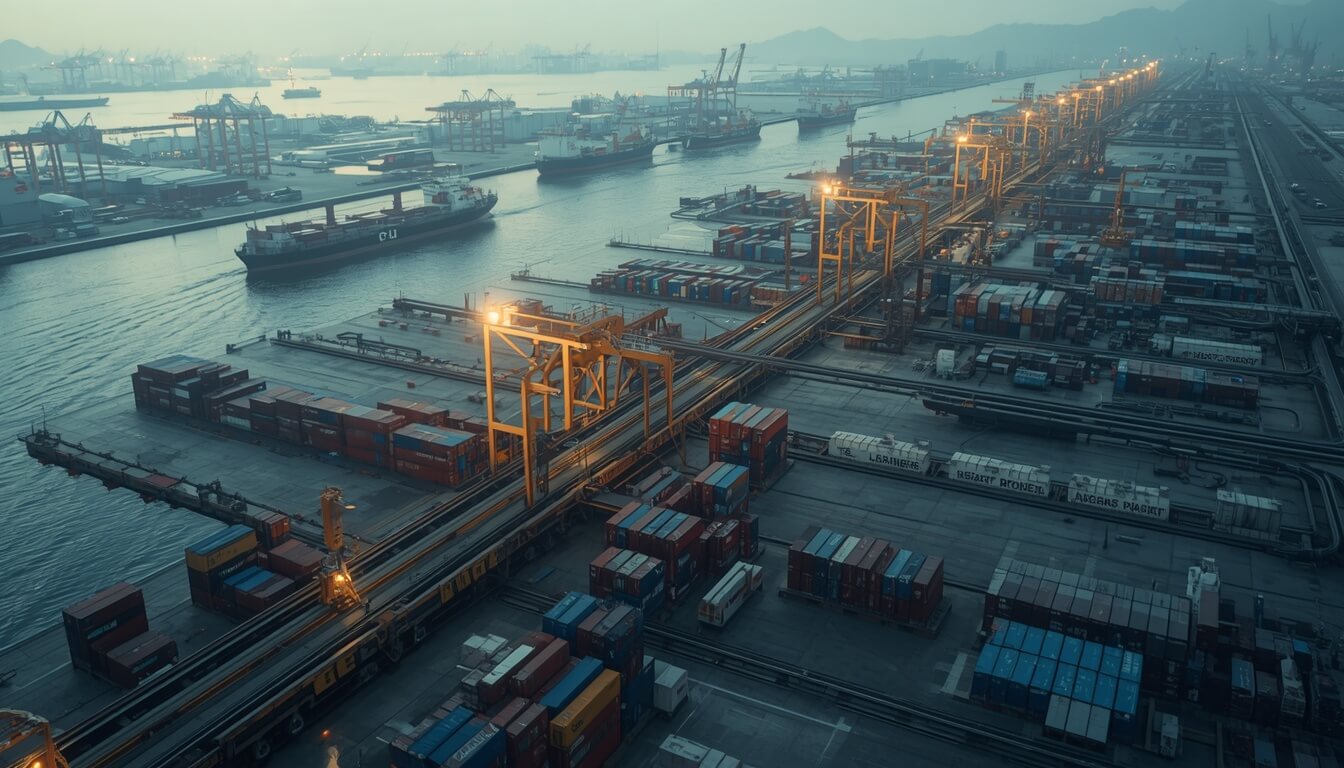
The global battery industry is increasingly becoming a competition over supply chains as much as a competition over technology. Building a better battery cell is only one part of the challenge. Manufacturers also need reliable access to raw materials, chemical processing, specialized components, production equipment, energy and logistics networks.
This is particularly important because battery production is highly dependent on geographically concentrated industrial capabilities. Some raw materials are mined in a relatively small number of countries, while much of the world's processing and battery manufacturing capacity is concentrated in Asia.
As electric vehicles, grid storage and other electrification technologies expand, these dependencies are becoming more strategically significant.
The result is a new industrial battleground in which companies and governments are attempting to secure access to critical materials while developing domestic manufacturing capacity and more resilient international supply chains.
Batteries Depend on a Complex Industrial Network
A modern battery is the result of a long sequence of industrial processes.
Raw materials must first be extracted and processed. Lithium compounds, nickel, cobalt, graphite, manganese and other materials can then enter specialized chemical and manufacturing processes before becoming components of battery cells.
The cells themselves require additional manufacturing stages involving electrodes, separators, electrolytes, casings and electronic systems. Finally, cells are assembled into modules or packs and integrated into vehicles or energy-storage systems.
Each stage creates potential constraints.
A shortage of one material or component can affect the entire production chain even when sufficient capacity exists elsewhere.
This means that battery manufacturing capacity cannot be evaluated simply by counting factories. The underlying network of mines, refineries, chemical plants, component suppliers and logistics infrastructure is equally important.
The technological dimension of this industry is examined in The Global Race to Build Better Batteries.
Raw Materials Are the Starting Point
Lithium is one of the most visible materials associated with battery production, but the battery supply chain is considerably broader.
Different battery chemistries require different combinations of materials. Nickel, cobalt, manganese and graphite can play important roles depending on the design of the battery.
This creates a moving target for supply-chain planners.
If manufacturers increase their use of LFP batteries, for example, the relative importance of certain materials changes compared with nickel-rich chemistries. If sodium-ion batteries become more widely adopted, demand for some lithium-related inputs could develop differently.
Technology therefore influences supply-chain requirements.
At the same time, supply-chain conditions can influence technology. A manufacturer facing high prices or limited availability for a particular material has an incentive to investigate chemistries that reduce dependence on it.
This interaction between technology and materials is one of the defining characteristics of the battery industry.
Mining Is Only One Part of the Problem
Access to mineral resources does not automatically translate into battery-industry control.
Mining is only the first stage of the raw-material chain. Extracted minerals must often undergo several processing and refining steps before they can be used in battery manufacturing.
This distinction is strategically important.
A country can possess significant mineral deposits while still depending on foreign processing capacity. Conversely, a country with limited domestic mining can play an important role in the industry if it controls substantial refining, chemical-processing or manufacturing capabilities.
The battery supply chain therefore has several distinct layers:
- mineral extraction;
- refining and chemical processing;
- production of battery materials;
- cell manufacturing;
- battery-pack assembly;
- vehicle or storage-system integration;
- recycling and recovery.
Control over any one of these stages can influence the broader system.
China Has Built a Major Industrial Position
China has developed a particularly significant position across multiple stages of the battery value chain.
Its importance is not limited to battery-cell manufacturing. Chinese companies are also deeply involved in battery materials, chemical processing, components, equipment and downstream manufacturing.
This creates an industrial ecosystem in which different parts of the supply chain are geographically and commercially connected.
For battery manufacturers, proximity between suppliers and factories can reduce logistics complexity and make it easier to coordinate production.
The position of major companies such as CATL and BYD illustrates how this industrial ecosystem connects technology with manufacturing scale.
Their strategies are discussed in greater detail in CATL, BYD and the Competition to Control Battery Technology.
Governments Are Trying to Reduce Dependence
The strategic importance of batteries has encouraged governments in North America, Europe and elsewhere to support domestic production.
Industrial policy increasingly focuses on establishing local battery factories, attracting investment in raw-material processing and encouraging the development of domestic supply chains.
The objective is not necessarily to eliminate international trade.
A completely domestic battery supply chain would be difficult and potentially expensive to construct because different regions have different advantages in mining, processing, manufacturing and engineering.
Instead, governments are increasingly interested in reducing excessive dependence on individual countries or suppliers for strategically important stages of production.
This approach can involve financial incentives, investment programs, trade policies and regulations affecting where companies manufacture or source materials.
Capacity Is Becoming a Strategic Asset
Battery factories require enormous capital investment.
Large production facilities need specialized equipment, highly controlled manufacturing environments, reliable energy supplies and skilled workers. Building capacity can take years, while reaching high production yields can take additional time.
This creates a potential mismatch between rapidly growing demand and the speed at which new capacity can be developed.
If electric vehicle production expands faster than battery manufacturing, shortages can emerge. If companies build too much capacity too quickly, however, manufacturers can face lower utilization rates and weaker economics.
Capacity planning is therefore becoming a central strategic issue.
For companies, the challenge is to build enough manufacturing capacity to serve future demand without creating excessive fixed costs. For governments, the challenge is to encourage investment without permanently supporting inefficient production.
The Geography of Manufacturing Matters
Battery manufacturing is particularly sensitive to geography.
Factories benefit from being located near automotive production centers because batteries are heavy and expensive to transport relative to their value. Proximity can also improve coordination between battery manufacturers and vehicle companies.
This has encouraged the development of regional battery ecosystems.
North America is attempting to expand domestic battery production, while Europe is seeking to strengthen its own manufacturing capabilities. Asia remains a major center of battery production, with China, South Korea and Japan playing important roles in different segments of the industry.
The result is a gradual attempt to build multiple regional production networks rather than relying entirely on a single global manufacturing center.
Supply Chains Must Balance Efficiency and Resilience
For many years, global manufacturing strategies emphasized efficiency.
Companies often sought to source components from the lowest-cost suppliers and concentrate production where infrastructure, labor and expertise provided the strongest economic advantages.
Battery supply chains are forcing companies to consider another variable: resilience.
A supply chain optimized entirely for cost may become vulnerable if a geopolitical dispute, export restriction, shipping disruption, natural disaster or production failure affects a critical supplier.
Building redundancy can reduce these risks, but redundancy usually costs more.
Companies therefore face a difficult trade-off between maximum efficiency and greater resilience.
The optimal structure may involve multiple suppliers, geographically diversified factories and strategic inventories of selected materials.
Critical Minerals Have Become an Industrial Policy Issue
The concentration of mineral resources and processing capacity has made battery materials an increasingly important issue for governments.
Countries seeking to expand electric-vehicle production need to consider not only whether they can build battery factories but whether those factories can obtain sufficient materials over the long term.
This has encouraged governments and companies to establish relationships with mining companies and processing facilities around the world.
Long-term supply agreements can provide manufacturers with greater visibility over future material availability. Investments in mining and refining can provide another layer of security.
The result is a much broader industrial ecosystem than the battery factory itself.
Recycling Could Create a Secondary Supply
Recycling offers another potential way to reduce pressure on primary raw-material supply.
As the global population of electric vehicles and energy-storage systems grows, increasing volumes of used batteries will eventually become available for processing.
Recycling can recover materials that have already entered the industrial system, potentially reducing the need for additional primary extraction.
However, the economics of recycling depend on battery chemistry, collection systems, processing technology and the value of the recovered materials.
The industry is therefore still developing.
Over time, recycling could become a more important source of raw materials and create a secondary supply network alongside traditional mining.
Supply Chains Can Influence Technological Competition
The relationship between technology and supply chains works in both directions.
Battery manufacturers choose technologies partly according to performance and cost, but also according to the availability and price of the materials required.
A battery chemistry that uses more abundant materials can become attractive when supply constraints increase. Similarly, improvements in manufacturing processes can reduce the amount of material required per unit of battery capacity.
This means that technological innovation can change supply-chain requirements.
The reverse is also true.
If a material becomes difficult to source, expensive or subject to geopolitical restrictions, manufacturers may accelerate research into alternative chemistries.
Supply-chain conditions can therefore influence the direction of technological development.
The Role of Equipment and Manufacturing Know-How
Another often overlooked part of the battery supply chain is manufacturing equipment.
Battery factories require highly specialized machinery for electrode production, cell assembly, coating, testing and other processes.
The availability of equipment can therefore become a constraint when companies attempt to expand capacity rapidly.
Manufacturing know-how is equally important.
Two factories with similar equipment can produce very different results depending on production processes, quality control and accumulated engineering experience.
This creates another form of competitive advantage that is difficult to measure simply by looking at announced factory capacity.
Electric Vehicles Are Only Part of the Demand Story
The strategic importance of battery supply chains extends beyond electric cars.
Stationary energy storage is becoming increasingly important as electricity systems incorporate more renewable generation. Batteries can help manage fluctuations in solar and wind production and provide flexibility to electricity networks.
Industrial machinery, commercial vehicles, buses and other electrified applications can also increase demand for batteries.
This diversification matters because it reduces the industry's dependence on a single end market.
A battery technology that is not ideal for long-range passenger vehicles may still be useful for stationary storage or commercial applications where weight is less important and cost is a larger consideration.
Consequently, the battery supply chain is likely to support multiple markets simultaneously.
A More Regional Battery Industry May Emerge
The long-term structure of the battery industry could become more regional.
Instead of a single highly concentrated global production network, the industry may develop several major regional ecosystems connected by international trade.
Each ecosystem could combine local battery factories with regional automotive production while continuing to import selected minerals, chemicals or components.
Such a structure would not eliminate globalization. It would change its form.
Companies would continue to depend on international suppliers, but strategic production stages could increasingly be duplicated across different regions.
This could improve resilience while potentially increasing costs.
The Strategic Competition Is About Control and Flexibility
The battery industry's industrial competition is therefore broader than the race to manufacture more cells.
Companies are competing for access to materials, production technology, factories, engineering talent and customers. Governments are competing to attract investment and establish domestic industrial capabilities.
The central question is increasingly one of control and flexibility.
Who can secure the materials needed for future production? Who can manufacture cells at competitive cost? Who can adapt when battery chemistry changes? Who can maintain production if one supplier or region becomes unavailable?
These questions are becoming increasingly important as batteries move from a specialized component to a foundational technology for transportation and energy infrastructure.
The Battery Supply Chain Is Becoming Part of Industrial Strategy
The evolution of battery supply chains reflects a broader transformation in the global economy.
Technologies that support electrification are becoming strategically important because they influence transportation, energy systems, manufacturing and industrial competitiveness.
Batteries sit at the center of this transformation.
The competition is therefore not limited to companies such as CATL and BYD. It involves automakers, mining companies, chemical producers, equipment manufacturers, governments and research institutions across multiple continents.
The companies that succeed in this environment will need more than competitive battery technology. They will need access to reliable materials, scalable production, manufacturing expertise and flexible supply networks.
For governments, the challenge will be balancing industrial resilience with the efficiency benefits of global trade.
And for the industry as a whole, the central question will be how quickly supply chains can adapt as battery technologies, manufacturing processes and demand continue to evolve.
The global battery race is consequently becoming a race over the entire industrial system behind the battery itself.